
Types of Corporate Gatherings | Guide
Types of Corporate Gatherings | Guide
Corporate gatherings are company-sponsored events designed for employees or clients, ranging from formal board meetings and conferences to relaxed team celebrations and appreciation dinners. Each format serves a distinct business objective, whether that objective is governance, strategic planning, relationship building, or brand visibility.
This guide covers event types and their defining characteristics, formal versus informal formatting, venue selection criteria, corporate dinner planning, the appeal of outdoor settings, and how these gatherings strengthen business relationships.
Corporate gatherings span more than ten distinct formats, including board meetings, team-building events, retreats, business luncheons, product launches, holiday parties, client appreciation events, networking mixers, conferences, and award galas. Each one requires a different combination of layout, service level, and tone to achieve its purpose.
Choosing the right venue depends on capacity, ambiance, accessibility, and food and beverage quality. Layout psychology shapes how attendees interact, while location convenience directly affects attendance rates. Food and beverage is the single largest expense category for event planners, making culinary capability a deciding factor.
Successful corporate dinners require early planning. Large-scale events benefit from 12 to 18 months of lead time, and caterers should be secured 3 to 6 months ahead. Menu design must account for dietary diversity, and seating arrangements should align with the event's conversational goals.
Outdoor venues continue gaining popularity because they reduce formality, encourage organic interaction, and align with sustainability priorities. In warm climates like Coconut Grove, open-air settings offer near year-round viability.
Corporate gatherings also deliver measurable relationship-building outcomes. In-person events strengthen employee engagement, deepen client loyalty, and create networking momentum that digital communication cannot replicate.
What Defines a Corporate Gathering?
A corporate gathering is any event sponsored by a company that focuses on its employees or clients. These gatherings range from formal board meetings to relaxed team celebrations, each serving distinct business objectives.
According to Indeed, a corporate event is an event sponsored by a company and focuses on either its employees or clients. This definition covers a broad spectrum, from structured conferences with defined agendas to casual networking mixers and appreciation dinners. What unites them is organizational sponsorship and a clear business purpose, whether that purpose is strategic planning, relationship building, or employee recognition.
Formal or structured corporate events usually follow a defined agenda, with clear objectives, scheduled activities, and a professional tone. Informal gatherings, by contrast, prioritize open interaction and relaxed settings. Both formats qualify as corporate gatherings when a company initiates, funds, or organizes the event for a business-related goal.
Corporate gatherings also carry practical implications for attendance. Under most circumstances, an employer can require an employee to attend a social function during or even outside of normal work hours, as noted by the Society for Human Resource Management. This legal dimension reinforces that these events hold genuine organizational weight, not merely optional social occasions.
Understanding what qualifies as a corporate gathering helps planners select the right format, venue, and experience for each occasion.
What Are the Main Types of Corporate Gatherings?
The main types of corporate gatherings range from formal board meetings and conferences to social events like holiday parties and client appreciation dinners. Each format serves a distinct business objective, from governance and strategy to relationship-building and brand visibility.
Board Meetings
Board meetings are formal corporate gatherings where directors convene to discuss governance, financial performance, and strategic direction. These sessions follow structured agendas and typically require a quorum to pass resolutions. According to the Harvard Law School Forum on Corporate Governance, the average number of board meetings among S&P 500 companies reached 8.3 in 2021, up from 7.8 in 2019, with the majority of companies holding fewer than eight meetings per year. Frequency often increases during periods of organizational change or economic uncertainty. A well-chosen venue with private dining space and audiovisual support can elevate the professionalism of these high-stakes discussions.
Team-Building Events
Team-building events are corporate gatherings designed to strengthen collaboration, trust, and communication among employees. Activities range from structured workshops and problem-solving challenges to casual outings like group dinners or outdoor experiences. These events work best in relaxed settings where colleagues can interact outside their usual office dynamics. For companies in Miami, venues with open-air spaces and a welcoming atmosphere offer a natural backdrop that encourages genuine connection. The informal tone helps break down departmental silos, making team-building one of the most effective investments in workplace culture.
Corporate Retreats
Corporate retreats are extended offsite gatherings where leadership teams or departments step away from daily operations to focus on long-term planning, skill development, or company culture. A retreat typically spans one to three days and blends structured sessions with social downtime. The change of scenery is intentional; removing teams from their routine workspace stimulates creative thinking and encourages open dialogue. Venues that offer both meeting-ready spaces and a distinctive dining experience simplify logistics while keeping attendees engaged throughout the program.
Business Luncheons and Dinners
Business luncheons and dinners are corporate gatherings centered around a shared meal, used for relationship-building, deal discussions, or executive networking. The format is inherently versatile. A luncheon suits quick, focused conversations during the workday, while a dinner allows for deeper rapport over multiple courses. Menu quality and ambiance matter significantly in these settings because they reflect the host company's attention to detail. Choosing a restaurant with locally sourced ingredients and a refined atmosphere signals professionalism without feeling overly formal.
Product Launch Events
Product launch events are corporate gatherings organized to introduce a new product or service to clients, media, and industry stakeholders. These events combine presentation elements with experiential components designed to generate buzz. According to the American Express Global Business Travel Meetings & Events Forecast, 54% of corporations reported increasing the number of product launches they host, making this one of the fastest-growing corporate event segments. A memorable venue with flexible layout options and strong food and beverage service helps reinforce brand perception during these high-visibility moments.
Holiday Parties and Celebrations
Holiday parties and celebrations are corporate gatherings that mark seasonal milestones, company anniversaries, or year-end achievements. These events prioritize employee morale and serve as a gesture of appreciation from leadership. The tone is typically festive and social, with curated food, drinks, and sometimes entertainment or awards. Hosting in a distinctive setting, rather than a standard conference room, transforms an obligatory gathering into an experience people genuinely enjoy. For Miami-based companies, outdoor venues with a garden-inspired atmosphere add a memorable, celebratory feel.
Client Appreciation Events
Client appreciation events are corporate gatherings focused specifically on strengthening relationships with key clients and partners. As Indeed defines it, a corporate event is an event sponsored by a company and focuses on either its employees or clients. Appreciation events fall squarely on the client side, designed to express gratitude and reinforce loyalty. Curated dining experiences, personalized touches, and an inviting venue create a setting where business relationships deepen beyond transactional interactions. These gatherings often yield stronger retention than traditional marketing efforts alone.
Networking Mixers
Networking mixers are semi-structured corporate gatherings designed to facilitate new professional connections among attendees. Unlike formal meetings, mixers rely on an open, social format where guests circulate freely. Cocktail-style service, approachable seating arrangements, and a vibrant atmosphere all encourage organic conversation. The most effective mixers balance enough structure to guide introductions with enough flexibility for attendees to explore their own connections. Venues with both indoor and outdoor flow handle these dynamics particularly well.
Conferences and Seminars
Conferences and seminars are knowledge-focused corporate gatherings featuring presentations, panel discussions, and educational sessions. Conferences typically span multiple days with parallel tracks, while seminars are shorter, single-topic events. Both formats require venues equipped with audiovisual capabilities, comfortable seating, and catering that sustains attendee energy throughout the program. For smaller-scale seminars or breakout sessions, a private dining venue with dedicated event support offers an intimate alternative to conventional conference centers.
Award Ceremonies and Galas
Award ceremonies and galas are the most formal type of corporate gathering, designed to celebrate achievements, honor individuals, and reinforce company values. These events feature structured programs with speeches, presentations, and often multi-course dinners. Ambiance carries significant weight; lighting, décor, and venue character set the emotional tone for the evening. A polished yet distinctive setting elevates the occasion beyond a routine corporate function, making honorees and guests feel genuinely valued.
With each gathering type serving a unique purpose, the next consideration is matching the right level of formality to your event's goals.
What Is the Difference Between Formal and Informal Corporate Gatherings?
The difference between formal and informal corporate gatherings lies in structure, tone, and objectives. Formal events follow strict agendas with defined protocols, while informal gatherings prioritize relaxed interaction and flexible formats.
|
Feature |
Formal Gatherings |
Informal Gatherings |
|
Structure |
Fixed agenda with scheduled activities |
Flexible or no set agenda |
|
Tone |
Professional, protocol-driven |
Relaxed, conversational |
|
Dress Code |
Business formal or black-tie |
Business casual or smart casual |
|
Examples |
Board meetings, award galas, conferences |
Team-building events, happy hours, networking mixers |
|
Objective |
Governance, decisions, official recognition |
Relationship-building, morale, creativity |
|
Venue Style |
Boardrooms, ballrooms, conference centers |
Restaurants, outdoor spaces, lounges |
According to the Royal Institute of British Architects, formal or structured events usually follow a defined agenda, with clear objectives, scheduled activities, and a more formal tone. Informal gatherings, by contrast, rely on open-ended interaction where conversation flows naturally and participants set their own pace.
The right choice depends on the event's purpose. A shareholder meeting demands formality, while a team celebration benefits from a casual atmosphere. Many successful corporate programs blend both styles throughout the year, using formal events to align on strategy and informal ones to strengthen the connections that make collaboration effective. Choosing between the two often starts with selecting the right venue for the occasion.
How Do You Choose the Right Venue for a Corporate Gathering?
You choose the right venue for a corporate gathering by evaluating capacity, layout, ambiance, location, and food and beverage options. The following subsections break down each factor.
What Capacity and Layout Should the Venue Offer?
The venue should offer capacity that comfortably fits your guest count and a layout that supports your event's format. According to Northstar Meetings Group, planners select event locations primarily based on cost, followed by hotel and venue service levels and availability.
Layout shapes the attendee experience on a psychological level. Key factors include proxemics, crowding, wayfinding, and social facilitation. A boardroom arrangement suits formal strategy sessions, while open floor plans encourage networking and mingling.
Accessibility is equally important within the layout itself. All aisles need to be at minimum 36 inches wide to accommodate wheelchairs or scooters, and accessible restrooms require a clear, marked path. Confirming these details early prevents costly last-minute adjustments.
How Does Ambiance Influence a Corporate Event?
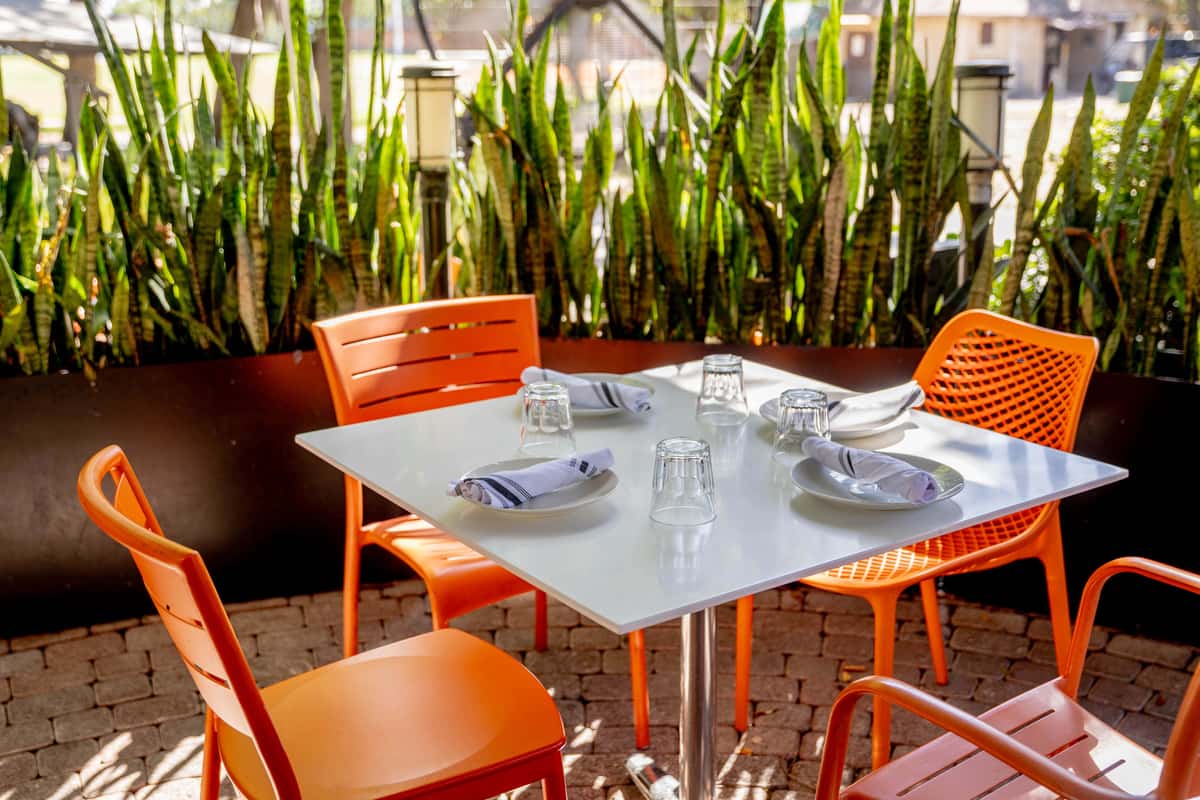
Ambiance influences a corporate event by shaping how attendees perceive the host company and engage with the program. Lighting, décor, sound levels, and architectural character all contribute to the emotional tone of a gathering, whether the goal is a relaxed networking mixer or a polished awards gala.
This attention to atmosphere carries measurable business impact. According to Blackthorn.io, business events often aim for a 3:1 ROI, meaning every dollar invested produces three in influenced value. A venue whose ambiance aligns with the event's purpose strengthens brand perception and makes that return more achievable. Choosing a space with natural character, such as a garden setting can create a memorable impression without heavy décor spending.
Why Does Location and Accessibility Matter?
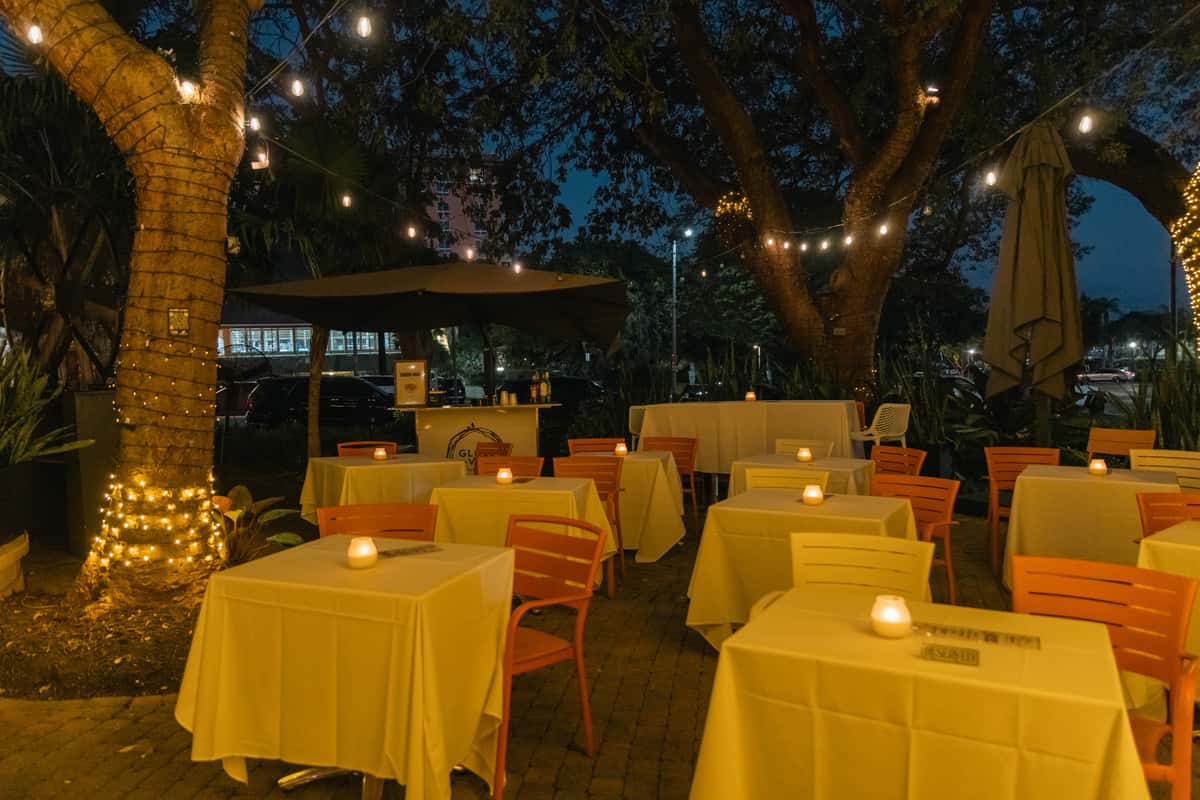
Location and accessibility matter because they directly affect attendance rates and guest satisfaction. A centrally located venue with ample parking, proximity to hotels, and clear signage reduces friction for attendees traveling from different parts of the city or flying in from out of town.
ADA-compliant features are non-negotiable. Designated accessible parking spaces, ramp access, and clearly marked pathways ensure every guest can participate fully. For events in South Florida, outdoor venues in walkable neighborhoods like Coconut Grove offer the added advantage of nearby accommodations and scenic surroundings that extend the experience beyond the event itself. Prioritizing convenience signals professionalism and respect for every attendee's time.
What Food and Beverage Options Should Be Available?
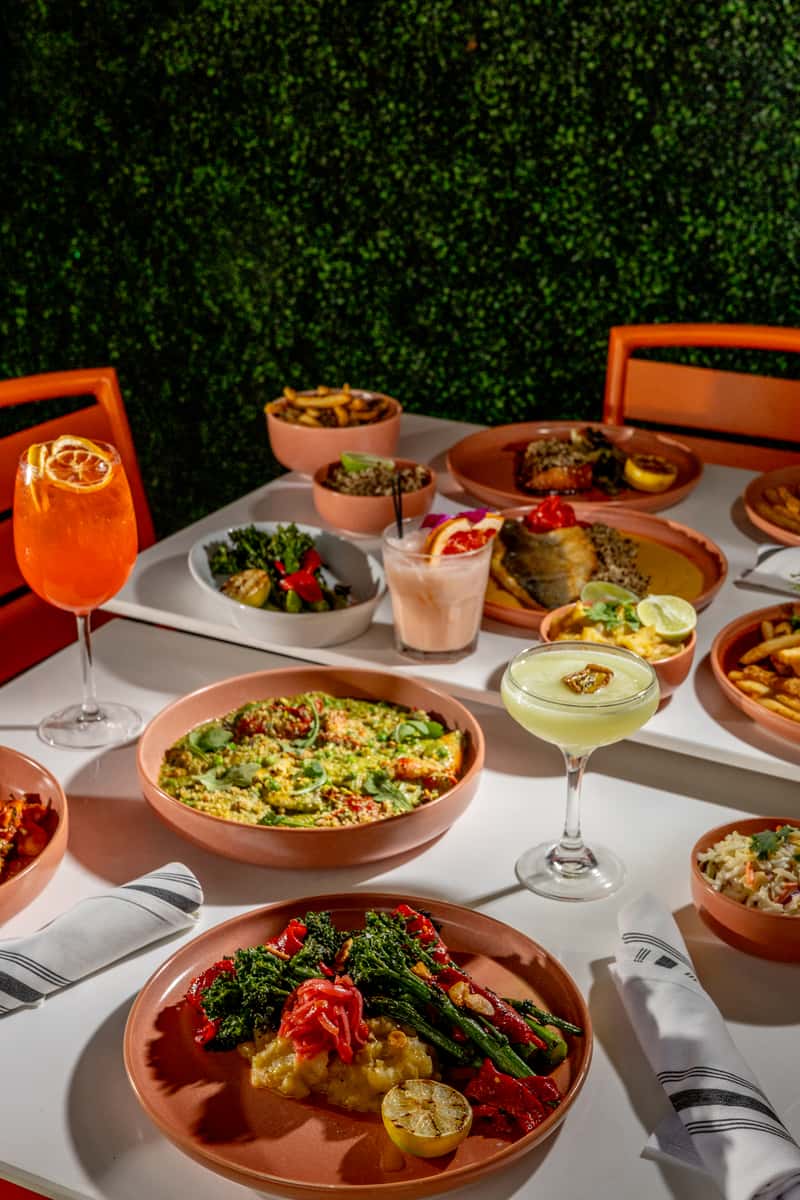
The food and beverage options available should include diverse menu selections that accommodate dietary restrictions, allergen sensitivities, and evolving drinking preferences. According to Statista, food and beverage ranks as the largest expense item for event planners at 73%, making it the single most budget-significant decision in venue selection.
Modern corporate menus should address these key trends:
- Gluten-free, low-calorie, and vegetarian options to cover the most common dietary needs.
- Locally sourced, seasonal ingredients that deliver superior freshness and reduce environmental impact.
- A strong mocktail and non-alcoholic beverage program, since BizBash reports 40% of Americans plan to drink less this year.
A venue with an established culinary team and flexible menu customization eliminates the need for outside catering, simplifying logistics considerably.
With venue criteria defined, the next step is planning the details of a corporate dinner itself.
What Should You Consider When Planning a Corporate Dinner?
When planning a corporate dinner, you should consider booking timelines, menu inclusivity, and seating arrangements. These three factors shape the guest experience and determine whether the event runs smoothly.
How Far in Advance Should You Book a Corporate Dinner?
You should book a corporate dinner at least 3 to 6 months in advance, with large-scale events requiring even earlier planning. According to CLE Productions, the first phase of event planning should begin as early as 12 to 18 months before the event date, which is particularly important for large-scale corporate events. Caterers should be secured 3 to 6 months ahead, especially during busy seasons or for large guest counts.
A practical planning timeline includes:
- 12 to 18 months out: Define the event purpose, set a preliminary budget, and begin venue research.
- 6 to 9 months out: Confirm the venue and lock in the date.
- 3 to 6 months out: Book catering, finalize the menu, and send initial invitations.
- 4 to 6 weeks out: Confirm headcount, arrange seating, and coordinate audiovisual needs.
Starting early gives you leverage to negotiate better rates and secure preferred vendors before calendars fill up.
How Do You Plan a Menu for Diverse Dietary Needs?
You plan a menu for diverse dietary needs by collecting guest preferences early and building options around the most common restrictions. Include gluten-free, vegetarian, and low-calorie selections as baseline offerings, since these represent the most prevalent dietary categories on corporate menus. Allergy-sensitive items, such as nut-free and dairy-free dishes, should be clearly labeled.
Seasonal, locally sourced ingredients simplify this process; farm-to-table menus naturally accommodate a wider range of diets while delivering superior freshness. Offer at least one plant-based entrée and one protein-focused option so every guest has a satisfying choice. Communicating available accommodations on the invitation itself reduces last-minute complications.
What Seating Arrangements Work Best for Corporate Dining?
The seating arrangements that work best for corporate dining depend on the event's purpose. Round tables of 8 to 10 guests encourage open conversation and are ideal for relationship-building dinners or client appreciation events. Long banquet-style tables create a sense of shared occasion and work well for team celebrations. U-shaped configurations suit dinners that include a speaker or presentation segment, allowing all guests a clear sightline.
Regardless of layout, spacing between chairs and pathways should remain comfortable. Mixing departments or placing key clients beside senior leadership creates intentional networking opportunities that rarely happen organically.
With these planning fundamentals in place, the venue you choose can elevate the entire experience.
Why Are Outdoor Venues Popular for Corporate Gatherings?
Outdoor venues are popular for corporate gatherings because they offer natural settings that encourage relaxed interaction, flexible layouts, and a memorable atmosphere that indoor spaces rarely match.
Open-air environments reduce the formality that can stifle genuine conversation at business events. Natural light, fresh air, and scenic surroundings create a welcoming tone that puts attendees at ease, whether the occasion is a team-building event, client dinner, or networking mixer. This relaxed energy often leads to stronger relationship-building outcomes.
Sustainability is another driving factor. According to a 2021 study published in Nature, the event industry contributes as much as 10% of carbon emissions annually, prompting professionals to adopt greener practices. Outdoor venues naturally reduce energy consumption by minimizing artificial lighting and climate control, aligning corporate events with growing environmental priorities.
Weather planning remains the primary consideration for open-air gatherings. Tools like GroupSync allow planners to filter venues by expected weather and temperature, making it easier to compare options suited to a specific event timeline. For regions with warm climates, outdoor venues offer year-round viability that maximizes planning flexibility.
The combination of atmosphere, sustainability benefits, and adaptable space design makes outdoor settings one of the strongest choices for corporate event planners seeking both impact and efficiency. Understanding how these events build lasting business connections adds further value to the venue decision.
How Do Corporate Gatherings Strengthen Business Relationships?
Corporate gatherings strengthen business relationships by creating structured opportunities for face-to-face interaction, trust-building, and shared experiences outside daily workflows. The key mechanisms include employee engagement, client retention, and networking momentum.
How Do Corporate Events Improve Employee Engagement?
Corporate events improve employee engagement by fostering personal connections between colleagues and leadership in relaxed, non-transactional settings. Shared experiences at dinners, retreats, and team-building activities create social bonds that translate into stronger workplace collaboration.
The retention impact is significant. According to Quantum Workplace, 56% of engaged employees and 61% of disengaged employees received a job offer within the past six months, yet only 11% of engaged employees actually interviewed. This gap highlights how engagement, often reinforced through corporate gatherings, reduces the likelihood that employees act on outside opportunities. Investing in events that build genuine connection is one of the most practical ways to protect institutional knowledge and reduce costly turnover.
Why Do In-Person Events Build Stronger Client Relationships Than Digital Communication?
In-person events build stronger client relationships than digital communication because physical presence enables trust signals that screens cannot replicate, such as eye contact, body language, and spontaneous conversation. Client appreciation dinners, networking mixers, and product launches allow businesses to demonstrate commitment beyond the transactional.
These relationship-building outcomes are measurable. According to AudienceView, the average online conversion rate for live events was 12.6%, establishing a benchmark that organizations use to gauge how effectively face-to-face engagement translates into business action. When clients feel personally valued through curated dining experiences or exclusive gatherings, loyalty deepens in ways that email campaigns and video calls simply cannot match.
What Role Does Networking Play at Corporate Gatherings?
Networking plays a central role at corporate gatherings by connecting professionals across departments, industries, and seniority levels in settings designed to encourage open dialogue. Conferences, seminars, and mixers provide structured yet flexible environments where new partnerships form organically.
The value extends beyond exchanging business cards. Shared meals, collaborative workshops, and informal conversations during cocktail hours create the kind of rapport that accelerates deal cycles and referral pipelines. For companies experiencing voluntary turnover near the U.S. average of 13.5%, according to Mercer's 2025 Workforce Turnover Survey cited by Paycor, networking events also serve as internal retention tools by helping employees feel connected to a broader professional community within their organization.
With these relationship-building dynamics in mind, choosing the right venue amplifies every interaction.
How Can an Open-Air Restaurant in Coconut Grove Elevate Corporate Gatherings?
An open-air restaurant in Coconut Grove can elevate corporate gatherings by combining Miami's year-round warm climate with a distinctive natural setting that formal indoor venues cannot match. The sections below cover Glass & Vine's event hosting capabilities and the key takeaways from this guide.
Does Glass & Vine Host Corporate Dinners and Group Events?
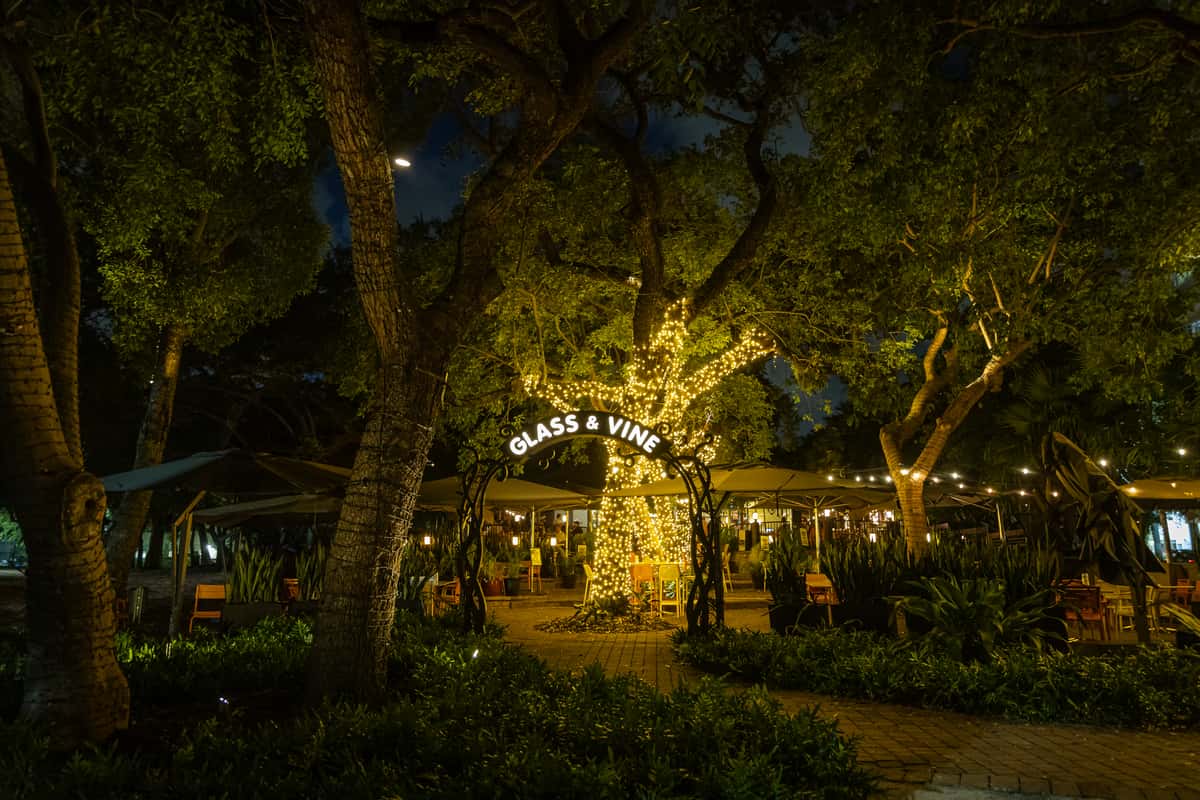
Yes, Glass & Vine hosts corporate dinners and group events in its open-air setting beneath the oak canopy of Peacock Park in Coconut Grove. The venue provides complete corporate event support with A/V equipment, media room capabilities, and flexible scheduling with 6 to 9 months lead time. Miami's mean temperature of 78°F and highs that reach 70°F or above on all but roughly 12 days per year make outdoor dining viable nearly every evening. This consistency allows planners to book open-air corporate dinners without the weather uncertainty that limits outdoor venues in other cities. For organizations seeking a setting where the natural surroundings do the atmospheric heavy lifting, few Miami venues combine park-side charm with full event infrastructure as seamlessly.
What Are the Key Takeaways About Types of Corporate Gatherings?
The key takeaways about types of corporate gatherings center on matching the event format to its strategic objective and selecting a venue that reinforces that goal. Corporate gatherings range from structured board meetings and conferences to relationship-driven formats like client appreciation dinners, networking mixers, and team-building events. Each type demands different layouts, service levels, and ambiance. According to Booking.com for Business, the global corporate events market is projected to grow from $325 billion in 2024 to $595.27 billion by 2029 at a 10.6% CAGR, which signals that companies are investing more deliberately in gatherings that deliver measurable returns. Choosing a venue that aligns food and beverage quality, accessibility, and atmosphere with the event's purpose remains the single most controllable factor in whether a corporate gathering achieves its intended outcome.
With these principles in place, Glass & Vine offers Coconut Grove corporate event planners a venue where open-air ambiance and full-service capabilities meet.