The Philosophy Behind Shared Plates and Communal Dining
The Philosophy Behind Shared Plates and Communal Dining
The philosophy behind shared plates and communal dining is a social dining approach that emphasizes collective experience over individual portions. Communal dining, or commensality, transforms eating from a solitary act into a shared ritual built on trust, generosity, and equality.
This guide covers the historical origins of communal eating, the psychology and relationship science behind sharing food, how the shared plate philosophy shapes menu design and dining environments, and how global culinary traditions bring this practice to life locally.
Shared meals have anchored human culture for millennia. Ancient Mesopotamian banquets reinforced political loyalty, medieval service à la française filled tables with communal platters, and modern diners are now returning to these roots as individually plated entrées give way to collaborative formats.
The psychological effects run deep. Eating the same food at the same time increases trust and cooperation between strangers, while regular communal meals correlate with greater happiness and life satisfaction. Shared plates dissolve social hierarchies by placing every guest on equal footing, and 94% of all diners in 2025 reported they are likely to share meals when dining out.
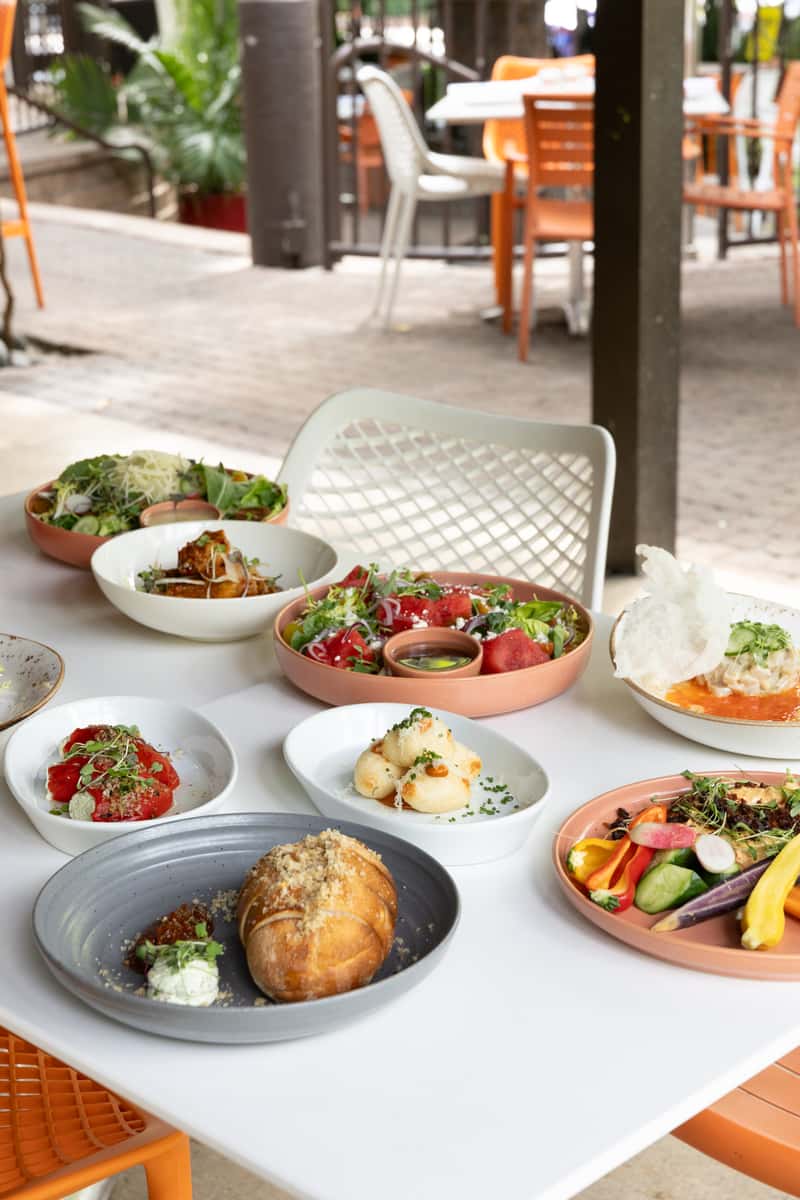
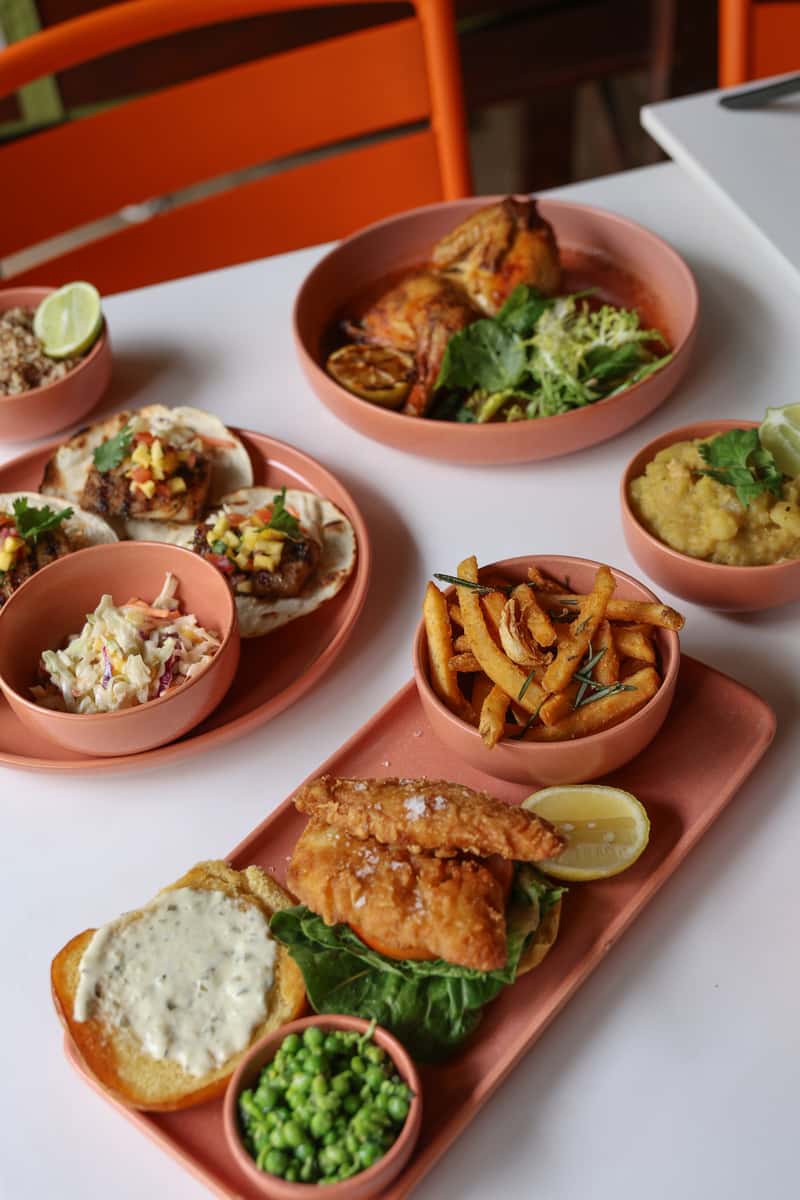
For chefs, this philosophy demands menus built around variety, flexible portions, and seasonal, locally sourced ingredients that hold up as dishes travel the table. The dining environment matters equally; open-air garden settings and casual atmospheres lower formality and encourage guests to linger, pass plates, and connect.
From Spanish tapas to Chinese family banquets to Ethiopian injera spreads, cultures worldwide arrived independently at the same principle. In Coconut Grove, Glass & Vine brings this tradition to life beneath Peacock Park's oak canopy with shareable dishes and an outdoor setting designed for gathering.
Why Has Communal Dining Been Central to Human Culture?
Communal dining has been central to human culture because shared meals create bonds of trust, reinforce social structures, and express collective identity. From ancient feasts to modern restaurants, the history of eating together reveals how this practice evolved.
How Did Ancient Civilizations Use Shared Meals to Build Community?
Ancient civilizations used shared meals to build community by turning food into a ritual of belonging and political unity. In Mesopotamia, collective banquets reinforced loyalty among ruling classes and marked membership in privileged groups. Across early societies, eating from common vessels signaled equality and mutual obligation between participants.
This instinct to connect through food remains deeply embedded. As Chef José Andrés stated, "If you are lost, share a plate of food with a stranger... you will find who you are." That sentiment echoes a truth ancient cultures understood intuitively: the table is where strangers become allies.
What Role Did Communal Feasting Play in Medieval and Renaissance Eras?
Communal feasting played a central role in medieval and Renaissance eras as a tool of diplomacy, celebration, and social order. Great halls hosted long shared tables where nobility and guests ate from common platters, reinforcing bonds of allegiance and hospitality.
Service à la française defined this period's approach to dining. Multiple dishes arrived simultaneously for the entire table, encouraging guests to serve one another and share freely. This format persisted as the dominant European dining style for centuries, only giving way to individualized plate service in the mid-1800s. The shift was significant; when each person received a separate plate, something communal was quietly lost.
How Did Modern Restaurant Culture Shift Away from Shared Dining?
Modern restaurant culture shifted away from shared dining through the rise of individually plated entrées, which prioritized personal choice over collective experience. As fine dining adopted service à la russe, the expectation became one dish per person, consumed independently.
Yet this trend is reversing. According to the Auguste Escoffier School of Culinary Arts, approximately 55% of Americans preferred dining out at restaurants over ordering takeout in 2024, up from 43% in 2023. Meanwhile, cultures that never abandoned communal formats offer a counterpoint; in Chinese dining tradition, sharing food from common plates remains a central practice reinforcing family unity and social harmony. Independent restaurants in Miami have shown sustained spending growth relative to chains throughout 2025, driven by consumer preference for unique, local experiences that often center on shareable menus.
The historical arc is clear: what began at ancient tables is finding renewed purpose in contemporary dining rooms.
What Does the Philosophy of Breaking Bread Together Really Mean?
The philosophy of breaking bread together means choosing connection over isolation at the table. It transforms eating from a solitary act into a shared ritual built on trust, generosity, and equality.
How Does Sharing Food Create Trust and Vulnerability Among Diners?
Sharing food creates trust and vulnerability among diners by removing the safety net of individual portions and requiring a mutual openness to the experience. When guests reach for the same dish, they silently agree to let their guard down.
This dynamic is well supported by research. Experimental studies from the University of Chicago show that eating the same food at the same time increases trust and facilitates cooperation between strangers through mimicry in consumption. The shared plate format, much like tapas-style dining, encourages people to slow down, talk, and try new things together, which stands in contrast to the "one plate per person" setup. That willingness to try something unfamiliar, guided by a dining companion's recommendation, is a small but meaningful act of vulnerability.
Why Is the Act of Passing Plates Considered a Form of Generosity?
The act of passing plates is considered a form of generosity because it requires each person to prioritize the group's enjoyment over their own. Offering the last bite or serving someone else before yourself are quiet, instinctive gestures of care.
Unlike ordering individually, where each diner controls their own experience, communal plates make giving unavoidable. Every rotation of a dish around the table is a micro-decision to share rather than keep. This rhythm of giving and receiving builds goodwill organically, often without anyone consciously recognizing it. For most diners, this is what makes a shared meal feel warmer than eating the same food from separate plates.
How Does Communal Dining Dissolve Social Hierarchies at the Table?
Communal dining dissolves social hierarchies at the table by placing every guest on equal footing around a shared spread. As The MIT Press Reader notes, eating from the same table, plate, or bowl expresses social solidarity, unity, and equality in subtle yet powerful ways across cultural contexts.
A communal table, generally larger than a singular table, is intentionally designed to encourage this kind of connection. The format leaves no room for one person's order to signal status over another's. This leveling effect resonates strongly with modern diners. According to a 2025 American Express report, 94% of all diners and 97% of Gen Z diners reported they are likely to share their meal when dining out. That near-universal preference suggests communal dining is not just a trend; it reflects a deep desire for egalitarian social experiences.
With shared plates redefining what it means to gather around a table, the differences between this approach and traditional individual entrées become even more striking.
Why Are Shared Plates Different from Traditional Individual Entrées?
Shared plates are different from traditional individual entrées because they transform dining from a solo activity into a collaborative experience built on interaction, choice, and connection. Where an individual entrée isolates each guest's meal, shared plates require coordination and communication at the table.
This distinction goes beyond portion format. A study published in Psychological Science found that people eating from shared plates cooperated more in social dilemmas and negotiations than those eating from separate plates, driven by increased perceived coordination. The simple act of reaching for the same dish shifts the dynamic from parallel eating to genuine engagement.
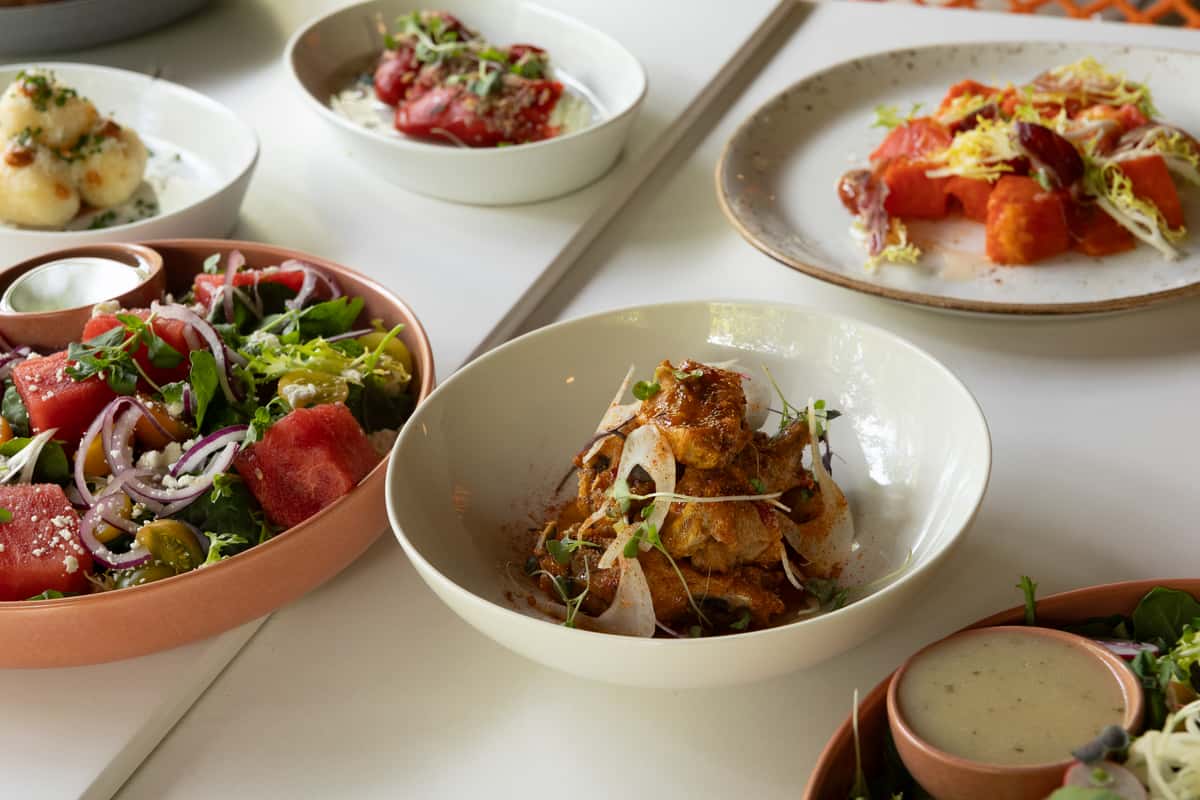
Individual entrées assign one protein, one starch, and one vegetable per person. Shared plates, by contrast, invite the table to collectively explore a wider range of flavors, textures, and preparations. That variety encourages conversation as diners recommend bites, negotiate the last piece, and discover new preferences together. For restaurants focused on connection over convention, this format is far more aligned with how people naturally bond over food.
How Does Sharing Food Strengthen Relationships and Connection?
Sharing food strengthens relationships and connection by creating moments of cooperation, conversation, and collective experience. The sections below explore how shared plates deepen bonds between couples, families, and larger groups.
How Do Shared Plates Encourage Conversation Between Couples?
Shared plates encourage conversation between couples by transforming a meal into an interactive experience rather than a passive one. When two people choose dishes together, negotiate portions, and pass plates back and forth, every exchange becomes a small act of communication. This natural rhythm of offering and receiving keeps dialogue flowing without the awkward silences that can settle over individually plated meals. According to research highlighted by Gastropod, eating the same food at the same time increases trust and facilitates cooperation, even between strangers. For couples, that effect is amplified; the collaborative act of sharing creates a sense of partnership that extends well beyond the table.
How Does Family-Style Dining Help Families Bond Over a Meal?
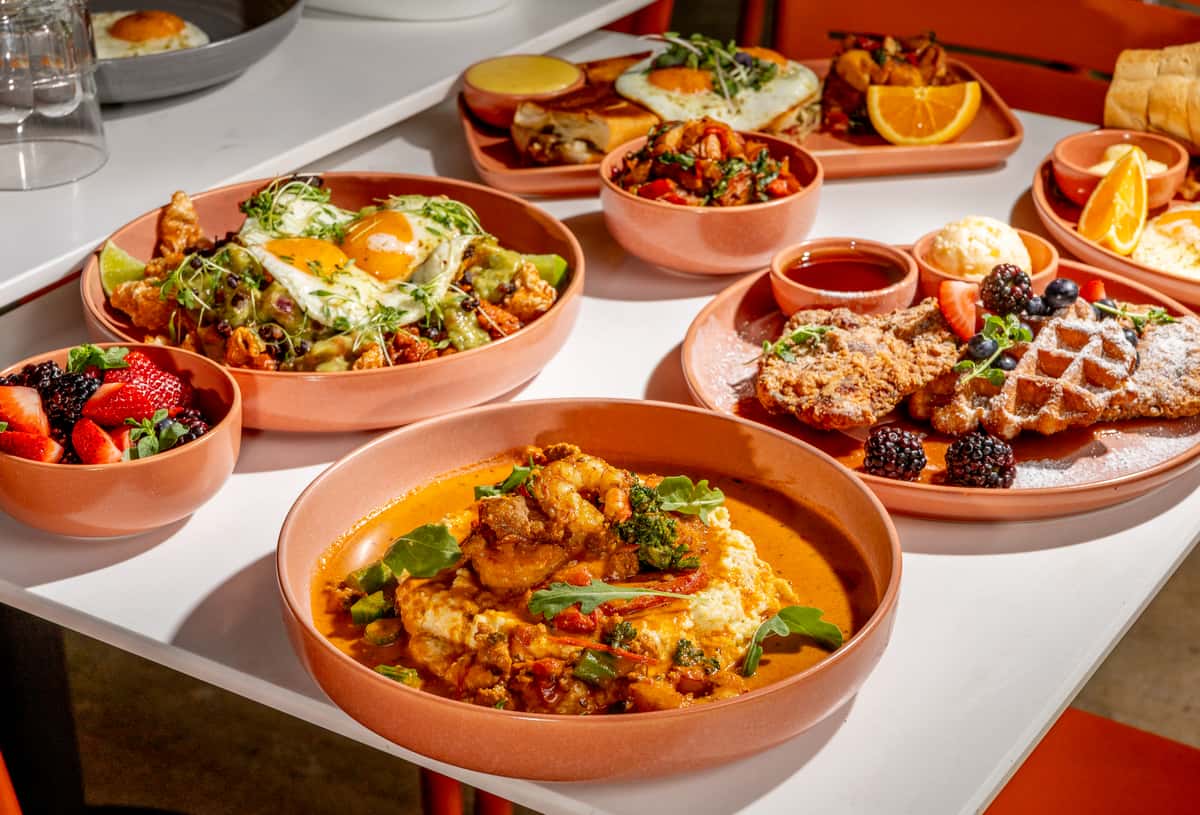
Family-style dining helps families bond over a meal by placing everyone in an active, participatory role. Parents serve children, siblings reach across the table, and each person contributes to the shared experience. This format encourages presence. Rather than waiting for individual plates to arrive, families engage immediately, passing bowls and discussing what to try next. The result is a meal that feels less like a transaction and more like a ritual. For families with children of different ages, the variety of dishes accommodates different preferences while still anchoring everyone around the same table and the same moment.
Why Do Group Dinners with Shared Plates Create Lasting Memories?
Group dinners with shared plates create lasting memories because they build a collective narrative around the meal. When friends or colleagues order together, debate flavors, and react to dishes in real time, the experience becomes a shared story. According to research from the Religious Studies Center at BYU, collective banquets were a ubiquitous feature of Mesopotamian political ideology, used to maintain unity within privileged groups. That ancient impulse persists: communal eating binds a group's identity to a specific moment and place. A table full of shared plates naturally generates more spontaneity, laughter, and conversation than individually plated courses, making the evening far more likely to be remembered and retold.
With the emotional power of shared meals established, the psychological mechanisms behind these bonds offer even deeper insight.
What Psychological Effects Does Communal Dining Have on People?
Communal dining produces measurable psychological effects, from neurochemical bonding responses to reduced stress levels. The following sections explore how eating together triggers oxytocin release and why sharing food cultivates belonging.
How Does Eating Together Trigger Oxytocin and Social Bonding?
Eating together triggers oxytocin and social bonding through the synchronized, face-to-face rituals that communal meals naturally create. Commensality, the act of eating together, is studied across disciplines and considered critical for social communion, order, health, and well-being, according to research published by the National Institutes of Health. When people share food in close physical proximity, the brain's reward system responds to coordinated social cues like passing dishes, making eye contact, and laughing together. These repeated micro-interactions stimulate oxytocin release, reinforcing feelings of trust and closeness. For restaurants designed around shared plates, this neurochemical response is not incidental; it is built into the experience.
Why Does Sharing Food Reduce Stress and Create a Sense of Belonging?
Sharing food reduces stress and creates a sense of belonging because the act itself signals safety, acceptance, and mutual care. Offering someone a portion from your plate is an implicit gesture of inclusion, which lowers cortisol-driven anxiety responses. Research from the University of Oxford indicates that the more often people eat with others, the more likely they are to feel happy and satisfied with their lives. This effect compounds over time: regular shared meals build relational consistency, turning acquaintances into trusted companions. In a setting like Coconut Grove, where outdoor gatherings feel unhurried and natural, communal dining becomes a reliable pathway to emotional well-being.
How Does the Shared Plate Philosophy Shape Menu Design?
The shared plate philosophy shapes menu design by prioritizing variety, flexible portions, and ingredients that invite communal participation. Below, we explore how local sourcing, portion strategy, and seasonal cooking each contribute to a menu built for sharing.
Why Are Locally Sourced Ingredients Important for Shareable Dishes?
Locally sourced ingredients are important for shareable dishes because they deliver peak freshness and distinct regional character that elevate communal plates. When a dish travels the table, every bite needs to hold up; vibrant, just-harvested produce and proteins accomplish this naturally. Local sourcing also creates a sense of place, connecting diners to the community around them. For a restaurant like Glass & Vine, where culinary creations showcase a bounty of locally sourced ingredients, this approach turns each shared plate into a reflection of South Florida's flavors. Prioritizing local suppliers remains one of the most effective ways to ensure shareable dishes feel intentional rather than generic.
How Do Chefs Balance Portion Size and Variety on a Shared Menu?
Chefs balance portion size and variety on a shared menu by designing dishes that are generous enough to pass around yet compact enough to encourage ordering multiple plates. The goal is a table filled with contrasting flavors and textures, so guests can sample widely without committing to a single large entrée. Smaller, focused portions reduce food waste while increasing perceived value. This format also gives kitchens creative freedom to rotate offerings frequently. For most shared-plate menus, three to five dishes per two guests is the sweet spot, allowing the table to experience a full range of the chef's vision without overwhelming anyone.
Why Does Seasonal Cooking Complement the Communal Dining Style?
Seasonal cooking complements the communal dining style because it introduces natural variety and a sense of occasion to the table. When menus rotate with the seasons, each visit offers something new to share and discuss, keeping the communal experience dynamic. This approach mirrors historical precedent: service à la française, where multiple dishes were served simultaneously for communal sharing, was the dominant European dining style until service à la russe replaced it in the mid-19th century. That older tradition relied on seasonal abundance to fill the table with diverse options. Today, seasonal menus give chefs a built-in framework for creating the kind of varied, shareable spreads that make communal dining compelling.
With menu design rooted in sharing, the dining environment itself plays an equally important role.
What Role Does the Dining Environment Play in Communal Eating?
The dining environment plays a direct role in how willingly guests engage with communal eating. Open-air settings and relaxed atmospheres both shape the way people interact with shared plates.
Why Do Open-Air and Garden Settings Enhance Shared Dining?
Open-air and garden settings enhance shared dining by removing the physical and psychological barriers that enclosed spaces create. Natural light, fresh air, and surrounding greenery encourage guests to linger longer, which naturally leads to more plates being passed and more conversations unfolding. Outdoor dining also softens the formality that can make people hesitant to reach across a table or sample from a neighbor's dish. When the space itself feels expansive and unhurried, the meal follows that rhythm. According to the University of Oxford, the more often people eat with others, the more likely they are to feel happy and satisfied with their lives. Garden settings amplify this effect by grounding the experience in sensory richness beyond what's on the plate.
How Does Casual Atmosphere Encourage Guests to Share More Freely?
Casual atmosphere encourages guests to share more freely by lowering the social expectations that formal dining imposes. When a restaurant signals relaxation through its layout, noise level, and service style, diners feel permission to eat with their hands, try unfamiliar dishes, and offer bites to the table without overthinking etiquette. This mirrors the tapas tradition, where sharing encourages diners to slow down, talk, and try new things together rather than staying confined to a single entrée. Formality creates invisible boundaries; a relaxed setting dissolves them. For communal dining to truly work, the space must tell guests that connection matters more than convention. Understanding how environment shapes sharing reveals why certain restaurants become gathering places for their communities.
How Do Different Cuisines Around the World Embrace Shared Plates?
Different cuisines around the world embrace shared plates through deeply rooted traditions that treat communal eating as a cultural cornerstone rather than a mere dining format. From Spanish tapas bars to Chinese family banquets, the practice of placing dishes at the center of the table reflects shared values of generosity, connection, and collective enjoyment.
Spanish tapas culture encourages diners to slow down, talk, and try new things together, offering a deliberate contrast to the "one plate per person" setup. Small plates arrive in waves, turning a meal into a prolonged social ritual where conversation matters as much as the food.
In Chinese dining culture, sharing food from common plates is a central practice that reinforces family unity and social harmony, according to research published in PubMed. Dishes are placed on a rotating centerpiece, and serving others before yourself signals respect and care.
Middle Eastern mezze spreads follow a similar communal logic. Platters of hummus, flatbread, and grilled vegetables are arranged for the entire table, with no single diner claiming ownership of any dish. Japanese izakaya dining mirrors this approach through small shared plates paired with drinks, fostering an informal atmosphere where colleagues and friends connect.
Ethiopian cuisine takes shared plates further by serving stews and salads on a single large injera flatbread, with diners eating directly from the communal surface. The practice of gursha, hand-feeding another person a morsel of food, transforms the meal into an act of affection. Latin American and Caribbean traditions also center on family-style presentations, with large platters of rice, beans, and roasted meats passed freely among guests.
What unites these traditions is a common conviction: food tastes better when experienced collectively. Each culture developed its own rituals, ingredients, and table manners, yet all arrived at the same philosophy of placing connection above individual portions. Understanding how sharing food resonates globally makes the communal dining experience in any setting feel both timeless and intentional.
How Can You Practice the Art of Communal Dining in Coconut Grove?
You can practice the art of communal dining in Coconut Grove by choosing restaurants that prioritize shareable menus, open-air settings, and a relaxed atmosphere built for connection. Glass & Vine brings this philosophy to life beneath Peacock Park's oak canopy.
How Does Glass & Vine's Shareable Menu and Open-Air Garden Setting Bring the Communal Dining Philosophy to Life?
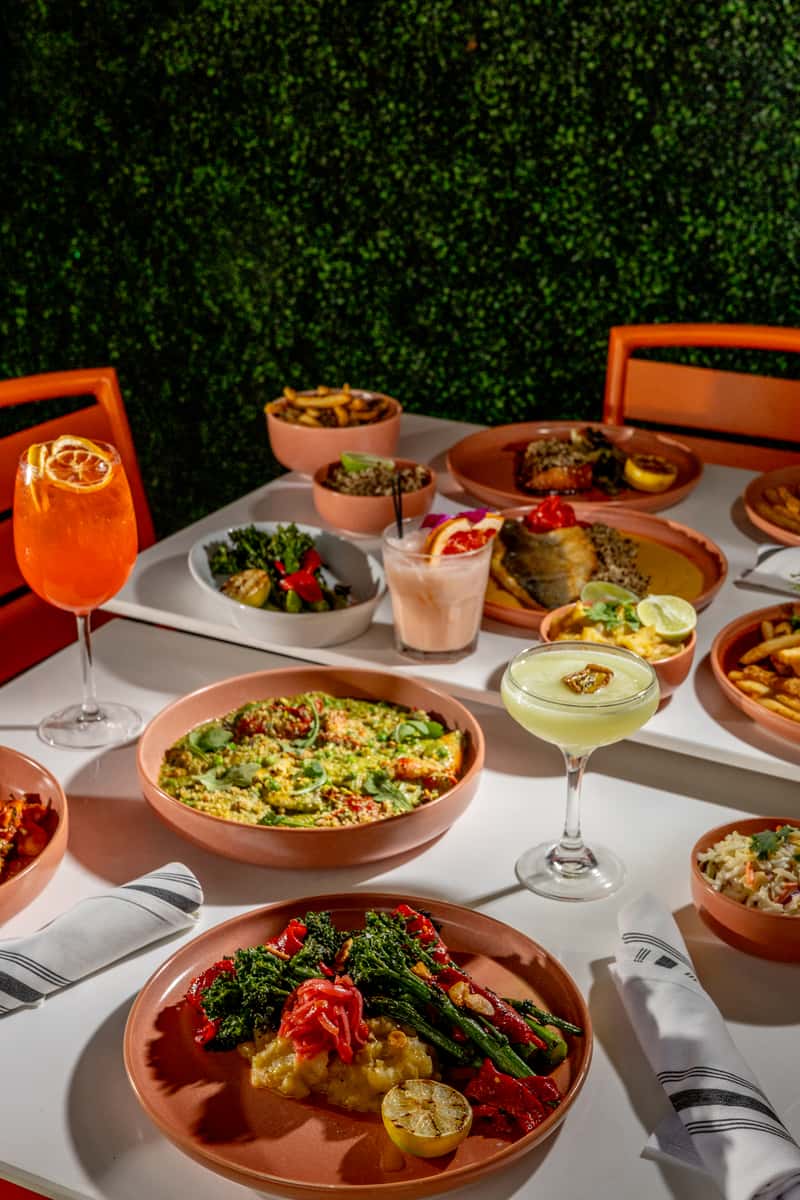
Glass & Vine's shareable menu and open-air garden setting bring the communal dining philosophy to life by pairing locally sourced, sharing-focused dishes with a lush outdoor environment designed for lingering and conversation. Nestled beneath the canopy of Peacock Park, the restaurant creates what the brand calls "a secret garden by the sea," where pretense falls away and the table becomes a gathering point.
Coconut Grove residents favor restaurants that offer outdoor seating, consistent quality, and shareable plates. Glass & Vine meets each of these preferences with culinary creations built for passing and sampling across the table. The playground-adjacent setting welcomes families, while the romantic garden atmosphere draws couples and groups alike. Every element, from the breezy patio to the dog-friendly space, reinforces the idea that a meal shared openly is a meal enjoyed more fully.

What Are the Key Takeaways About the Philosophy Behind Shared Plates and Communal Dining?
The key takeaways about the philosophy behind shared plates and communal dining center on connection, trust, and cultural tradition. Sharing food is not simply a dining format; it is a deeply rooted human practice that strengthens relationships and dissolves social barriers.
- Communal dining builds trust, with research showing that eating the same food simultaneously increases cooperation between strangers.
- Shared plates encourage slower, more conversational meals compared to individual entrées.
- The philosophy spans cultures and centuries, from ancient collective banquets to modern tapas-style menus.
- Open-air and casual environments amplify the communal effect by reducing formality.
- According to a 2025 American Express report, 94% of all diners and 97% of Gen Z diners said they are likely to share meals when dining out.
For those seeking this experience in Coconut Grove, Glass & Vine offers a setting where the shared plate philosophy feels both intentional and effortless.