
Pros and Cons Outdoor Event Venues Miami
Pros and Cons Outdoor Event Venues Miami
Outdoor event venues in Miami are open-air spaces that use the city's tropical climate, waterfront access, and natural scenery as the foundation for weddings, corporate gatherings, and social celebrations. Each venue type carries distinct advantages and real logistical challenges that planners must weigh before booking.
This guide covers the core benefits of hosting outdoors, the weather and regulatory risks that complicate planning, the venue types available across Miami, seasonal timing and budgeting considerations, and how to choose the right setting in Coconut Grove.
Natural scenery, flexible capacity, and reduced decoration costs rank among the strongest reasons planners select open-air locations. Waterfront backdrops along Biscayne Bay, mature garden canopies, and coastal breezes create distinctive guest experiences and photography opportunities compared with enclosed ballrooms.
Miami's subtropical climate introduces serious counterweights. Annual rainfall exceeds 57 inches, summer thunderstorms arrive with little warning, and hurricane season stretches from June through November. Noise ordinances restrict certain sound activities after 11 p.m., some Miami Beach special-event permit applications require 60 to 90 days of lead time, and perishable food demands strict temperature-controlled service, especially when outdoor highs surpass 90°F.
The city offers five primary venue formats: waterfront properties, garden and park settings, rooftop terraces, beach locations, and private estate courtyards. Capacities range from intimate 10-person penthouses to park lawns accommodating thousands.
Dry-season months from November through April deliver the most reliable conditions, with January averaging just 2.33 inches of rain and a comfortable mean temperature of 67.4°F. Booking during peak season requires early permit submission and higher venue pricing, while wet-season events demand rain backup infrastructure as a baseline budget item.
Venues combining garden-canopy shade, on-site kitchen facilities, and hybrid indoor-outdoor layouts address the widest range of these challenges in a single location.
Why Do Event Planners Choose Outdoor Venues in Miami?
Event planners choose outdoor venues in Miami because the city combines year-round warm weather, diverse natural backdrops, and a thriving tourism economy that draws millions of visitors annually. Miami's outdoor settings range from waterfront terraces and botanical gardens to rooftop spaces and beachfront properties, each offering distinct advantages for weddings, corporate gatherings, and social celebrations. The Greater Miami Convention & Visitors Bureau reported 28.3 million visitors and $32.2 billion in total economic impact for 2025, highlighting the scale of Miami's tourism economy. That visitor volume may contribute to demand for memorable, photogenic venues, and open-air settings can deliver the tropical atmosphere guests associate with South Florida. With options spanning intimate courtyards for 10 guests to expansive park lawns accommodating thousands, outdoor venues in Miami give planners the flexibility to match almost any event scale, style, or budget to a natural setting that indoor spaces simply cannot replicate.
What Are the Main Pros of Outdoor Event Venues in Miami?
The main pros of outdoor event venues in Miami include natural scenery, lower decoration costs, flexible capacity, superior photography settings, natural ventilation, and a relaxed social atmosphere. Each advantage plays a distinct role in elevating the overall event experience.
How Does Natural Scenery Enhance the Guest Experience?
Natural scenery enhances the guest experience by providing a built-in backdrop that no interior designer can replicate. Tropical foliage, ocean views, and mature tree canopies create an immersive setting that engages all the senses from the moment guests arrive. In Miami, venues surrounded by palm trees, flowering plants, and waterfront vistas offer a sense of place that resonates with both locals and visitors. This connection to the environment sets a tone of discovery and celebration that enclosed ballrooms simply cannot match. For event planners seeking a memorable first impression, a scenic outdoor setting often does more than any custom installation.
How Do Outdoor Venues Reduce Decoration and Design Costs?
Outdoor venues reduce decoration and design costs by supplying a visually rich environment that requires minimal enhancement. Lush gardens, waterfront views, and canopy-shaded lawns serve as natural decor, eliminating the need for extensive floral arrangements, fabric draping, or themed backdrops. Planners working with open-air spaces in Miami frequently redirect budget from aesthetics toward catering or entertainment. While some lighting and signage may still be needed, the savings on structural decor can be substantial. This cost efficiency is one of the most practical advantages for corporate events and weddings alike, where visual impact and budget discipline must coexist.
How Does Open-Air Space Allow More Flexible Guest Capacity?
Open-air space allows more flexible guest capacity by removing the fixed walls and ceiling constraints of indoor venues. Outdoor layouts can expand or contract based on attendance, accommodating everything from intimate gatherings to large receptions. According to the National Weather Service, Miami's winter season offers cooler temperatures and lower humidity, making the dry months potentially more comfortable for open-air gatherings. Modular setups with movable furniture, tents, and staging areas let planners adjust the footprint as RSVPs change. This adaptability is especially valuable for events where final headcounts shift close to the date.
How Do Waterfront and Garden Settings Improve Event Photography?
Waterfront and garden settings improve event photography by offering natural light, layered depth, and vibrant color palettes throughout the day. Golden-hour shots along Biscayne Bay or beneath a canopy of mature oaks produce images that feel effortless yet striking. Photographers benefit from varied textures, including stone pathways, tropical plants, and reflective water surfaces, all within a single venue. These elements create dimensional, magazine-quality compositions without requiring elaborate photo staging. For hosts who prioritize shareable, visually compelling event content, few indoor venues can compete with the photographic range a well-situated outdoor setting in Miami provides.
How Does Natural Ventilation Benefit Large Gatherings in Miami?
Natural ventilation benefits large gatherings in Miami by circulating fresh air across open spaces, reducing the stuffiness that often plagues enclosed ballrooms during high-attendance events. Coastal breezes, particularly at waterfront and garden venues in Coconut Grove, help regulate perceived temperature and improve overall guest comfort. Open-air airflow also disperses cooking aromas and perfumes more effectively, keeping the environment pleasant as crowds grow. For outdoor events, this passive air movement may improve comfort during the cooler dry season. Natural ventilation remains one of the most underappreciated advantages outdoor venues offer for large-format gatherings.
How Do Outdoor Venues Create a More Relaxed Social Atmosphere?
Outdoor venues create a more relaxed social atmosphere by removing the formality that enclosed spaces tend to impose. Open sightlines, ambient sounds from nature, and the freedom to move between distinct zones encourage organic conversation and mingling. Guests at garden or waterfront settings instinctively adopt a more casual, approachable posture compared to seated ballroom configurations. This effect is amplified in Miami, where the cultural expectation around outdoor socializing already favors warmth and openness. For hosts planning networking events, rehearsal dinners, or milestone celebrations, that relaxed energy often leads to deeper guest engagement and a more memorable occasion overall.
Understanding these advantages sets the stage for weighing the real challenges outdoor venues present.
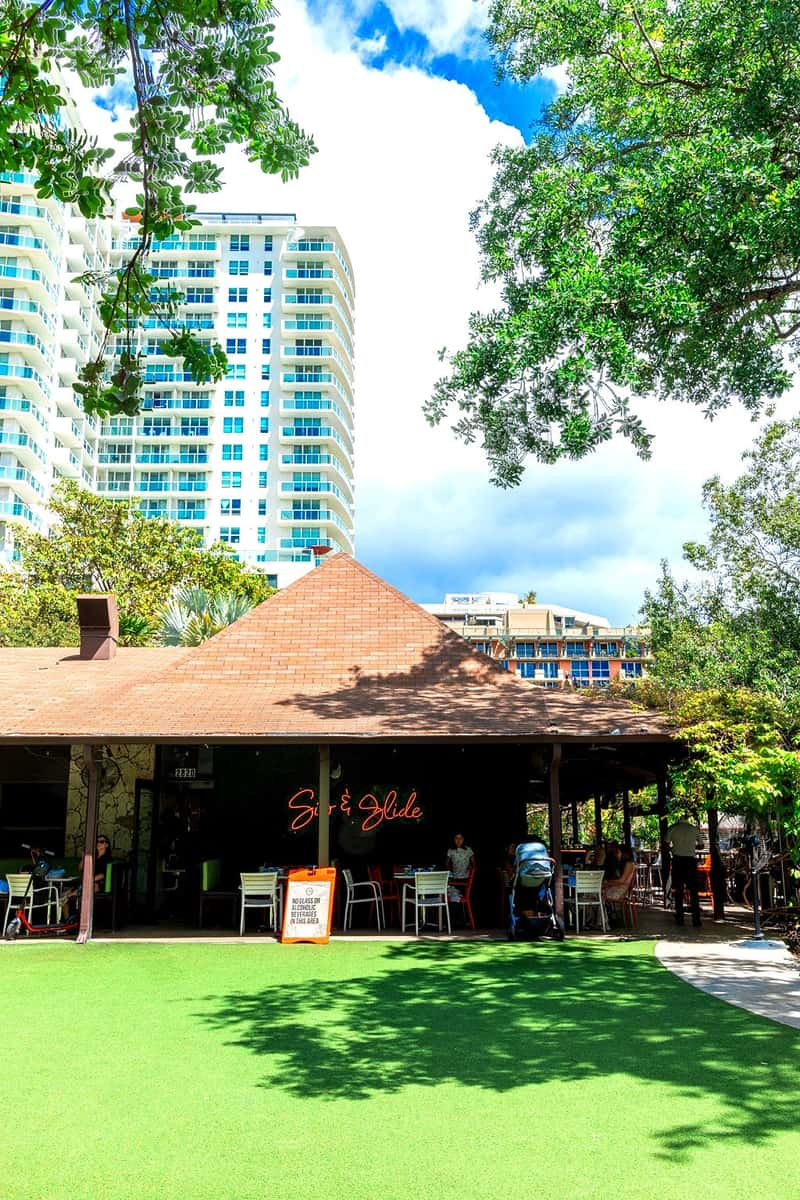
What Are the Main Cons of Outdoor Event Venues in Miami?
The main cons of outdoor event venues in Miami include unpredictable rain, extreme heat and humidity, hurricane season scheduling risks, noise ordinance restrictions, insects and wildlife, and limited climate control for food service.
How Does Miami's Unpredictable Rain Season Affect Outdoor Events?
Miami's unpredictable rain season affects outdoor events by introducing sudden downpours that can disrupt timelines, damage decor, and force last-minute venue changes. According to NOAA's 1991–2020 climate normals, Miami receives 57.18 inches of precipitation annually, with the heaviest months concentrated between June and October; September alone averages 8.45 inches. Summer thunderstorms arrive with little warning, often in short, intense bursts that soak unprotected setups.
Planners should account for these risks by securing tent rentals, identifying covered backup spaces, and building weather-check protocols into day-of logistics. Even during the drier winter months, isolated showers remain possible, so a rain contingency plan is never optional for outdoor events in Miami.
How Do High Heat and Humidity Impact Guest Comfort?
High heat and humidity impact guest comfort by raising the risk of heat-related illness and general fatigue during outdoor events. OSHA identifies five factors that influence heat exposure: physical activity, air temperature, humidity, sunlight, and air movement. The agency recommends water, rest, and shade as the primary prevention strategy.
Miami's summer highs average in the upper 80s with dew points in the lower-to-middle 70s, creating oppressive conditions for guests standing or dancing outdoors. Event planners should provide shaded seating areas, misting stations, and ample cold beverages. Scheduling events during evening hours, when temperatures drop slightly, is one of the most practical ways to reduce heat-related discomfort for attendees.
How Does Hurricane Season Limit Outdoor Event Scheduling?
Hurricane season limits outdoor event scheduling by creating a six-month window of elevated risk from June 1 through November 30. According to the National Hurricane Center's 1991–2020 data, an average Atlantic season produces 14 named storms, 7 hurricanes, and 3 major hurricanes, with peak activity centered on September 10.
This uncertainty forces planners to weigh cancellation policies, insurance costs, and vendor flexibility when booking between mid-August and mid-October. Many clients avoid this window entirely, concentrating demand into the dry season and driving up venue pricing from November through April. For those who do book during hurricane season, comprehensive event cancellation insurance and flexible vendor contracts become essential budget line items.
How Do Noise Ordinances and Permits Restrict Outdoor Venues?
Noise ordinances and permits restrict outdoor venues by imposing sound limits, curfews, and administrative timelines that narrow what planners can execute. Miami-Dade County's noise ordinance makes it unlawful to produce "unreasonably loud, excessive, unnecessary or unusual noise," and operating a sound-producing device between 11 p.m. and 7 a.m. that is audible from 100 feet away constitutes prima facie evidence of a violation.
Permit requirements add further constraints:
- Miami Beach charges a $352 application fee plus security deposits of $2,500 to $20,000 based on estimated attendance.
- Miami Beach special events on public property with 150 or more attendees that require City services must be submitted 90 days before first load-in.
- Private-property events require a 60-day submission window.
These lead times and costs make spontaneous or late-planned outdoor events nearly impossible in Miami.
How Do Insects and Wildlife Create Challenges at Outdoor Events?
Insects and wildlife create challenges at outdoor events by causing guest discomfort and requiring proactive mitigation strategies. The Centers for Disease Control and Prevention notes that mosquitoes bite during both day and night, recommending EPA-registered insect repellents, loose-fitting long-sleeved clothing, and permethrin-treated gear for protection.
Miami's warm, humid climate sustains mosquito populations year-round, particularly near standing water. Planners should coordinate professional pest treatments before the event, eliminate standing water on-site, and provide repellent stations for guests. Beyond mosquitoes, iguanas and raccoons are common in garden and waterfront settings, sometimes disrupting food stations or startling guests. Choosing a venue with experienced grounds management makes a meaningful difference in controlling these encounters.
How Does Limited Climate Control Affect Food and Beverage Service?
Limited climate control affects food and beverage service by accelerating spoilage and creating strict temperature management requirements. USDA Food Safety and Inspection Service guidance states that perishable food must be refrigerated within two hours, or within one hour when temperatures exceed 90°F. Cold items must stay at 40°F or below, while hot food must remain at 140°F or warmer.
These thresholds are routinely tested during Miami's warmer months, where daytime temperatures frequently surpass 90°F. Caterers need commercial-grade warming trays, insulated coolers, and shaded service stations to maintain compliance. For planners weighing these logistics, venues with on-site kitchen infrastructure significantly reduce food safety risks compared to fully open-air locations.
With these challenges in mind, understanding the types of outdoor venues available in Miami helps planners match their priorities to the right setting.
What Types of Outdoor Event Venues Are Available in Miami?
The types of outdoor event venues available in Miami include waterfront properties, garden and park settings, rooftop terraces, beach and oceanfront locations, and private estates with courtyards.
Waterfront and Bayfront Venues
Waterfront and bayfront venues position events along Biscayne Bay or the Miami River, offering panoramic water views as a natural backdrop. According to a University of Miami-hosted Coconut Grove capacity sheet, the Courtyard by Marriott Miami Coconut Grove provides over 10,000 square feet of indoor and outdoor event space "across from the sparkling waters of Biscayne Bay," including a 3,600-square-foot Poolside Patio and reception capacities up to 250. These settings suit corporate receptions, rehearsal dinners, and cocktail events where the waterline creates a visual anchor. Bayfront venues in Coconut Grove are particularly sought after because the bay breeze provides natural cooling during warmer months.
Garden and Park-Setting Venues
Garden and park-setting venues use tropical landscaping, mature tree canopies, and manicured lawns as built-in decor. Fairchild Tropical Botanic Garden, for example, lists spaces ranging from Phillips Courtyard at 40 guests to Bailey Palm Glade at 275, with daytime rates starting at $2,000 for intimate gatherings. Shaded amphitheaters framed by coconut palms and Florida limestone offer ceremony-ready settings without heavy rental costs. For planners who want the lush, garden-canopy experience paired with dining, venues nestled within parks like Peacock Park in Coconut Grove blend nature and hospitality seamlessly.
Rooftop and Terrace Venues
Rooftop and terrace venues elevate events above street level, delivering skyline views and open-air circulation. A University of Miami Travel Management newsletter notes that a South Beach hotel offers rooftop settings that can host up to 150 people, along with intimate penthouse venues for up to 10 guests. Covered terraces provide partial weather protection while maintaining the outdoor atmosphere. These elevated spaces work especially well for cocktail hours, milestone celebrations, and brand activations where the cityscape becomes part of the visual experience.
Beach and Oceanfront Venues
Beach and oceanfront venues place events directly on sand or oceanside platforms along Miami's Atlantic coastline. Miami-Dade County's official venue listings include beaches, cabanas, and pavilions as bookable outdoor rental spaces, with selected facilities accommodating groups ranging from 50 to 5,000. The barefoot, casual atmosphere suits weddings, product launches, and sunset receptions. However, beach venues typically require additional permitting, security deposits, and square-footage fees. Planners should also account for wind, sand, and tidal factors that can affect setup logistics and guest comfort.
Estate and Courtyard Venues
Estate and courtyard venues offer enclosed outdoor spaces with architectural character, often surrounded by historic walls, fountains, or private gardens. Courtyards provide an intimate, wind-sheltered atmosphere while remaining fully open-air. Fairchild's venue page uses terms like courtyard, patio, sand garden, and garden house, reflecting the variety within this category. Private estates in neighborhoods such as Coral Gables and Coconut Grove frequently feature lush tropical landscaping with built-in lighting and seating areas. For events that need the ambiance of outdoors with more controlled sightlines and privacy, estate and courtyard settings strike a practical balance.
Knowing which venue type fits your event is the first step; Miami's climate shapes how each performs year-round.
How Does Miami's Climate Affect Outdoor Event Planning Year-Round?
Miami's climate affects outdoor event planning year-round by creating two distinct seasons: a dry winter ideal for open-air gatherings and a wet summer that demands rain contingency strategies. The sections below cover the best booking months, wet-season challenges, and dry-season advantages.
What Are the Best Months for Outdoor Events in Miami?
The best months for outdoor events in Miami are November through April, when rainfall drops significantly and temperatures remain comfortable. According to NOAA's 1991–2020 normals, Miami Beach averages just 2.33 inches of precipitation in January with a pleasant mean temperature of 67.4°F, compared to 8.45 inches in September at a mean of 82.1°F. December offers similarly mild conditions at a mean temperature of 70.3°F with generally lower humidity than summer.
Because these months fall within peak demand, early permit submission is essential. The City of Miami Beach requires public-property events with 150 or more attendees to be submitted 90 days before first load-in. Booking during this window gives planners the best combination of predictable weather and guest comfort.
What Challenges Does Miami's Wet Season Bring for Outdoor Events?
Miami's wet season brings frequent afternoon thunderstorms, elevated humidity, and hurricane risk to outdoor events. Running from roughly May through October, this period produces the bulk of Miami's 57.18 inches of annual rainfall. June alone averages 7.76 inches, while September peaks at 8.45 inches.
Beyond rain, the Atlantic hurricane season spans June 1 through November 30, with peak activity concentrated between mid-August and mid-October. Summer daily highs averaging in the upper 80s, paired with dew points in the lower to middle 70s, create oppressive heat that strains guest comfort and complicates food safety. For any planner considering a wet-season outdoor event, a covered backup space or a venue with built-in canopy protection is not optional; it is a baseline requirement.
How Does Miami's Dry Season Favor Outdoor Event Hosting?
Miami's dry season favors outdoor event hosting through lower rainfall, moderate temperatures, and reduced humidity that eliminate many weather-related complications. From November through April, monthly precipitation stays well below summer levels, and mean temperatures range from the upper 60s to the mid-70s.
Lower humidity can reduce concern over heat-related illness and may ease outdoor food management when temperatures are milder, though temperature controls remain necessary for perishable foods. The National Weather Service describes winter conditions as featuring "cooler temperatures, lower humidities and less frequent precipitation," making this the most reliable window for open-air celebrations. For planners weighing seasonal trade-offs, the dry season offers the closest thing to guaranteed outdoor comfort that a subtropical city can provide.
With seasonal timing established, the next consideration is understanding the full cost of booking an outdoor venue in Miami.
What Should You Budget for When Booking an Outdoor Venue in Miami?
You should budget for venue rental fees, permit and application costs, weather contingency expenses, equipment rentals, and food service logistics. Each cost category varies based on venue type, guest count, and season.
Outdoor venue budgets in Miami typically include several core categories:
- Venue rental fees: Rates vary widely by location and capacity. Fairchild Tropical Botanic Garden lists daytime rates of $2,000 to $3,400 for intimate spaces accommodating 1 to 40 guests, with tables, chairs, and tents available at additional cost.
- Permit and application fees: Miami Beach's special-events schedule, effective October 1, 2026, lists a $352 application fee, a $352 late fee, security deposits ranging from $2,500 to $20,000 based on estimated attendance, and square-footage charges of $0.37 per square foot.
- Weather contingency costs: Tent rentals, covered backup spaces, and event insurance add significant line items, particularly during wet season months when rainfall averages exceed 7 inches per month.
- Equipment and infrastructure rentals: Portable cooling fans, generators, lighting, sound systems, and restroom facilities are rarely included in base rental pricing at open-air locations.
- Food safety compliance: Perishable food requires temperature-controlled holding equipment since items cannot sit out more than one hour when temperatures exceed 90°F.
- Vehicle access and logistics: Miami Beach charges $214 per east or west vehicle-access pass for load-in and setup.
For planners weighing these costs, the biggest budgeting mistake is treating weather contingency as optional. In Miami's subtropical climate, rain backup infrastructure is not a luxury; it is a baseline requirement that should appear in every outdoor event budget from the start. Comparing outdoor venues to indoor alternatives reveals how these added line items shift the total cost picture.
How Do Outdoor Venues in Miami Compare to Indoor Venues for Events?
Outdoor venues in Miami compare to indoor venues across several key dimensions: atmosphere, capacity flexibility, weather dependence, and cost structure. Miami-Dade County's official venue categories reflect this range, listing "Outdoor Rental Space," "Indoor/Outdoor Rental Space," beaches, pavilions, and cabanas alongside enclosed ballrooms.
Outdoor settings deliver natural scenery, open-air ventilation, and scalable layouts that indoor spaces cannot replicate. Indoor venues counter with climate control, predictable conditions, and simplified permitting. The choice depends on event type, season, and guest count. According to the Greater Miami Convention & Visitors Bureau, Greater Miami and Miami Beach welcomed 28.3 million visitors in 2025, generating $32.2 billion in total economic impact; this reflects the scale of the region's visitor economy.
The practical differences between the two come down to controllable versus uncontrollable variables. Indoor venues remove weather risk entirely, which simplifies logistics for food service, audiovisual equipment, and guest comfort. Outdoor venues trade predictability for atmosphere and flexibility. Miami-Dade County accommodates groups of 50 to 5,000 across selected outdoor rental spaces, offering options for a wide range of event sizes.
For most Miami events, the strongest approach is a hybrid venue with both indoor and outdoor capabilities. This combines the ambiance guests expect in a subtropical destination with the safety net of an enclosed backup space. Planners who insist on fully outdoor formats should budget for tenting, portable cooling, and rain contingency plans, while those choosing fully indoor formats may sacrifice the scenic appeal that draws visitors to Miami in the first place.
Understanding which backup strategies protect outdoor events is the next critical planning step.
What Backup Plans Should You Have for an Outdoor Event in Miami?
Backup plans for an outdoor event in Miami should address sudden rain, extreme heat, and hurricane-season disruptions. The essential contingencies include weather-trigger protocols, indoor fallback spaces, and vendor flexibility clauses.
- Rain contingency with a clear trigger point. Secure a tent rental agreement or indoor backup space before the event date. According to the City of Miami Parks Permit Handbook, cancellation one hour before the scheduled start based on inclement weather may permit rescheduling at no additional charge, subject to availability.
- Indoor or covered fallback space. Choose a venue that offers both outdoor and covered areas. Hybrid layouts let hosts shift guests seamlessly without relocating entirely.
- Heat mitigation supplies. Stock hydration stations, portable fans, misting systems, and shaded rest areas. Planning for Miami's summer highs in the upper 80s means guest comfort depends on proactive cooling.
- Flexible vendor contracts. Negotiate weather clauses with caterers, florists, and rental companies that allow date changes or setup modifications without full-penalty fees.
- Real-time weather monitoring. Assign a team member to track radar and National Weather Service alerts starting 48 hours before the event, with a predetermined decision deadline for activating the backup plan.
- Hurricane-season insurance. Events scheduled between June and November should carry event cancellation insurance that explicitly covers named storms, since standard policies often exclude weather-related claims.
For planners weighing these risks, the most overlooked contingency is the decision timeline. Having a backup plan means little if no one agrees when to activate it. Setting a firm go/no-go deadline, typically 24 hours before setup, eliminates last-minute confusion and protects the budget.
Choosing a venue with built-in flexibility simplifies every contingency on this list.
How Do You Choose the Right Outdoor Event Venue in Coconut Grove?
You choose the right outdoor event venue in Coconut Grove by evaluating capacity, weather contingency plans, permit requirements, and the setting's natural character. The following sections cover garden-canopy dining advantages and key takeaways for weighing Miami's outdoor venue pros and cons.
What Role Does a Garden-Canopy Setting Play in Outdoor Dining Events?
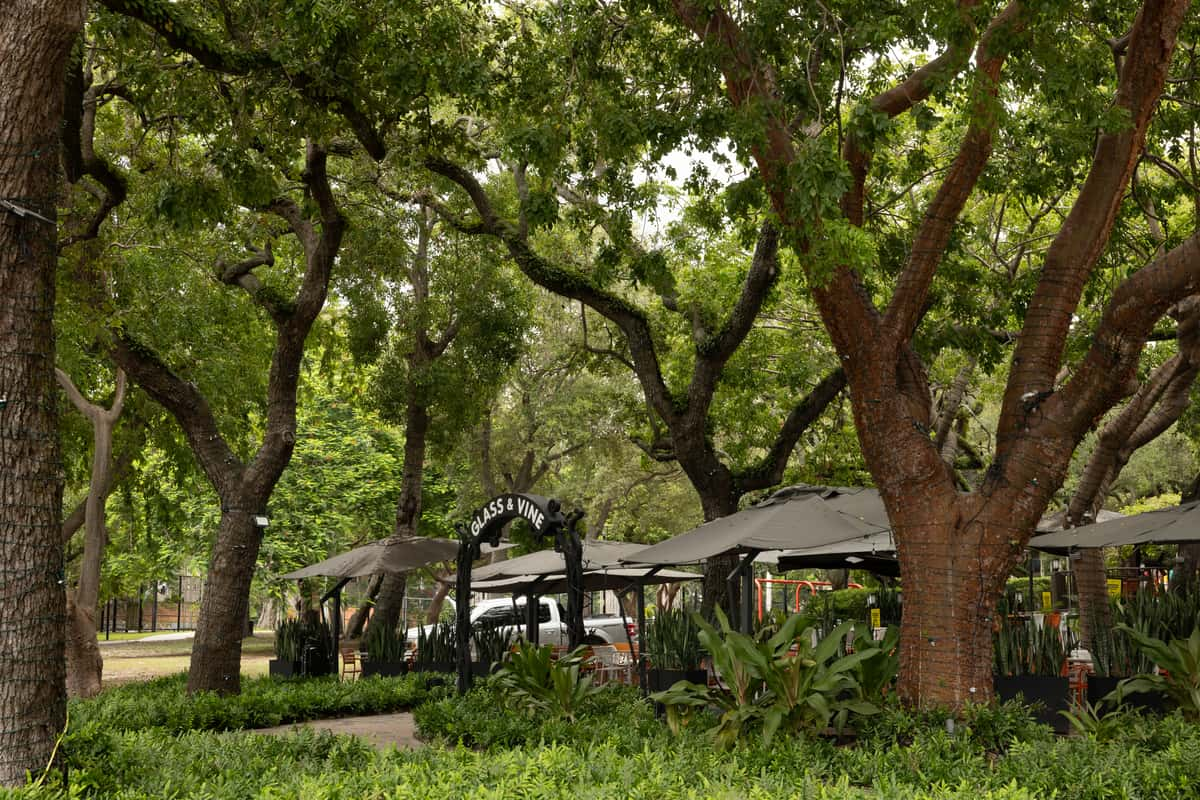
A garden-canopy setting plays a critical role in outdoor dining events by providing natural shade, weather protection, and an immersive atmosphere that enclosed spaces cannot replicate. Mature tree cover reduces direct sun exposure, keeps seated guests cooler, and softens sudden light rain without requiring a full tent rental.
According to the City of Miami Parks Permit Handbook, inclement weather is defined as heavy rain, lightning, hail, high wind, or severe dust storm lasting over 50% of permitted time, and permit holders must communicate with onsite park staff immediately if conditions deteriorate. A canopy of established oaks or tropical hardwoods offers a first layer of defense against brief afternoon showers, buying time before a formal weather call is necessary.
For dining events specifically, overhead foliage creates dappled light that flatters food presentation and photography while naturally diffusing sound across the space. Glass & Vine sits near Peacock Park's oak canopy in Coconut Grove, offering a garden-inspired open-air environment where outdoor dining can feel connected to the surrounding landscape.
What Are the Key Takeaways About Outdoor Event Venue Pros and Cons in Miami?
The key takeaways about outdoor event venue pros and cons in Miami center on balancing spectacular natural settings against weather unpredictability, permitting complexity, and climate-driven logistics.
Miami's outdoor venues range widely in capacity and format. Fairchild Tropical Botanic Garden, for example, lists spaces from 40-guest courtyards to a 275-guest palm glade, with rental rates depending on the event package and additional costs for tables, chairs, and tents.
The most actionable lessons from evaluating Miami's outdoor event landscape include:
- Natural scenery, waterfront access, and open-air flexibility consistently reduce decoration costs and elevate guest experience.
- Rain contingency planning is non-negotiable; venues with built-in coverage, such as covered terraces or tree canopies, reduce the financial risk of last-minute weather pivots.
- Permit timelines vary by jurisdiction, so submitting applications at least 14 days in advance for covered City of Miami park permits and 60 or 90 days for applicable Miami Beach special-event permits can help avoid scheduling conflicts.
- Heat, humidity, and food safety require active management from May through October, with shade and refrigeration infrastructure as deciding factors.
- Venues offering hybrid indoor-outdoor configurations provide the strongest backup plans without sacrificing the open-air atmosphere guests expect.
For planners evaluating Coconut Grove specifically, prioritizing venues with natural canopy coverage, on-site food service infrastructure, and flexible seating layouts addresses the most common outdoor event challenges in a single location. Glass & Vine provides this combination beneath Peacock Park's established tree canopy, with a garden setting designed for both intimate gatherings and larger celebrations.