
Pros and Cons Family Style Dining
Pros and Cons Family Style Dining
Family style dining is a service format where shared dishes are placed at the center of the table for guests to serve themselves rather than ordering individual entrées. This communal approach mirrors how meals are served at home, encouraging conversation, cooperation, and a relaxed pace that plated service rarely matches.
This guide covers the social and developmental benefits of shared plates, the practical advantages for groups and families, the real drawbacks around dietary needs and hygiene, how family style compares to plated service, and how to choose the right format for your occasion.
Shared meals can help strengthen social bonds and may encourage cooperation among diners. Research consistently shows that eating from communal plates increases collaborative behavior, and even one additional shared meal per week correlates with measurable gains in reported happiness. Children benefit especially; self-serving from shared platters builds motor skills, confidence, and willingness to try unfamiliar foods.
On the practical side, family style simplifies ordering for large groups, gives every guest access to a wider variety of dishes, and often costs less per person than equivalent individual entrées. The pass-the-platter rhythm creates a casual, unhurried atmosphere that works particularly well in outdoor and garden settings.
The trade-offs are real. Shared utensils and platters increase allergen cross-contact risk for guests with food allergies. Portions can skew unevenly when early diners serve generously, and large-format dishes generate waste when quantities are misjudged. Picky eaters may feel pressured by unfamiliar options, and hygiene concerns rise during illness seasons.
Choosing the right service style depends on group size, dietary complexity, and occasion formality. Farm-to-table restaurants, outdoor venues, and share-focused concepts in places like Coconut Grove are purpose-built to maximize the benefits while minimizing common friction points.
What Is Family Style Dining and How Does It Work?
Family style dining is a service format where shared dishes are placed at the center of the table for guests to serve themselves. Rather than each person ordering an individual plate, the group passes platters and bowls around, choosing portions based on personal preference.
This approach closely mirrors how meals are served at home. According to the SUNY Open Textbook Introduction to Hospitality & Tourism, "Family-style service involves shared dishes served and distributed amongst a table of diners. Servers deliver ordered food to the table and guests are able to pass the items amongst themselves based on their desired choice." The format is increasingly common in dining establishments, particularly farm-to-table restaurants where seasonal variety and communal presentation are central to the experience.
The mechanics are straightforward. A restaurant prepares larger portions of each dish, typically enough to feed the full party. Servers bring these shared plates to the table simultaneously or in courses. Guests then take what they want, adjusting portions to their appetite. No one is locked into a single entrée, and the natural act of passing dishes encourages conversation.
What makes this format distinct from buffet service is the seated, tableside experience. Diners never leave the table to fill a plate. Everything arrives at the group, which keeps the meal intimate and unhurried. For restaurants, this style simplifies kitchen workflow by focusing on fewer dishes in larger quantities rather than individually plated presentations.
Family style dining works especially well when a menu features diverse flavors and shareable formats. The next sections explore why this approach has gained popularity for groups and families, along with the real benefits and trade-offs worth considering before choosing it.
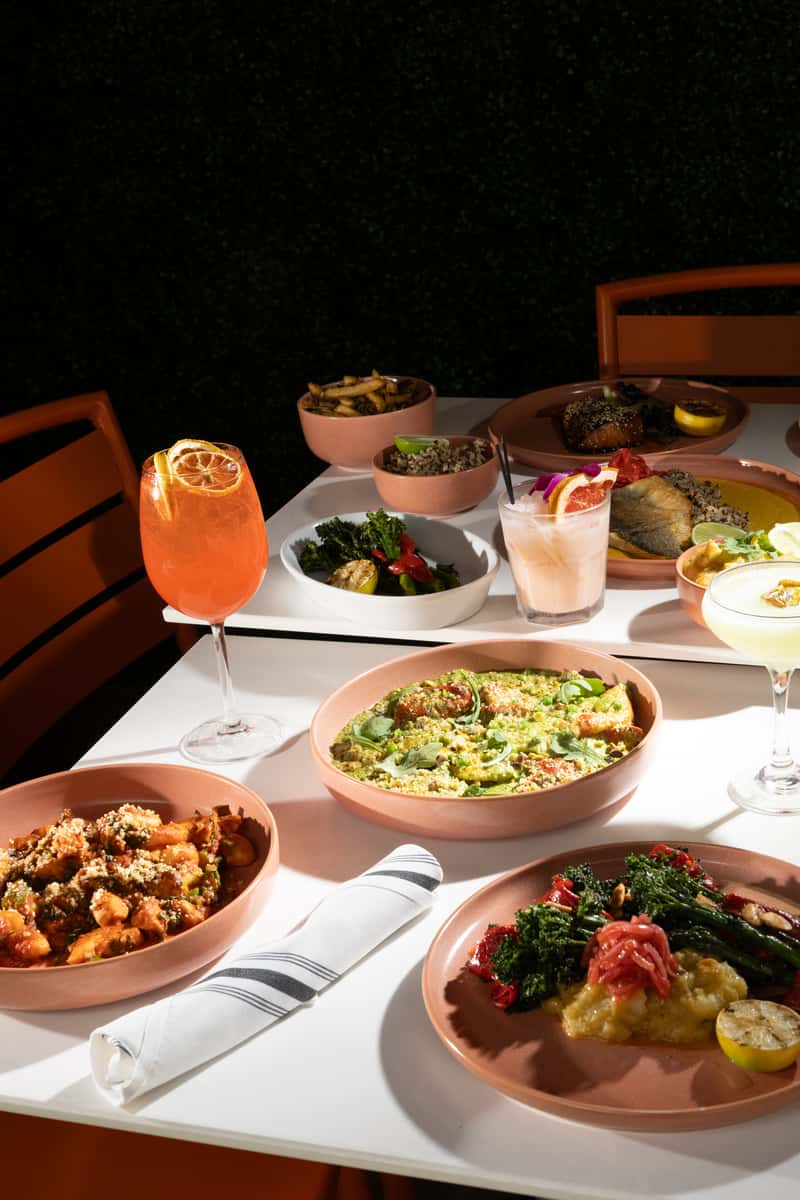
Why Is Family Style Dining Popular for Groups and Families?
Family style dining is popular for groups and families because it builds social connection, encourages variety, and creates a relaxed, communal atmosphere. The key reasons span psychological bonding, cooperative behavior, and practical benefits for children and large parties.
Shared plates foster cooperation among diners. A 2019 study published in Psychological Science (N = 1,476) found that people eating from shared plates cooperated more in social dilemmas and negotiations than those eating from separate plates. This cooperative dynamic naturally appeals to families navigating group decisions and to friends looking for a convivial experience rather than isolated individual meals.
Beyond cooperation, communal dining strengthens happiness. According to the World Happiness Report 2025, sharing one more meal per week is associated with an average increase of roughly 0.2 points on a happiness scale from 0 to 10 across countries. That association suggests a potential connection between regular shared meals and well-being, making family style service one way to encourage communal dining.
Children benefit in particular ways that go beyond simple enjoyment:
- They learn about serving sizes and gain the chance to try new foods.
- They practice motor skills by using utensils to serve themselves.
- They build self-confidence and expand social skills through active participation.
The U.S. Administration for Children and Families (HeadStart.gov) highlights these developmental advantages as core outcomes of family style meal service.
For large groups, the format eliminates the friction of individual ordering. Rather than coordinating a dozen separate entrées, the table selects a spread of shared dishes, which simplifies decisions and reduces wait times. This practical efficiency, combined with the deeper social and developmental benefits, explains why family style dining continues to draw groups and families to restaurants that prioritize communal experience.
Understanding why this format resonates sets the stage for examining its specific advantages and trade-offs in detail.
What Are the Pros of Family Style Dining?
The pros of family style dining include stronger social connection, greater dish variety, simpler ordering, a relaxed atmosphere, and better per-person value. Each benefit shapes the overall experience differently.
How Does Family Style Dining Encourage Sharing and Connection?
Family style dining encourages sharing and connection by centering the meal around communal plates that prompt conversation and interaction. Passing dishes around the table naturally draws people into a shared rhythm, turning eating into a collective activity rather than an isolated one.
According to the World Happiness Report 2025, sharing one more meal per week is associated with an average increase of roughly 0.2 points on a happiness scale from 0 to 10. That incremental boost adds up quickly for groups that dine together regularly. When everyone reaches for the same platter, social barriers soften; conversations flow more freely than they would over individually plated courses. For gatherings where the goal is genuine connection, this format consistently delivers.
How Does Family Style Dining Let Guests Try More Dishes?
Family style dining lets guests try more dishes because shared platters give everyone access to the full spread rather than committing each person to a single entrée. Instead of choosing one item and wondering about the rest, diners sample across the entire order.
As described in the SUNY Open Textbook Introduction to Hospitality & Tourism, family-style service involves shared dishes served and distributed among a table of diners, allowing guests to pass items among themselves based on their desired choice. This format is especially valuable at restaurants with diverse menus. Guests who might hesitate to order an unfamiliar dish on their own feel comfortable trying a portion from a shared plate, which broadens their palate without any financial risk.
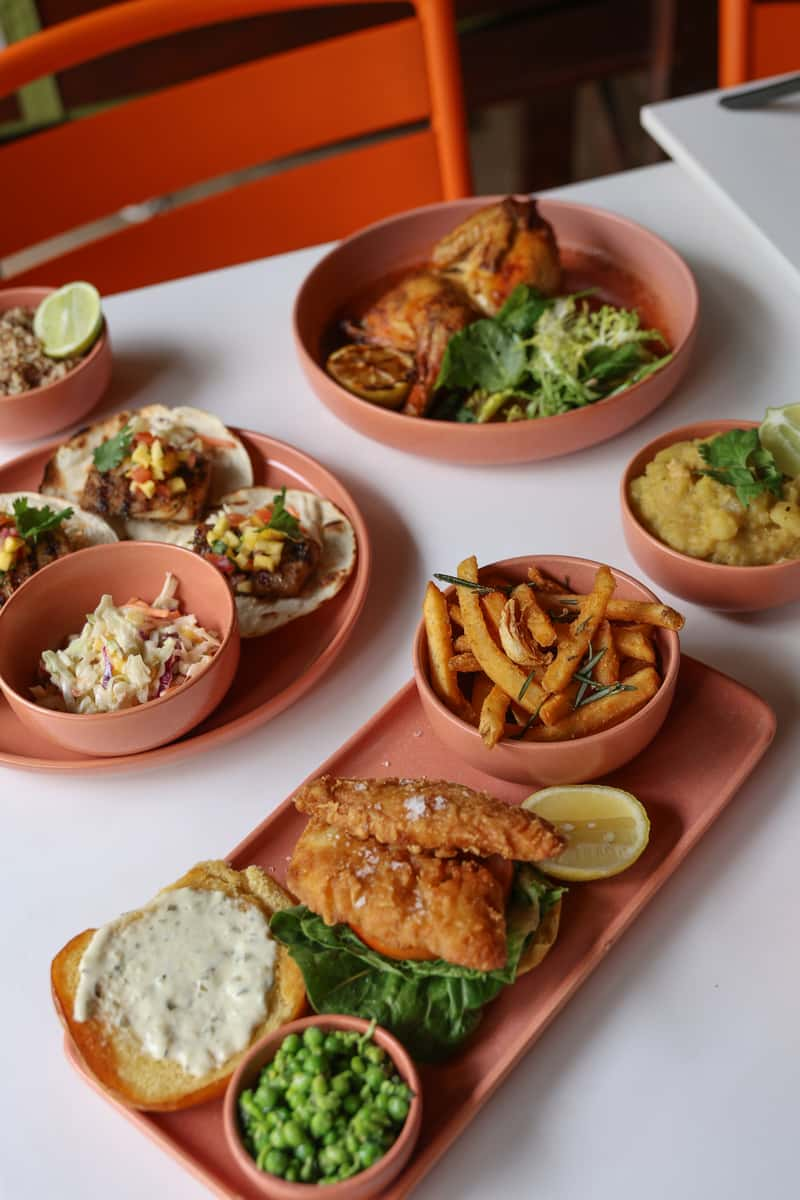
How Does Family Style Dining Simplify Ordering for Large Groups?
Family style dining simplifies ordering for large groups by replacing individual entrée decisions with a collective selection of shared dishes. Rather than coordinating six, eight, or twelve separate orders, the table agrees on a handful of platters that cover everyone's preferences.
This approach may reduce decision fatigue and simplify the ordering process. Servers spend less time taking itemized requests, which means food reaches the table faster. For celebrations, work dinners, or any occasion with a mixed group, selecting a few well-rounded dishes is far more efficient than navigating a lengthy back-and-forth. It is one of the most practical advantages of the format, especially when time or patience is limited.
How Does Family Style Dining Create a More Relaxed Atmosphere?
Family style dining creates a more relaxed atmosphere by removing the formality of individual courses and rigid service sequences. Shared platters arrive when they are ready, and guests serve themselves at their own pace.
Without the pressure of timed courses or portioned plates, the meal unfolds naturally. Diners lean in, linger over favorites, and revisit dishes they enjoyed. The casual act of passing a bowl or spooning seconds onto a friend's plate shifts the energy from structured to comfortable. This less regimented flow works particularly well in outdoor or garden settings, where the environment already invites guests to slow down. For most groups, that easygoing cadence is exactly what makes the evening memorable.
How Can Family Style Dining Offer Better Value Per Person?
Family style dining can offer better value per person because shared platters distribute cost across the entire table rather than loading it onto individual plates. Ordering several large-format dishes can cost less per guest than ordering equivalent individual entrées for everyone, depending on menu pricing and portion sizes.
The math works in the group's favor: three or four generously portioned platters often feed a table of six for less than six separate entrées would. Guests may waste less because they can take only what they want, although shared platters can still generate leftovers when quantities are misjudged. For budget-conscious groups or anyone hosting a larger gathering, this cost efficiency makes family style dining a smart financial choice without sacrificing variety or quality.
Understanding these advantages helps clarify whether the trade-offs are worth it for your next gathering.
What Are the Cons of Family Style Dining?
The cons of family style dining include complications around dietary restrictions, uneven portions, hygiene concerns, picky eaters, and food waste. Each drawback deserves consideration before choosing this service style.
How Do Dietary Restrictions Complicate Family Style Meals?
Dietary restrictions complicate family style meals because shared platters increase the risk of allergen cross-contact. When dishes circulate around a table, a guest with a nut allergy or gluten sensitivity cannot always verify what has touched the serving utensils. The American Academy of Allergy, Asthma & Immunology advises that individuals with food allergies should avoid shared plates and utensils with co-diners. Plated service, by contrast, gives kitchens more control over individual preparations. For groups with mixed dietary needs, requesting separate allergen-appropriate portions prepared with cross-contact precautions alongside communal dishes may be a safer approach. This single logistical challenge often determines whether family style works for a particular table.
How Can Uneven Portion Distribution Become a Problem?
Uneven portion distribution can become a problem when guests serve themselves without awareness of how many people need to eat from each dish. Early diners may take generous helpings, leaving those at the end of the table with smaller or no portions of popular items. Children, in particular, struggle to gauge appropriate serving sizes in a self-serve setting. Unlike plated meals, where the kitchen controls exact portions, family style relies on social awareness and group cooperation. Proactive strategies, such as portioning dishes into smaller serving bowls or having staff guide initial servings, help ensure everyone receives a fair share.
How Does Family Style Dining Affect Hygiene Concerns?
Family style dining affects hygiene concerns by requiring multiple guests to handle the same serving utensils and reach across shared platters. According to the Centers for Disease Control and Prevention, food workers wash their hands when they should only about one in three times, highlighting a potential hygiene concern in restaurant food handling. Shared dishes may introduce additional hygiene concerns at the table level when utensils are handled by multiple diners. For health-conscious diners, this remains one of the most frequently cited drawbacks of communal service.
Why Might Picky Eaters Struggle With Family Style Dining?
Picky eaters might struggle with family style dining because the format presents an unpredictable mix of flavors and textures on every platter. A selective diner who would normally order one familiar dish now faces a table full of unfamiliar options. While family style can gently encourage trying new foods, it can also create anxiety for those with strong aversions or sensory sensitivities. The social pressure of a shared meal sometimes makes it harder to decline dishes without drawing attention. Ordering one or two "safe" dishes alongside more adventurous selections gives picky eaters reliable options while still preserving the communal experience.
How Can Family Style Dining Lead to Food Waste?
Family style dining can lead to food waste when large shared platters are over-ordered or when guests take more than they eat. A 2022 study published in Foods found that communal buffet-style service produced an average of 112 to 115 grams of food waste per customer across two studied restaurants. Generous family style portions may also lead to leftovers when too much food is ordered or served. The U.S. EPA reported that 328 pounds of food waste per person went to landfill and other disposal methods in 2016, setting a goal to cut that figure by 50% by 2030. Ordering conservatively and adding dishes as needed is the most practical way to minimize waste at a family style table.
Understanding these drawbacks helps diners decide when family style truly fits their group and when plated service may be the better choice.
How Does Family Style Dining Compare to Plated Dining?
Family style dining compares to plated dining in how food reaches the table, how guests interact with the meal, and how much variety each person experiences. The key differences involve service format, guest autonomy, and social dynamics.
Family style dining places shared platters at the center of the table, letting guests serve themselves and sample multiple dishes. Plated dining delivers individual portions directly to each guest, offering precise presentation and controlled servings. The choice between these two formats shapes the entire rhythm of a meal.
One of the clearest distinctions involves food exploration. According to a study published by the School Nutrition Association, teachers reported trying new foods with children at a 69% frequency during family-style meal service, compared to just 42% during pre-plated service and 40% with lunch boxes. That gap suggests communal formats may encourage opportunities to try new foods in childcare settings.
The practical trade-offs between these service styles include:
- Guest control: Family style gives diners autonomy over portions and selections, while plated dining relies on the kitchen to determine serving size.
- Presentation: Plated meals allow chefs to design each dish with precise visual arrangement, whereas family style prioritizes abundance and accessibility.
- Pace of service: Shared platters arrive as they are ready, creating a continuous, relaxed flow. Plated courses follow a structured sequence.
- Social interaction: Passing dishes and sharing food generates conversation and connection. Plated service keeps each guest focused on their own plate.
- Dietary accommodation: Plated meals can be tailored individually to specific restrictions. Family style requires more advance planning to separate allergens.
For groups that value variety, spontaneity, and a communal atmosphere, family style dining consistently delivers. Plated service works best when individual dietary needs vary significantly or when precise portion control matters. Neither format is universally superior; the right choice depends on the occasion, the group, and the dining experience you want to create.
Understanding these differences helps when deciding what style fits your next gathering.
What Types of Restaurants Are Best for Family Style Dining?
The types of restaurants best for family style dining include farm-to-table establishments, Italian trattorias, Chinese and Asian restaurants, Mediterranean venues, and outdoor garden-style restaurants. Each category naturally lends itself to shared plates and communal service.
Family style dining works best where menus feature shareable portions and a relaxed atmosphere. Farm-to-table restaurants have become a natural home for this service model. According to the SUNY Open Textbook Introduction to Hospitality & Tourism, family-style service is increasingly common in farm-to-table dining establishments, where servers deliver dishes to the table and guests pass items among themselves based on personal preference.
Italian trattorias and Chinese restaurants represent two of the longest-standing traditions in communal dining. Italian family style centers on large bowls of pasta, shared antipasti, and platters of grilled proteins. Chinese-style meals, built around rotating shared plates, are so closely associated with this format that researchers use them as the benchmark for studying communal eating behavior. Mediterranean restaurants, with their emphasis on mezze spreads and small shared dishes, also align naturally with the format.
Outdoor dining venues add another dimension. The relaxed, open-air setting removes the formality that can make shared plates feel awkward in fine dining rooms. Restaurants with garden patios, waterfront seating, or park-adjacent locations encourage guests to linger, pass dishes freely, and enjoy a more casual pace. For families especially, proximity to green space or a playground transforms a shared meal into a full outing rather than a rushed dinner.
Full-service restaurants remain the strongest category for this style. With projected U.S. restaurant industry sales reaching $1.55 trillion according to the National Restaurant Association's State of the Restaurant Industry 2026 report, full-service dining remains an important segment of the market, while communal formats offer an alternative approach to table service.
The ideal family style restaurant combines generous, shareable portions with an atmosphere that feels unhurried. Whether the cuisine is Southern Italian, Cantonese, or locally sourced American, the common thread is a menu designed around the table rather than the individual plate. Choosing a venue with this philosophy makes the difference between a meal that feels forced into sharing and one that was built for it.
What Should You Consider Before Choosing Family Style Dining?
Before choosing family style dining, you should consider group size, occasion formality, and the needs of any children at the table. The following sections break down each factor.
Is Family Style Dining Better for Small or Large Groups?
Family style dining is better suited for large groups, though it works for small parties too. Larger tables benefit most because shared platters simplify ordering and let everyone sample multiple dishes without coordinating individual meals. Groups of six or more often find that passing communal plates feels natural and keeps conversation flowing across the table.
Smaller groups of two to four can still enjoy the format, but the variety advantage diminishes since fewer people means fewer dishes ordered. For couples or intimate dinners, the communal aspect may feel unnecessary when each person can simply choose their own entrée. Family style can work particularly well for groups where sharing several dishes offers variety while keeping service manageable.
Does Family Style Dining Work Well for Formal Occasions?
Family style dining does not always work well for formal occasions. The format's casual, pass-the-platter dynamic can feel out of place at events that call for precise presentation and individual plating, such as business dinners, milestone celebrations with set courses, or black-tie affairs.
That said, some upscale restaurants have reimagined family style service with elevated presentations, portioned sharing boards, and attentive tableside assistance. In these settings, communal dining can feel intentional rather than informal. The key distinction is the venue's execution: when a restaurant designs its shared plates for elegance and provides dedicated service, family style can complement a semi-formal gathering. For strictly formal occasions with fixed seating protocols, plated service remains the safer choice.
Is Family Style Dining a Good Choice When Dining With Kids?
Family style dining is a good choice when dining with kids because it lets children serve themselves, try small portions of unfamiliar dishes, and participate actively in the meal. Self-serving builds motor skills, confidence, and social awareness around the table.
However, families should account for food allergies before committing to shared plates. According to the American Academy of Allergy, Asthma & Immunology's guidance on dining out with food allergies, it is best to avoid shared plates and utensils with co-diners who have allergen sensitivities. Cross-contact risk increases when multiple dishes circulate freely. If a child at the table has a serious allergy, requesting individually plated allergen-free items alongside the communal spread is the most practical safeguard. For families without allergy concerns, the interactive nature of family style makes it one of the most kid-friendly formats available.
Understanding these factors helps you match the dining format to your specific occasion.
How Does Share-Focused Outdoor Dining in Coconut Grove Elevate the Family Style Experience?
Share-focused outdoor dining in Coconut Grove elevates the family style experience by combining communal cuisine with a relaxed, open-air setting. Below, discover how Glass & Vine brings this concept to life and the essential takeaways on family style dining's benefits and trade-offs.
Can Glass & Vine's Share-Focused Cuisine Enhance a Family Style Meal?
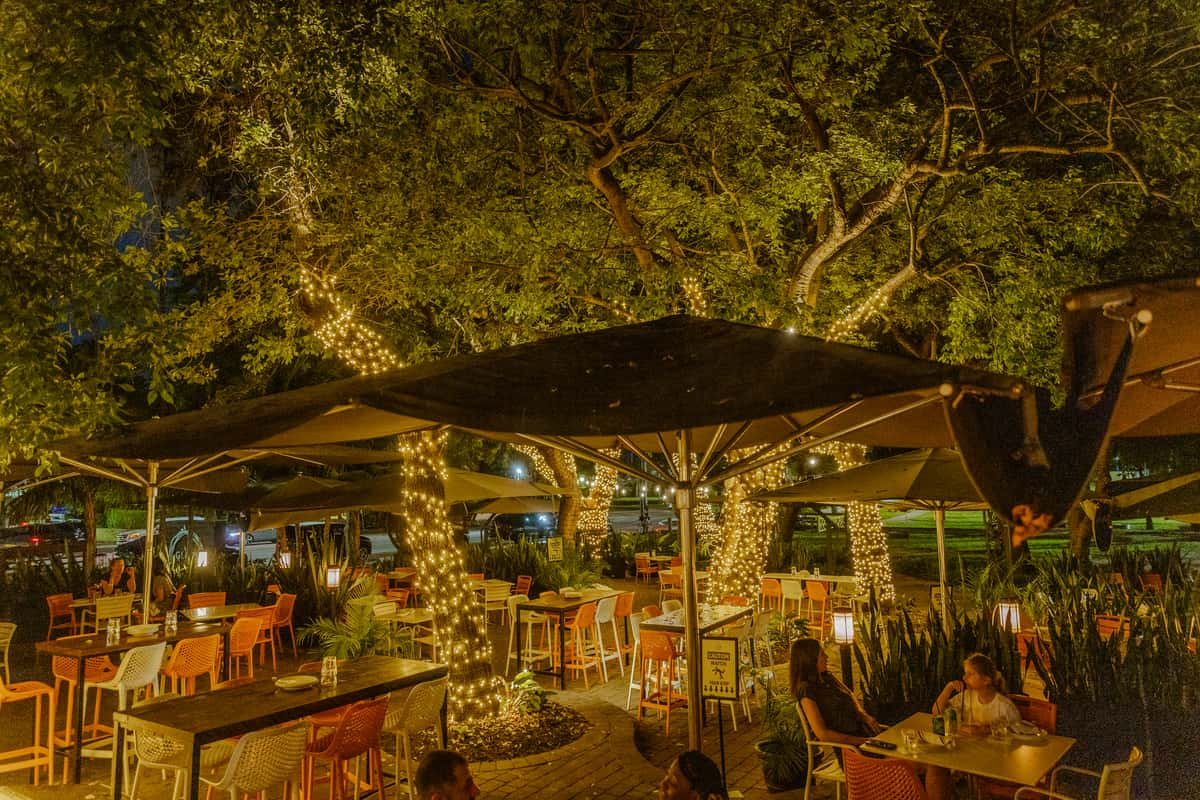
Yes, Glass & Vine's share-focused cuisine can enhance a family style meal by pairing dishes designed for communal enjoyment with a lush, garden-inspired atmosphere. Set beneath the oak canopy of Peacock Park in Coconut Grove, Glass & Vine creates an open-air environment where passing plates feels natural and unhurried.
The menu features locally sourced ingredients across a diverse array of flavors and textures, all crafted for sharing. Families benefit from a playground-adjacent setting that lets kids explore while parents linger over brunch, lunch, or dinner. Dog-friendly patio seating and a dedicated doggy menu extend the welcoming, communal feel even further.
For anyone weighing the pros and cons of family style dining, a venue purpose-built around shared plates removes many common friction points, from awkward ordering for large groups to rigid portion control. Glass & Vine offers brunch, happy hour, and dinner menus that make communal dining effortless in Coconut Grove.
What Are the Key Takeaways About the Pros and Cons of Family Style Dining?
The key takeaways about the pros and cons of family style dining center on balancing social connection against practical considerations like dietary needs and portion equity.
Core benefits include:
- Shared meals strengthen social bonds and boost cooperation among diners.
- Guests sample a wider variety of dishes instead of committing to a single entrée.
- Ordering is simplified for large groups, creating a more relaxed atmosphere.
- Children develop confidence, motor skills, and willingness to try new foods through self-serving.
Notable trade-offs include:
- Guests with food allergies may face cross-contact risks from shared plates and utensils.
- Uneven portion distribution can leave some diners unsatisfied.
- Picky eaters may feel limited when communal dishes dominate the table.
- Larger shared platters can generate food waste if quantities are misjudged.
The strongest family style experiences happen at restaurants that design their menus, service, and setting around communal dining from the start. When a venue anticipates these trade-offs with thoughtful portioning, allergen awareness, and flexible options, the benefits consistently outweigh the drawbacks.