
Importance of Ambiance for Dining: Real Benefits
Importance of Ambiance for Dining: Real Benefits
Restaurant ambiance is the combined sensory environment of a dining space, shaped by lighting, music, scent, temperature, and spatial design. It directly alters how guests perceive flavor, feel emotionally, and behave throughout a meal.
This guide covers how atmosphere changes the way food tastes, the psychological benefits of well-designed dining environments, the specific elements that create great ambiance, how outdoor settings differ from indoor ones, and how atmosphere influences spending, social occasions, and lasting memories.
Lighting, sound, and scent each modify flavor perception in measurable ways. Dim lighting enhances sweetness in single-dimension foods, slow-tempo music encourages longer chewing that releases more aromatic compounds, and fresh open air allows natural food aromas to reach the palate unobstructed.
Well-designed atmosphere reduces cortisol, promotes mindful eating, and deepens emotional connection between guests. Nature-integrated environments evoke positive emotions and support relaxation before the first course arrives.
Six core elements build cohesive ambiance: lighting, sound, natural greenery, temperature, spatial layout, and scent. Each serves a distinct function, from regulating pace to signaling quality and inclusivity.
Outdoor dining introduces dynamic natural light, living canopies, and open airflow that enclosed rooms cannot replicate. Proximity to mature trees and garden landscapes shifts the experience from purely culinary to holistically restorative.
Sensory details like playlist tempo, table spacing, and climate control function as economic levers, directly extending dwell time and increasing per-visit spending. For social occasions, the right atmosphere removes friction so couples, families, and groups can focus entirely on each other.
What Is Restaurant Ambiance and Why Does It Influence Diners?
Restaurant ambiance is the combined sensory environment of a dining space, shaped by lighting, music, scent, temperature, and spatial design. It influences diners because these elements directly alter perception, emotion, and behavior during a meal.
Ambient conditions such as lighting, music, scent, and temperature shape customer feelings and perceptions within restaurant servicescapes, according to research published on ResearchGate examining the "Decoding the Dining Atmosphere" framework. A restaurant's physical environment, atmosphere, and overall aesthetics are essential in shaping customers' emotions and preferences, as a 2025 PLoS One study confirmed. These sensory inputs work together, often subconsciously, to determine whether guests feel relaxed, engaged, or rushed. For diners evaluating where to eat, ambiance functions as a silent but powerful signal of quality, care, and intent. Understanding how outdoor and indoor environments shape dining psychology reveals why atmosphere consistently ranks among the top reasons people choose one restaurant over another.
How Does Ambiance Affect the Way Food Tastes?
Ambiance affects the way food tastes by altering sensory perception through lighting, sound, and scent. These environmental factors shape how the brain interprets flavor before a single bite reaches the palate.
How Does Lighting Level Change Flavor Perception?
Lighting level changes flavor perception by influencing how the brain processes taste signals in context. A study published through Murray State University Digital Commons found that dim lighting enhances taste perceptions for single taste dimension foods, such as sweet dishes, but this effect is attenuated when food contains multiple taste dimensions like sweet and salty combined.
Cross-sensory interactions extend beyond light alone. Research published in Neuropsychologia demonstrated that food is rated as significantly more sour when it has a rough surface compared to a smooth one, confirming that taste perception responds to environmental and tactile cues simultaneously. For restaurants prioritizing flavor experience, lighting design is not merely decorative; it actively shapes what guests taste.
How Does Background Music Tempo Alter Taste Experience?
Background music tempo alters taste experience by changing eating pace, chewing behavior, and emotional state during a meal. According to a study in Food Quality and Preference, subjects exposed to slow tempo music at 85 BPM were calmer, spent more time eating, and chewed more times and for longer than those listening to fast tempo music at 145 BPM.
This behavioral shift directly influences flavor perception. Slower chewing releases more aromatic compounds, allowing the palate to register subtlety and complexity that faster eating overlooks. Patrons in slow tempo environments also lingered longest in the restaurant, while those hearing fast tempos left quickest. Thoughtful music selection, then, functions as an invisible seasoning.
How Do Natural Scents and Fresh Air Enhance Food Enjoyment?
Natural scents and fresh air enhance food enjoyment by priming olfactory receptors and reducing sensory fatigue that accumulates in enclosed spaces. Fresh air carries fewer competing synthetic odors, allowing the natural aromas of prepared food to reach the nose unobstructed. Because smell accounts for a significant portion of perceived flavor, dining in open-air settings often makes dishes taste more vibrant and nuanced.
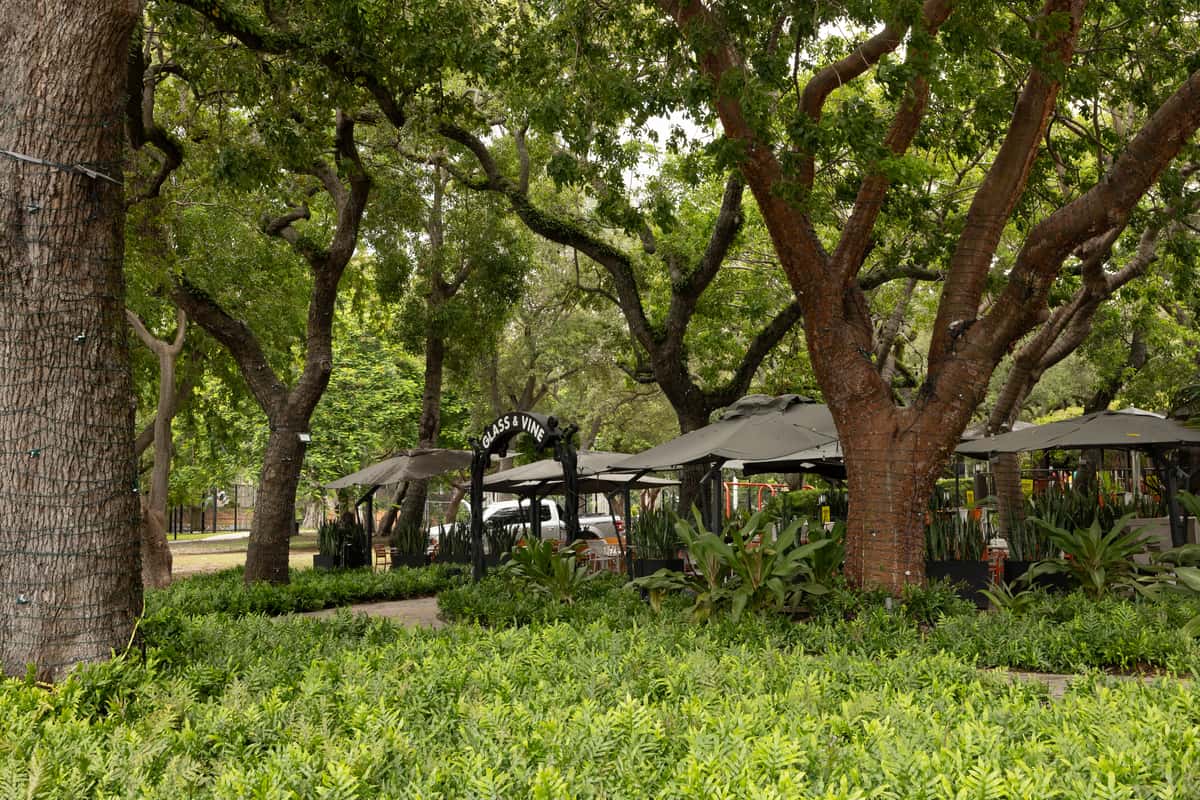
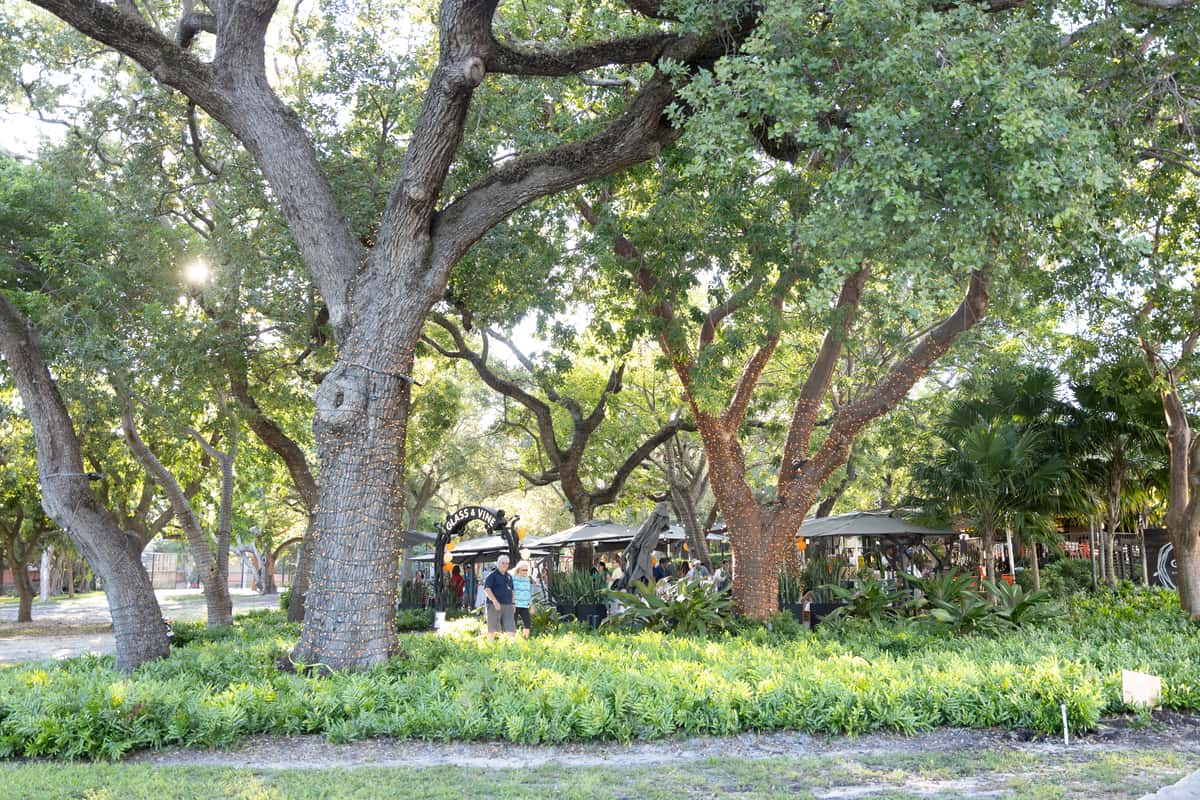
Tropical greenery and ocean breezes, like those found beneath Peacock Park's oak canopy in Coconut Grove, introduce subtle botanical and saline notes that complement cuisine without overwhelming it. This creates a multisensory harmony between environment and plate that indoor dining struggles to replicate.
With taste shaped by light, sound, and scent, the psychological benefits of a well-designed atmosphere extend even further.
What Are the Psychological Benefits of Dining in a Well-Designed Atmosphere?
The psychological benefits of dining in a well-designed atmosphere include stress reduction, improved mindfulness during meals, and stronger emotional bonds between guests. The following sections explore each benefit.
How Does Ambiance Reduce Stress and Promote Relaxation?
Ambiance reduces stress and promotes relaxation by engaging the senses in calming, nature-inspired surroundings that lower cortisol and ease mental tension. A 2022 study published in Foods (MDPI) found that nature ambience in lunch restaurants has the potential to evoke positive emotions, reduce stress, and support healthy food choices among Finnish customers.
Biophilic elements, such as greenery, natural light, and open-air layouts, signal safety to the nervous system. When diners feel sheltered rather than confined, their breathing slows and conversation flows more freely. For restaurants that integrate living canopies or garden settings, this restorative effect begins before the first course arrives.
How Does a Comfortable Setting Encourage Mindful Eating?
A comfortable setting encourages mindful eating by reducing distractions and allowing guests to focus on flavors, textures, and pacing. When seating feels spacious, lighting remains soft, and noise stays controlled, the nervous system shifts from a reactive state into one receptive to sensory detail.
Guests in well-designed spaces tend to chew more slowly, notice subtle ingredient notes, and recognize satiety cues earlier. Comfort removes the urgency to finish quickly, transforming a meal from mere consumption into deliberate engagement with each bite. This awareness enhances both satisfaction and portion control without conscious effort.
How Does Atmosphere Strengthen Emotional Connection Between Guests?
Atmosphere strengthens emotional connection between guests by creating shared sensory experiences that deepen conversation and presence. Warm lighting, comfortable proximity, and ambient sound levels low enough for easy dialogue encourage vulnerability and attentiveness between dining companions.
When an environment feels intentional, guests attribute that care to the occasion itself, elevating a simple dinner into a meaningful event. Couples linger longer, families engage more openly, and friends recall the evening with greater fondness. This emotional imprinting is why atmosphere remains inseparable from the memories people associate with a meal.
With these psychological foundations in place, understanding the specific design elements behind great ambiance reveals how restaurants achieve these effects.
What Are the Key Elements That Create Great Restaurant Ambiance?
The key elements that create great restaurant ambiance are lighting, sound, natural elements, temperature, spatial layout, and scent. Each element contributes to a cohesive sensory environment that shapes guest perception and comfort.
Lighting
Lighting sets the visual tone of a dining space and directly influences mood. Dim, warm lighting creates intimacy and encourages guests to relax, while brighter settings energize casual environments. Layered lighting design, combining ambient, task, and accent sources, allows restaurants to guide attention and establish atmosphere throughout different zones. According to the Illuminating Engineering Society, the recommended range is 3 to 6 footcandles at the dining table for menu reading, yet 75% of surveyed restaurants had illuminance levels below 1.3 fc at the dining plate. Thoughtful lighting remains one of the most underutilized tools for elevating a guest's emotional response to a space.
Sound and Music
Sound and music regulate dining pace and emotional state. Background music tempo influences how long guests stay; research published in Behavioral Sciences (MDPI) found that patrons in a slow tempo music group spent the most time in the restaurant, while patrons exposed to fast tempo left quickest. Volume matters equally. Music that complements rather than competes with conversation creates a comfortable acoustic envelope. The absence of jarring noise, from kitchen clatter to street traffic, is just as important as curated playlists in shaping the overall sonic experience.
Natural Elements and Greenery
Natural elements and greenery bring biophilic design principles into the dining environment. Living plants, water features, and organic materials reduce perceived stress and create visual warmth. Research published in Foods (MDPI) found that nature ambience in lunch restaurants evokes positive emotions, reduces stress, and supports healthy food choices. Incorporating greenery blurs the boundary between indoor and outdoor spaces, making guests feel connected to the natural world even within an enclosed setting. For restaurants with outdoor access, mature tree canopies and garden landscapes amplify this restorative effect considerably.
Temperature and Air Quality
Temperature and air quality determine baseline physical comfort before any other design element registers. Consumer research suggests that 70 to 73 degrees Fahrenheit represents the safer range for dining room temperature, though 68 degrees remains technically acceptable. Poor ventilation or extreme temperatures override even the most beautiful decor. Guests who feel too hot or too cold will leave sooner regardless of food quality. Maintaining consistent airflow without drafts requires thoughtful HVAC zoning, particularly in spaces that transition between indoor and open-air sections.
Interior Design and Spatial Layout
Interior design and spatial layout define how guests move through, perceive, and emotionally respond to a restaurant. Research published in PLoS One on fine-dining restaurants shows that while food quality is a dominant factor, spatial configuration and "configuration novelty" are critical for differentiating establishments in saturated markets. Seating arrangements, sightlines, material choices, and thematic coherence all contribute to perceived authenticity. The ADA requires that at least 5% of all fixed tables be accessible to wheelchair users, ensuring inclusivity remains part of thoughtful layout planning.
Scent and Aroma
Scent and aroma trigger immediate emotional and behavioral responses in diners. According to a University of Paderborn study cited by Fohlio, ambient scents increase impulse buying by 6%, buying intention by 14.8%, and the length of a customer's stay by 15.9%. Pleasant aromas from fresh ingredients, baked goods, or subtle botanical diffusers prime guests for enjoyment before the first bite arrives. Overpowering or artificial fragrances produce the opposite effect, creating discomfort. The most effective scent strategies feel organic and unforced, complementing the cuisine rather than competing with it.
With these sensory foundations working in harmony, outdoor settings introduce additional atmospheric dimensions worth exploring.
How Does Outdoor Dining Ambiance Differ From Indoor Settings?
Outdoor dining ambiance differs from indoor settings through natural light, open airflow, and living surroundings that create a sensory experience impossible to replicate indoors. The following sections explore how canopy, fresh air, and proximity to nature each shape the al fresco experience.
How Does Natural Canopy and Shade Shape the Outdoor Experience?
Natural canopy and shade shape the outdoor experience by filtering sunlight into soft, dappled patterns that shift throughout the day. Unlike fixed indoor lighting, tree cover creates dynamic illumination that feels organic and calming. A mature oak canopy, for instance, provides thermal comfort while framing the sky overhead, giving diners a sense of enclosure without confinement. This layered environment blends shelter with openness, producing an atmosphere that feels both intimate and expansive.
How Does Open Air Improve Guest Comfort and Mood?
Open air improves guest comfort and mood by providing natural ventilation and a sense of spatial freedom that enclosed rooms cannot match. According to a 2019 study published in Foods (MDPI), nature ambience in lunch restaurants evokes positive emotions, reduces stress, and supports healthy food choices among customers. Gentle breezes regulate perceived temperature naturally, while the absence of walls eliminates the psychological weight of confined spaces. For most diners, the simple act of breathing fresh air during a meal transforms routine eating into a restorative pause.
How Does Proximity to Nature Elevate a Meal?
Proximity to nature elevates a meal by engaging senses beyond taste, including birdsong, rustling leaves, and the scent of surrounding greenery. A 2018 University of Michigan study found that 20 to 30 minutes of nature exposure produces a 21.3% per-hour drop in cortisol levels, a benefit that translates directly to more relaxed, lingering meals. Dining surrounded by living plants and mature trees shifts the experience from purely culinary to holistic, where the environment itself becomes part of what guests remember.
Understanding how outdoor settings transform dining sets the stage for exploring how ambiance influences time spent and spending behavior.
How Does Ambiance Affect How Long Guests Stay and Spend?
Ambiance affects how long guests stay and spend by influencing their psychological comfort, pace of consumption, and willingness to order additional items. Sensory elements like music tempo, scent, and spatial design directly shape dwell time and per-visit spending.
Slow-tempo background music encourages guests to linger. According to a study published in Behavioral Sciences (MDPI), patrons in a slow tempo music group spent the most time in the restaurant, followed by the control group, while patrons in the fast tempo group were the quickest to leave. When guests feel unhurried, they are more likely to order dessert, an extra cocktail, or after-dinner coffee.
Ambient scent also plays a measurable role. Research from the University of Paderborn found that ambient scents increase impulse buying by 6%, buying intention by 14.8%, and the length of a customer's stay by 15.9%. Pleasant aromas reduce the perceived passage of time, keeping guests comfortably seated longer without feeling rushed.
Spatial layout reinforces these effects. Closely packed tables create pressure to leave; a Cornell University survey found that approximately 64% of British consumers reported that closely spaced tables were detrimental to their overall dining experience. Generous spacing, on the other hand, signals that guests are welcome to stay, which correlates with higher check averages.
Temperature contributes as well. When dining rooms fall outside the recommended 69 to 72 degrees Fahrenheit, guests become physically uncomfortable and leave sooner, regardless of how much they enjoy the food. Comfort at a basic thermoregulatory level is a prerequisite for extended visits.
For restaurants prioritizing revenue per seat, the takeaway is clear: ambiance is not decoration but an economic lever. Every sensory detail, from playlist tempo to table spacing to climate control, either extends or shortens the window in which guests are willing to spend. Understanding how atmosphere shapes group dynamics adds another dimension to this equation.
How Does Dining Atmosphere Impact Social Occasions and Group Experiences?
Dining atmosphere impacts social occasions by shaping comfort levels, emotional connection, and the overall quality of shared moments. The following sections explore how ambiance enhances romantic dates, family meals, and group celebrations.
How Does Ambiance Enhance a Romantic Date Night?
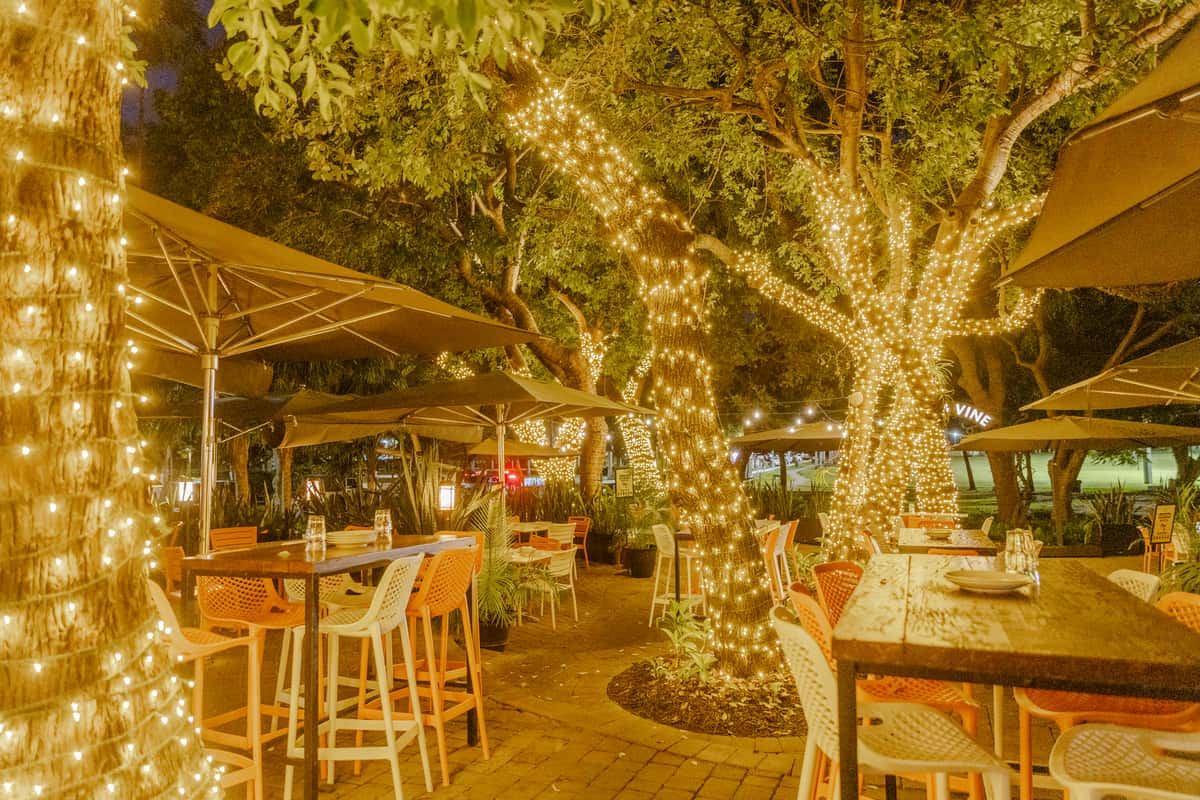
Ambiance enhances a romantic date night by creating intimacy through sensory cues that encourage connection. Soft lighting, comfortable seating distance, and gentle background music allow couples to focus on each other without distraction. A thoughtfully designed space signals occasion and intention, elevating an ordinary meal into a meaningful shared experience. For most couples, the environment matters as much as the menu; a setting that feels private and unhurried gives conversation room to deepen naturally.
How Does Setting Affect Family Dining Comfort?
Setting affects family dining comfort by addressing the practical and sensory needs of guests across all ages. Temperature plays a direct role; a baseline range of 69 to 72 degrees Fahrenheit is recommended for restaurant seating areas to ensure general comfort, according to Albright HVAC. Families benefit from environments that balance relaxation with flexibility:
- Adequate spacing between tables reduces noise stress for parents and children.
- Accessible outdoor areas give younger guests room to move without disrupting others.
- Natural landscape elements and quality facilities contribute to overall satisfaction.
A 2021 study published in Foods (MDPI) found that three outdoor dining environment dimensions, including quality and facilities, image and atmosphere, and landscape elements, significantly affect customer satisfaction. For families, this means venues combining open space with comfortable infrastructure create the most positive experiences.
How Does Atmosphere Improve Group Celebrations and Gatherings?
Atmosphere improves group celebrations and gatherings by providing a cohesive sensory backdrop that unites diverse guests around a shared experience. Large parties require environments where conversation flows easily, energy feels festive without becoming chaotic, and the setting itself becomes part of the occasion. Flexible seating arrangements, ambient sound levels that allow cross-table dialogue, and visually engaging surroundings all contribute to collective enjoyment. When the environment handles these details well, guests focus on each other rather than compensating for discomfort.
With the social dynamics of dining understood, choosing a restaurant that matches your specific occasion becomes far easier.
What Role Does Ambiance Play in Creating Memorable Dining Experiences?
Ambiance plays the central role in creating memorable dining experiences by anchoring sensory and emotional details in long-term memory. A 2025 US Foods survey found that atmosphere was cited as the #1 reason (66%) people enjoy dining at a restaurant, followed by the opportunity to socialize (52%). When lighting, sound, scent, and spatial design align cohesively, they form a multisensory narrative that guests recall long after the meal ends. This explains why diners often remember how a place made them feel before they remember specific dishes. The most lasting dining memories are built not on food alone, but on the complete environmental story surrounding it.
How Can You Choose a Restaurant Based on Ambiance Quality?
You can choose a restaurant based on ambiance quality by evaluating sensory cues, spatial comfort, and air quality before or during your visit. The following sections cover what couples, families, and social groups should prioritize.
What Should Couples Look for in a Restaurant Atmosphere?
Couples should look for a restaurant atmosphere that balances intimate lighting, comfortable acoustics, and aesthetic cohesion. The physical environment, overall aesthetics, and atmosphere are essential in shaping customers' perceptions, emotions, and preferences, according to a 2025 study published in PLoS One.
Key atmospheric cues for couples to evaluate include:
- Soft, warm lighting that creates privacy without making the menu unreadable.
- Background music at a volume that permits easy conversation.
- Table spacing that provides a sense of seclusion from neighboring parties.
- Cohesive design elements that feel intentional rather than generic.
Since around 60% of independent restaurants close within three years, establishments that invest in purposeful atmosphere signal long-term commitment to guest experience. For couples seeking a meaningful evening, prioritizing restaurants where every sensory detail feels deliberate separates a forgettable dinner from a lasting memory.
What Ambiance Cues Signal a Family-Friendly Environment?
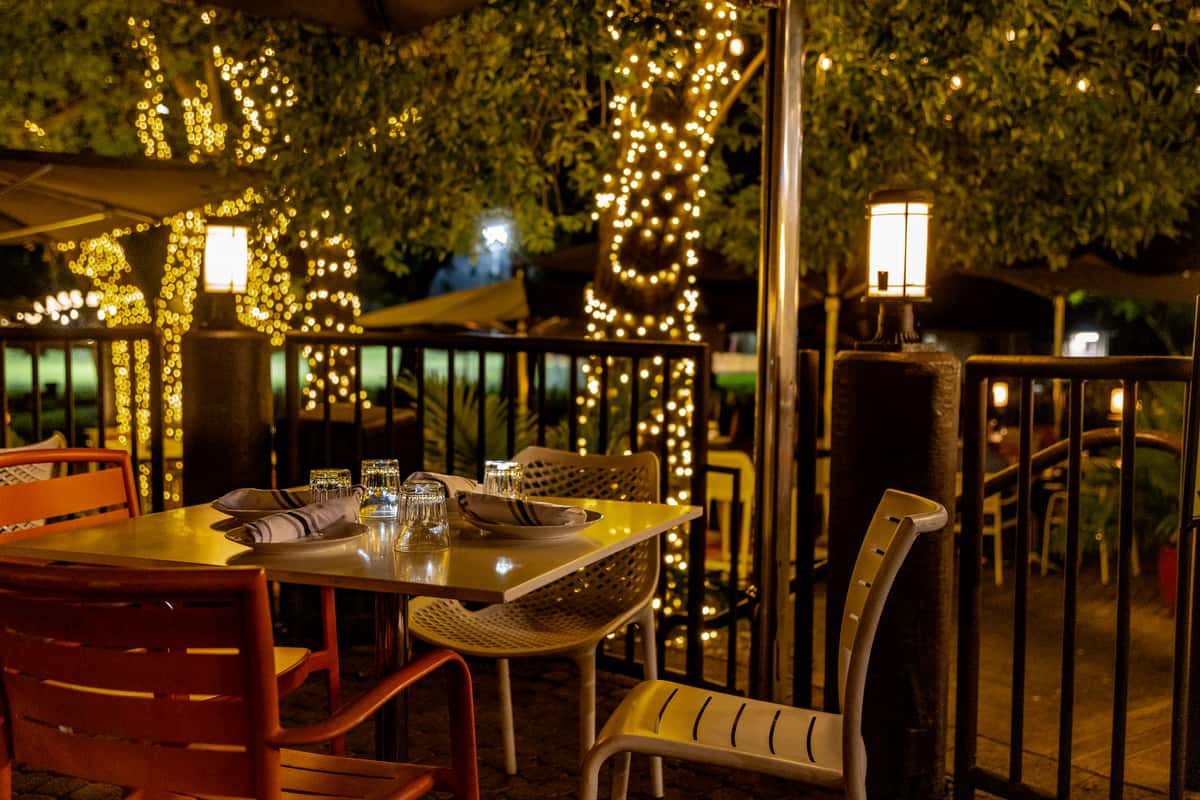
Ambiance cues that signal a family-friendly environment include flexible seating, moderate noise levels, and accessible layouts. Families benefit from spaces where children can move comfortably without disrupting other guests.
Look for these indicators:
- Wide pathways between tables accommodating strollers and high chairs.
- Natural or bright lighting that keeps the mood energetic rather than formal.
- Proximity to outdoor areas or play spaces where children can decompress.
- A temperature maintained within a comfortable range, which supports restless younger diners.
- Menus visibly designed for children, signaling that families are genuinely welcome.
A restaurant that integrates these elements into its design communicates that it values multi-generational gatherings, not just adult-only experiences.
What Makes an Atmosphere Ideal for Relaxed Social Dining?
An atmosphere ideal for relaxed social dining combines comfortable pacing, conversational acoustics, and a welcoming energy that encourages guests to linger. According to a US Foods survey cited by the Auguste Escoffier School of Culinary Arts, atmosphere was the number one reason 66% of people enjoy dining at a restaurant, followed by the opportunity to socialize at 52%.
Qualities that support social dining include:
- Communal or adaptable seating that accommodates groups of varying sizes.
- Sound levels that allow conversation across the table without shouting.
- An unhurried service pace that does not pressure guests to vacate.
- Open-air or garden settings where the environment itself becomes a conversation piece.
For social occasions, the best atmospheres feel effortless; they remove friction so guests can focus entirely on each other rather than their surroundings.
With these ambiance criteria in mind, exploring a restaurant's outdoor setting reveals how nature elevates the dining experience further.
How Does Garden-Inspired Open-Air Dining Deliver Real Ambiance Benefits?
Garden-inspired open-air dining delivers real ambiance benefits by combining natural elements, fresh air, and biophilic design to reduce stress and heighten sensory enjoyment. The following subsections explore how Glass & Vine's oak canopy setting enhances meals and summarize the key takeaways about ambiance's importance.
Can Dining Under a Natural Oak Canopy at Glass & Vine Enhance Your Meal?
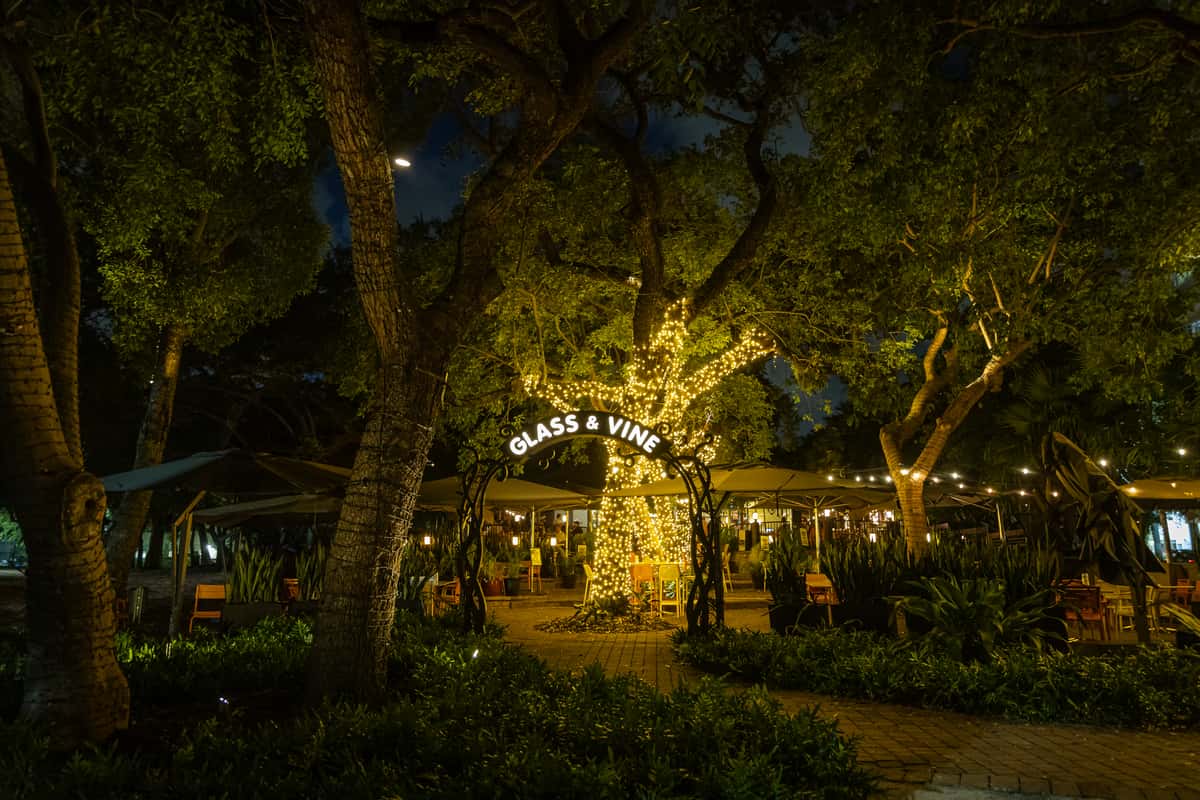
Yes, dining under a natural oak canopy at Glass & Vine can enhance your meal by engaging multiple senses simultaneously. The mature oaks of Peacock Park in Coconut Grove provide dappled natural light, gentle airflow, and a living ceiling that softens sound. According to a University of Michigan study, exposure to 20–30 minutes of nature produces a 21.3% per-hour drop in cortisol levels, a stress reduction directly applicable to restorative dining environments. Glass & Vine channels this biophilic effect through its garden-inspired setting, where the canopy creates a sense of enclosure without confinement. Lower stress promotes slower eating, sharper flavor perception, and deeper conversation. For guests seeking a place where pretense falls away, this secret garden by the sea transforms a meal into a multisensory experience.
What Are the Key Takeaways About the Importance of Ambiance for Dining?
The key takeaways about the importance of ambiance for dining are:
- Ambiance directly shapes flavor perception through lighting, sound, scent, and temperature.
- Well-designed atmosphere reduces stress, encourages mindful eating, and strengthens emotional bonds between guests.
- Outdoor and nature-integrated settings amplify these benefits by adding fresh air, natural light, and biophilic elements.
- Spatial configuration, including seating layout and thematic authenticity, differentiates memorable restaurants from forgettable ones.
- Atmosphere ranks as the top reason diners enjoy eating out, surpassing even the social opportunity itself.
For diners in Coconut Grove seeking these proven benefits in one setting, Glass & Vine combines oak-canopy shade, locally sourced cuisine, and relaxed sophistication to deliver ambiance that genuinely elevates every meal.