
How Restaurants Can Shape the Pace of Your Day
How Restaurants Can Shape the Pace of Your Day
A restaurant's ability to shape the pace of your day extends far beyond the food on your plate; it encompasses every sensory detail, from lighting and music to service timing and spatial design, that collectively determines whether a meal accelerates or decelerates your rhythm.
This guide covers meal timing and daily rhythm, the sensory qualities that control dining pace, indoor versus outdoor settings and time perception, meal formats and their ripple effects on your schedule, atmosphere-driven stress recovery, seasonal menus and sense of place, and intentional dining as a tool for structuring your day.
When you eat matters as much as what you eat. Morning, midday, and evening restaurant visits each create distinct energy patterns, with breakfast anchoring your metabolic clock, lunch dividing workday productivity into focused windows, and dinner shifting your nervous system toward rest and social connection.
Specific environmental qualities, including warm lighting temperatures, slow-tempo music, generous table spacing, and patient service pacing, work together to determine whether a meal feels rushed or leisurely. Menu design adds another layer, with curated selections speeding decisions while descriptive, storytelling-driven menus invite browsing and conversation.
Enclosed indoor spaces blur time awareness by removing natural light cues, while open-air dining activates your parasympathetic nervous system and slows perceived pace. Nature-inspired design deepens this effect, creating genuine physiological calm rather than surface-level ambiance.
Meal format ripples outward into daily structure. A leisurely brunch anchors a slow weekend, a structured lunch organizes an afternoon, a multi-course dinner builds an unhurried evening arc, and share-style plates extend social connection organically.
Local and seasonal menus ground you in place and moment, transforming routine meals into markers of geography and time that encourage more attentive, present eating. Choosing where to dine, whether planned or spontaneous, reflects and reinforces your intentions for the hours ahead.
Why Does the Restaurant You Choose Set the Rhythm of Your Day?
The restaurant you choose sets the rhythm of your day by shaping when you eat, how long you linger, and the mental state you carry into your next activity. Each meal occasion, from morning to evening, creates a distinct tempo.
How Does a Morning Restaurant Visit Influence Your Energy and Mood?
A morning restaurant visit influences your energy and mood by anchoring your body's metabolic clock at the start of the day. Energy metabolism and appetite-regulating hormones follow circadian rhythms, and according to research published in the National Institutes of Health's PubMed Central, disrupting these patterns can lead to adverse metabolic consequences.
Choosing a calm, light-filled space for breakfast encourages mindful eating that stabilizes blood sugar and sets a positive emotional baseline. A rushed counter-service stop, by contrast, often produces a scattered, reactive start. The atmosphere surrounding that first meal primes your nervous system for hours to come, making the morning dining choice one of the most consequential yet overlooked decisions in daily pacing.
How Does a Midday Dining Choice Affect Your Afternoon Productivity?
A midday dining choice affects your afternoon productivity by determining both the nutritional quality and the pacing of your lunch break. According to a study published in the International Journal of Environmental Research and Public Health, restaurant customers rate selection criteria differently based on the eating-out occasion, with brand reputation ranking highest for business-related meals.
This suggests professionals instinctively recognize that where they eat at midday carries professional stakes. A structured sit-down lunch at a moderately paced restaurant creates a genuine mental reset, while a hurried grab-and-go meal often leaves cognitive fatigue unaddressed. The midday restaurant choice is, in practice, an investment in how sharp and focused the remaining work hours feel.
How Does an Evening Restaurant Experience Wind Down Your Day?
An evening restaurant experience winds down your day by shifting your body and mind from productivity mode into rest and connection. Slower service pacing, dimmer lighting, and lower music tempos all signal to your nervous system that the day's demands are over.
Social dining amplifies this effect. Evening meals that bring people closer together tend to involve more laughter, reminiscing, and shared plates, all of which reinforce emotional well-being. The right evening setting acts as a deliberate transition, separating the pressures of the day from the restorative hours ahead. For anyone seeking to end their day with intention rather than inertia, the evening restaurant choice matters as much as a morning routine.
With the rhythm of each meal occasion established, the specific qualities of a restaurant, from lighting to layout, further refine how fast or slow that experience unfolds.
What Restaurant Qualities Control How Fast or Slow a Meal Feels?
Restaurant qualities that control how fast or slow a meal feels include ambient lighting, music tempo, table layout, service pacing, and menu design. These elements work together to either encourage lingering or prompt a quicker turnaround.
How Does Ambient Lighting Affect the Perceived Pace of a Meal?
Ambient lighting affects the perceived pace of a meal by signaling whether to relax or stay alert. Warm color temperatures at 2700 K increase sensations of pleasure and privacy, encouraging diners to settle in. Cooler temperatures at 5600 K cause greater arousal, which can make a space feel more energized and time-conscious.
This matters because perceived pace directly shapes satisfaction. According to a study published in the Journal of Service Management, the relationship between perceived pace and satisfaction follows an inverted U-shape; satisfaction increases up to a point, then decreases as perceived pace continues to rise. Diners also show greater tolerance for a faster pace after finishing their meal than during earlier service stages. Lighting that matches the intended tempo of each course helps restaurants hold that satisfaction sweet spot.
How Does Music Tempo and Volume Shape Your Dining Speed?
Music tempo and volume shape dining speed by influencing how quickly guests eat and how long they stay. As beats per minute increase, food consumption tends to speed up while time spent at the table decreases. Higher BPM also induces more active, even stressful emotional states, whereas lower BPM promotes relaxation.
According to a study published in PubMed Central, patrons exposed to slow-tempo music spent the most time in the restaurant, the control group followed next, and the fast-tempo group left quickest. Beyond pacing, fast-tempo music leads people to make riskier decisions in behavioral contexts. For a restaurant aiming to create an unhurried atmosphere, keeping the playlist below 100 BPM is one of the simplest levers available.
How Does Table Spacing and Layout Influence How Rushed You Feel?
Table spacing and layout influence how rushed you feel by shaping your sense of personal space and privacy. Tightly packed arrangements create visual and auditory crowding, which heightens awareness of surrounding activity and subtly pressures diners to finish sooner. Generous spacing between tables reduces that environmental noise and lets conversations unfold naturally.
Layout geometry matters, too. Tables positioned along walls or tucked into alcoves feel more protected, encouraging guests to linger. Open, grid-style arrangements near high-traffic zones produce the opposite effect. When proximity to other diners is too close, comfort drops and the instinct to leave accelerates, regardless of how good the food is.
How Does Service Pacing Determine the Tempo of Your Experience?
Service pacing determines the tempo of your experience by controlling the rhythm between ordering, receiving courses, and settling the check. Well-timed intervals between courses give guests room to converse and decompress, while rushed deliveries compress the meal into something transactional.
According to research published in the Journal of Service Management, diners tolerate a faster pace more readily during the post-process stage, such as receiving the check, than during pre-process or in-process stages like waiting to order or between courses. This means early attentiveness and mid-meal patience matter most. Restaurants that front-load speed where it frustrates guests often sacrifice the relaxed perception that builds loyalty.
How Does Menu Design Encourage Lingering or Quick Turnaround?
Menu design encourages lingering or quick turnaround by directing how long guests spend choosing what to eat. According to Cornell University research published in the International Journal of Hospitality Management, the general strategy of menu engineering is to efficiently convey enough information so customers happily choose what the restaurant prefers them to buy.
Shorter menus with curated sections reduce decision fatigue and speed up ordering. Longer, descriptive menus with storytelling elements invite guests to browse and discuss options, extending the pre-meal experience. Price placement also plays a role; menu price ranks as customers' top priority across full-service, quick-casual, and quick-service restaurants. Clear, scannable pricing accelerates decisions, while integrated pricing within descriptive text slows the eye and encourages exploration.
With these environmental qualities working in concert, the format of your meal adds another layer to how your day unfolds.
How Does Indoor Versus Outdoor Dining Change Your Sense of Time?
Indoor versus outdoor dining changes your sense of time by altering your exposure to natural light, environmental cues, and spatial openness. Enclosed spaces can blur time awareness, while open-air settings tend to slow perceived pace.
How Do Enclosed Indoor Spaces Affect Your Awareness of Time Passing?
Enclosed indoor spaces affect your awareness of time passing by removing natural light cues that anchor your internal clock. Without sunlight shifts or weather changes, diners lose the environmental markers that typically signal how much time has elapsed. A 2017 study published in Current Biology found that a five-hour delay in meal timing changes the phase relationship of human circadian rhythms, with plasma glucose rhythms delayed. Controlled lighting and consistent temperature inside a restaurant create a sensory bubble, making an hour feel shorter or longer depending on the atmosphere's design. This disconnection from external time can work in a restaurant's favor, encouraging guests to settle in without the urge to check the clock.
How Does Open-Air Dining Slow Down Your Perception of Time?
Open-air dining slows down your perception of time by immersing you in natural sensory input that promotes present-moment awareness. Sunlight, breeze, and ambient sounds from the surrounding environment engage the parasympathetic nervous system. According to a 2022 review in the National Institutes of Health, natural environments have the potential to positively impact parasympathetic nervous systems, increase cognitive functioning, and improve attention. These physiological shifts reduce mental urgency, making each moment at the table feel fuller and less rushed. When nature is part of the dining experience, the meal becomes less about efficiency and more about presence. For restaurants that prioritize this connection, open-air settings are among the most effective tools for reshaping how guests experience time.
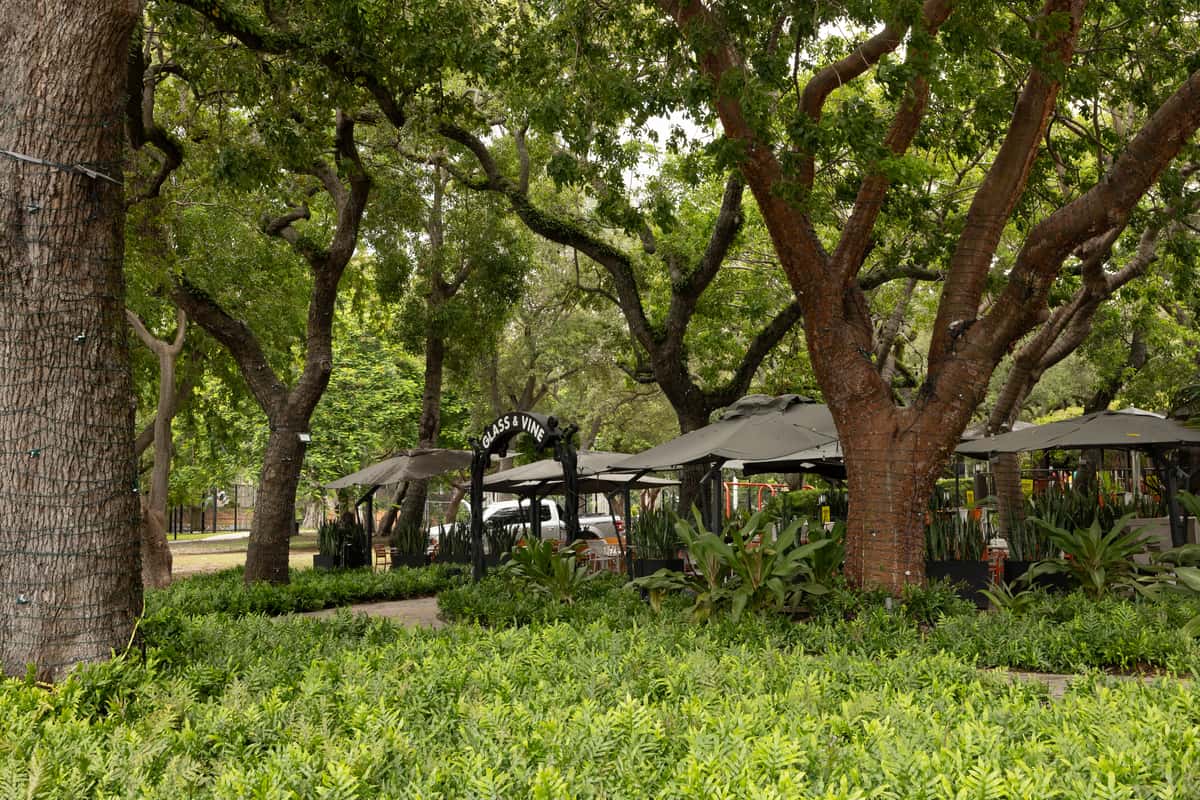
Restaurants that integrate natural elements into their design, such as garden settings under tree canopies, maximize this calming effect. In Coconut Grove, Glass and Vine exemplifies this approach with open-air dining beneath Peacock Park's oak canopy, creating an environment where natural surroundings actively slow the dining pace.
With the setting established, the format of the meal itself further defines a day's rhythm.
How Does the Format of a Meal Shape Your Daily Pacing?
The format of a meal shapes your daily pacing by establishing a tempo, duration, and social dynamic that ripple into the hours that follow. Brunch, structured lunch, multi-course dinner, and share-style dining each set a distinct rhythm.
How Does a Leisurely Brunch Anchor a Slow-Paced Weekend?
A leisurely brunch anchors a slow-paced weekend by replacing rigid morning schedules with an extended, unhurried meal that sets a relaxed tone for the entire day. When breakfast and lunch merge into a single, drawn-out occasion, the pressure to move quickly dissolves. Late-morning start times naturally push the day's obligations further out, creating space for conversation and stillness. According to a study published in Nutrients (MDPI), irregular meal timing was associated with higher neuroticism, lower physical activity, and greater productivity loss, suggesting that intentionally slow, consistent weekend meals may counteract the fragmented rhythms many people accumulate during the workweek. A well-paced brunch functions less like a meal and more like a psychological reset point.
How Does a Structured Lunch Shape a Workday Routine?
A structured lunch shapes a workday routine by inserting a defined midpoint that divides the day into two distinct productivity windows. The format matters: a single-plate entrée with efficient service creates a brief, energizing pause, while a longer seated lunch signals a deliberate break. Research published in PubMed Central found that eating lunch after 12:00 PM may enhance cognitive performance, reinforcing the value of a well-timed midday meal. The predictability of a structured lunch also provides a mental anchor, helping workers transition between tasks with greater clarity. For professionals who eat at the same restaurant regularly, this routine becomes a stabilizing rhythm that organizes the entire afternoon.
How Does a Multi-Course Dinner Create an Unhurried Evening?
A multi-course dinner creates an unhurried evening by distributing the dining experience across sequential stages, each with its own built-in pause. The intervals between courses slow conversation, digestion, and attention to a deliberate pace. A study published in the Appetite Journal found a significant positive correlation between group size and meal duration (r=0.50, p<0.001), and multi-course formats amplify this effect by structuring time around each plate. The progression from appetizer through dessert gives the evening a natural arc, discouraging the impulse to rush. For anyone seeking to decompress after a demanding day, few formats rival the cumulative deceleration a multi-course meal provides.
How Does Share-Style Dining Extend and Enrich Time at the Table?
Share-style dining extends and enriches time at the table by turning the meal into a collaborative, ongoing activity rather than a series of individual decisions. Passing plates, negotiating portions, and discovering new flavors together create continuous social engagement that lengthens the experience organically. Research published in Royal Society Open Science found that those who eat socially more often feel happier, are more satisfied with life, and have more friends they can depend on for support. Share-style formats amplify these benefits because every dish becomes a small shared event. This format is particularly effective for groups that want connection without formality, allowing conversation to flow as freely as the food.
Locally, Glass and Vine in Coconut Grove structures its dinner menu around shareable plates designed to extend conversation and connection naturally. Their all-day format means guests can adopt this collaborative dining approach whether settling in for brunch, lunch, or dinner under the park's canopy.
With meal format influencing your daily rhythm, the atmosphere surrounding that meal deepens its effect.
How Does a Restaurant's Atmosphere Help You Disconnect and Reset?
A restaurant's atmosphere helps you disconnect and reset by combining nature-inspired design with a welcoming social setting. These elements work together to lower stress and shift your mindset away from daily pressures.
How Does Nature-Inspired Design Encourage You to Slow Down?
Nature-inspired design encourages you to slow down by surrounding you with organic elements that activate your body's relaxation responses. Natural environments positively impact parasympathetic nervous systems, increase cognitive functioning, and improve attention, according to a 2022 review published in the National Institutes of Health. Living greenery, open canopies, and natural light cue your brain to release urgency and settle into the present moment. Enclosed, artificial spaces do the opposite; they keep you in task-oriented mode. When a restaurant weaves real plants, natural materials, and outdoor views into its layout, the effect is more than decorative. It creates a genuine shift in how your nervous system processes the experience.
How Does a Welcoming Social Environment Reduce Daily Stress?
A welcoming social environment reduces daily stress by creating conditions where connection replaces tension. According to a field experiment published in Foods (MDPI), restorative physical environments such as nature contribute to stress recovery by reducing negative mood states and enhancing positive emotions. Even brief exposure to nature views generates positive emotional reactions that counteract daily strain.
Several elements make a social dining atmosphere restorative:
- Comfortable seating arrangements that encourage conversation rather than isolation.
- Ambient noise levels that allow easy dialogue without shouting.
- Unhurried service pacing that removes the pressure to eat quickly and leave.
- A relaxed tone set by staff that signals permission to linger.
When these conditions align, meals become a genuine mental reset rather than just a pause between obligations. Choosing where you dine shapes how effectively you recover from daily stress.
How Do Local and Seasonal Menus Connect You to Place and Moment?
Local and seasonal menus connect you to place and moment by anchoring each dish to a specific geography and time of year. When a restaurant sources ingredients from nearby farms and waters, every plate reflects the region's current harvest, creating a dining experience that could only exist in that location during that season.
This connection runs deeper than flavor. According to a 2023 study published in Behavioral Sciences (MDPI), food involvement significantly affects place attachment and destination loyalty, with those relationships differentiated by diners' lifestyles. A seasonal menu transforms a meal from a routine transaction into a marker of where you are and when you arrived. Ingredients at their peak carry a freshness that processed or imported alternatives cannot replicate, grounding you in the present.
For restaurants that prioritize this approach, the effect shapes daily pacing in subtle ways. A winter citrus salad or a summer stone fruit dessert signals the passage of time through taste rather than a calendar. Diners who engage with these menus tend to eat more attentively, slowing their pace because each dish offers something unfamiliar enough to notice. This mindful engagement with food tied to place and season is one of the most effective ways a restaurant can pull you out of autopilot and into the rhythm of the present moment.
How Does Choosing Where to Dine Reflect Your Intentions for the Day?
Choosing where to dine reflects your intentions for the day by signaling whether you seek structure or spontaneity. A planned restaurant visit anchors your schedule around a fixed commitment, while an unplanned stop introduces flexibility and shifts your momentum.
How Does a Planned Restaurant Visit Create Structure in Your Schedule?
A planned restaurant visit creates structure in your schedule by establishing a fixed time commitment that organizes surrounding activities. When you reserve a table in advance, you build your errands, meetings, and leisure around that anchor point. According to a study published in the International Journal of Environmental Research and Public Health, restaurant customers rated selection criteria differently according to eating-out occasions, with brand reputation most important for business necessity and word-of-mouth recommendation the greatest factor for celebrations. This suggests that intentional dining choices reflect purpose: a business lunch demands punctuality, while a celebration dinner shapes an entire evening's timeline. Planned meals reduce decision fatigue later in the day because one significant choice is already settled.
How Does a Spontaneous Dining Stop Shift Your Daily Momentum?
A spontaneous dining stop shifts your daily momentum by breaking routine patterns and introducing an unscripted pause. Instead of following a predetermined schedule, an impromptu meal redirects your attention toward the present moment. This kind of flexibility often creates a psychological reset, particularly when the environment encourages you to linger. A study published in Nutrients (MDPI) found that irregular meal timing was correlated with higher neuroticism and lower subjective health, yet occasional, deliberate spontaneity differs from chronic irregularity. Choosing to stop somewhere inviting on impulse can restore energy and curiosity rather than drain it. For those exploring Coconut Grove, a spontaneous visit to a garden setting can transform a routine afternoon into something genuinely restorative.
With your dining intentions clarified, an all-day destination can support every pace you choose.
How Can All-Day Dining at Glass and Vine Shape Every Part of Your Day?
All-day dining at Glass and Vine can shape every part of your day by offering a garden setting and flexible menus that match your pace from brunch through dinner. Below, explore how the Coconut Grove location sets a relaxed rhythm and the key takeaways about restaurants and daily pacing.
Can Glass and Vine's Garden Setting and All-Day Menu Help You Set a Relaxed Pace in Coconut Grove?
Yes, Glass and Vine's garden setting and all-day menu can help you set a relaxed pace in Coconut Grove. Nestled beneath the oak canopy of Peacock Park, Glass and Vine provides open-air dining surrounded by natural elements that encourage guests to slow down. According to a meta-analysis of 31 studies published in Urban Forestry & Urban Greening, increased natural exposure was associated with decreased salivary cortisol, with an effect size of -0.06. That physiological calming effect aligns with what a lush, garden-inspired space naturally delivers.
Glass and Vine's all-day menu structure supports this unhurried rhythm at every daypart:
- Brunch and bottomless brunch on weekends anchor a slow-paced morning.
- Lunch offers a midday reset under the shade of mature trees.
- Happy hour transitions the afternoon into evening with curated cocktails.
- Dinner brings share-style plates designed for lingering conversation.
Families benefit from the playground-adjacent patio, and dog owners can settle in with a dedicated doggy menu. For anyone seeking a place in Coconut Grove where the environment and the food work together to shape a calmer day, Glass and Vine delivers that rare combination of refined dining and genuine relaxation.
What Are the Key Takeaways About How Restaurants Shape the Pace of Your Day?
The key takeaways about how restaurants shape the pace of your day center on environment, timing, and format working together to influence your rhythm. Lighting, music tempo, service pacing, and menu design all directly control whether a meal feels rushed or leisurely. Outdoor and nature-inspired settings activate stress recovery and slow perceived time, while meal timing itself affects energy, cognition, and mood across the day.
The most actionable insights include:
- Choosing restaurants with warm lighting and slower music encourages longer, more satisfying meals.
- Open-air dining with natural elements promotes genuine mental decompression.
- Matching meal format to your intention, whether a structured lunch or an unhurried multi-course dinner, reinforces the daily pacing you want.
- Consistent, well-timed meals support better sleep, mood stability, and overall well-being.
Restaurants are not passive backdrops. Every sensory detail, from the playlist to the table layout, quietly choreographs how you experience time. Treating restaurant selection as an intentional choice, rather than a convenience, is one of the simplest ways to reclaim control over your daily pace.