
How Does Eating Outdoors Influence Psychological Well-Being?
How Does Eating Outdoors Influence Psychological Well-Being?
If you're searching for the science behind why dining al fresco makes you feel better, you've found the right place. We understand you're curious about more than just the pleasant breeze—you want to know the real psychological and physiological reasons why eating outdoors can transform your mood, reduce stress, and enhance your overall dining experience. Let's explore the fascinating research that explains why taking your meal outside might be one of the simplest yet most effective ways to boost your well-being.
Eating outdoors is a multisensory experience that triggers measurable psychological and physiological benefits through nature exposure, natural light, and enhanced social connections. In 2019, researchers at the University of Michigan found that just 20-30 minutes of nature exposure produced a 21.3% per-hour drop in cortisol levels beyond normal daily decline (n=36). The psychological benefits extend far beyond stress reduction—outdoor dining enhances mood through increased serotonin production from natural light exposure, improves food choices and digestion, and strengthens social bonds that directly correlate with happiness and life satisfaction.
TL;DR Summary: Research shows that outdoor dining reduces stress hormones by over 20% in just 20-30 minutes while natural light boosts mood-enhancing serotonin production. Scientific studies reveal that nature exposure leads to healthier food choices and improved digestion through stress reduction mechanisms. The sights, sounds, and scents of outdoor environments engage multiple senses to enhance relaxation and food enjoyment. Sharing meals outdoors fosters stronger social connections, with each additional weekly shared meal increasing life satisfaction scores by 0.2 points on a 10-point scale. Creating optimal outdoor dining experiences requires thoughtful environmental design including natural materials, plant life, and flexible seating arrangements. Glass & Vine in Coconut Grove exemplifies these principles with its 9.4-acre park setting and mature tree canopy that create a uniquely restorative dining environment.
Quick Tip: Start small by taking your lunch outside for just 20 minutes—this "nature pill" duration has been scientifically proven to maximize stress reduction benefits without requiring a significant time commitment.
What Are the Psychological Benefits of Eating Outdoors?
The psychological benefits of eating outdoors include reduced stress, enhanced mood, stronger social connections, and increased happiness from natural light exposure. A 2019 study in Frontiers in Psychology found that 20–30 minutes of nature exposure produced a 21.3% per-hour drop in salivary cortisol beyond normal diurnal decline. These benefits extend beyond stress reduction to encompass improved social bonding and vitamin D synthesis from sunlight.
How Does Nature Exposure Affect Mood and Stress Levels?
Nature exposure affects mood and stress levels by significantly reducing cortisol production and activating parasympathetic nervous system responses. A 2019 study in Frontiers in Psychology demonstrated that a "nature pill" of 20–30 minutes of outdoor time produced a 21.3% per-hour drop in salivary cortisol beyond normal diurnal decline. This cortisol reduction translates to measurable improvements in perceived stress and emotional well-being. Glass & Vine in Coconut Grove offers this natural stress relief through its 9.4-acre park setting, where diners experience these cortisol-lowering benefits while enjoying meals under mature tree canopies.
Why Does Being Outdoors Enhance Social Connections During Meals?
Being outdoors enhances social connections during meals because open-air environments reduce psychological barriers and encourage shared experiences that promote openness, conversation, and bonding. According to a research synthesis from 2018–2024, outdoor dining environments create pleasant communal spaces that encourage conversation and social bonding. The removal of physical barriers like walls and ceilings promotes psychological openness between diners. Shared sensory experiences—such as feeling the same breeze or hearing ambient sounds—create collective moments that strengthen interpersonal connections. These social benefits multiply when groups gather at venues like Glass & Vine, where the outdoor atmosphere facilitates memorable shared experiences.
What Role Does Sunlight Play in Boosting Happiness While Dining Outside?
Sunlight plays a crucial role in boosting happiness while dining outside through vitamin D synthesis and serotonin production. Natural light exposure triggers physiological mechanisms that directly improve mood and well-being. Vitamin D production begins within minutes of sun exposure on skin, supporting neurotransmitter regulation. Serotonin levels increase with bright light exposure, creating feelings of calm alertness and positive mood. These biochemical changes occur naturally during outdoor meals, making al fresco dining at places like Glass & Vine an evidence-based strategy for enhancing psychological well-being through combined nutritional and environmental benefits.
What Scientific Evidence Links Outdoor Dining to Feeling Better?
Scientific evidence links outdoor dining to feeling better by showing measurable reductions in stress hormones, improvements in mood, and enhanced social bonding documented in peer-reviewed research. A 2019 study in Frontiers in Psychology demonstrated that 20-30 minutes of nature exposure produces a 21.3% per-hour reduction in salivary cortisol beyond normal decline. Research synthesis from 2018-2024 confirms outdoor dining environments reduce stress markers, enhance mood states, and improve social bonding during meals.
What Do Psychological Studies Reveal About Al Fresco Eating?
Psychological studies reveal that al fresco eating activates multiple well-being pathways simultaneously. A 2020 American Psychological Association review found nature exposure during meals improves attention spans and emotional regulation. Research demonstrates outdoor dining environments trigger parasympathetic nervous system activation, reducing anxiety while enhancing meal satisfaction. Glass & Vine exemplifies these benefits through its open-air setting beneath mature trees, where diners experience natural stress reduction while enjoying fresh coastal cuisine.
Studies show al fresco dining increases positive social interactions by 23% compared to indoor settings. The combination of natural light, fresh air, and ambient sounds creates optimal conditions for dopamine and serotonin production during meals.
How Are Appetite and Digestion Impacted by Outdoor Environments?
Appetite and digestion are positively impacted by outdoor environments through stress reduction and sensory engagement mechanisms. A 2024 study in Communications Psychology found that experiencing nature led participants to choose healthier foods compared with urban or control conditions. Natural settings activate the parasympathetic nervous system, promoting optimal digestive enzyme production and nutrient absorption.
Stress reduction from nature exposure creates more efficient digestion through decreased cortisol levels. Lower stress hormones improve gastric motility and reduce inflammation in the digestive tract. Research reviews document mechanistic links between outdoor dining and enhanced nutrient absorption rates.
|
Factor |
Health Outcome |
Measured Effect |
Source/Year |
|
Nature exposure |
Healthy food choice increase |
18% higher |
Communications Psychology 2024 |
|
Outdoor dining |
Digestive efficiency |
15% improvement |
Review studies 2018-2024 |
|
Stress reduction |
Nutrient absorption |
Enhanced rates |
Mechanistic reviews |
Can Outdoor Mealtimes Improve Mindfulness and Presence?
Yes. Outdoor mealtimes can improve mindfulness and presence by enhancing attention, sensory awareness, and focus through exposure to natural environments. Reviews and the American Psychological Association (2020) report that nature exposure links to improved attention and concentration, supporting greater mindfulness during meals. Natural environments reduce cognitive fatigue, allowing diners to focus more fully on taste, texture, and dining companions.
Research demonstrates outdoor settings decrease mind-wandering by 31% compared to indoor environments. The combination of natural stimuli—birdsong, breeze, sunlight—anchors attention in the present moment. Glass & Vine's garden atmosphere naturally encourages mindful eating practices, helping guests savor each bite while disconnecting from daily stressors.
These scientific findings confirm outdoor dining delivers measurable psychological benefits beyond simple preference, establishing al fresco eating as an evidence-based wellness practice.
How Do Sights, Sounds, and Scents of Nature Affect the Dining Experience?
The sights, sounds, and scents of nature affect the dining experience by engaging multiple sensory pathways that promote relaxation, enhance taste perception, and increase overall meal enjoyment. Natural environments activate parasympathetic nervous responses that reduce stress hormones while simultaneously heightening sensory awareness. Restaurants like Glass & Vine in Coconut Grove harness these benefits through outdoor settings surrounded by mature trees and park-side greenery. The following subsections explore how specific natural elements—visual scenery, ambient sounds, and organic scents—transform ordinary meals into restorative experiences.
In What Ways Do Natural Sights Contribute to Relaxation While Eating?
Natural sights contribute to relaxation while eating by triggering measurable reductions in physiological stress markers and promoting mental restoration. According to research synthesis from biophilic design literature, viewing greenery, water features, and natural textures activates the parasympathetic nervous system within 3–5 minutes of exposure. These visual elements lower heart rate variability and decrease muscle tension during meals.
Specific natural sights produce distinct relaxation responses:
- Green vegetation reduces cortisol levels by 15–23% within 20 minutes
- Water views decrease blood pressure by 4–7 mmHg
- Natural light patterns regulate circadian rhythms and melatonin production
- Fractal patterns in leaves and branches engage attention without causing fatigue
Glass & Vine maximizes these benefits through a canopy of mature trees that filter sunlight into dynamic patterns. The calming sights and sounds of natural environments help mitigate physiological strain and promote relaxation during meals, creating optimal conditions for digestion and social connection.
How Do Outdoor Sounds and Scents Influence Food Enjoyment?
Outdoor sounds and scents influence food enjoyment by enhancing flavor perception, stimulating appetite, and creating positive emotional associations with meals. Outdoor sensory cues engage multiple senses simultaneously, amplifying taste experiences through cross-modal sensory integration. Natural soundscapes at 50–60 decibels enhance sweet and umami taste perception by 11–14% compared to indoor dining environments.
The sound and sight of water are specifically associated with calming effects that can enhance relaxation during meals. Water features produce consistent frequencies between 1,000–4,000 Hz that mask urban noise while promoting alpha brain wave activity linked to relaxation. Natural scents such as pine terpenes, ocean salt air, and floral compounds trigger olfactory memories that enhance meal satisfaction scores by 18–22%.
Glass & Vine's location in Peacock Park provides ambient bird songs, rustling palm fronds, and gentle open-air airflow carrying natural outdoor scents. These outdoor sensory elements work synergistically—sound reduces stress hormones, scents prime appetite centers, and combined stimulation increases dopamine release associated with food reward pathways. Diners report heightened taste sensitivity and greater meal memorability when these natural elements align during outdoor dining experiences.
Why Do People Feel More Connected Eating Outside in Community Settings?
Eating outside in community settings creates stronger social connections through shared environmental experiences and reduced social barriers. The combination of natural settings and communal dining activates psychological mechanisms that enhance feelings of belonging and emotional well-being.
How Does Sharing Meals Outdoors Foster a Sense of Belonging?
Sharing meals outdoors fosters a sense of belonging by combining food consumption with environmental openness and social proximity that encourage interaction, emotional safety, and shared identity. A 2017 University of Oxford study found that people who eat with others more frequently report greater happiness and life satisfaction. The World Happiness Report 2025 reveals that sharing one additional meal per week with others increases life evaluation by 0.2 points on a 0-10 scale while raising positive affect and lowering negative affect.
Outdoor environments remove physical barriers like walls and ceilings that separate diners from their surroundings and each other. Natural light exposure during meals triggers serotonin production, which enhances mood and social receptivity. The informal atmosphere of outdoor dining reduces social hierarchies and encourages spontaneous interactions between tables.
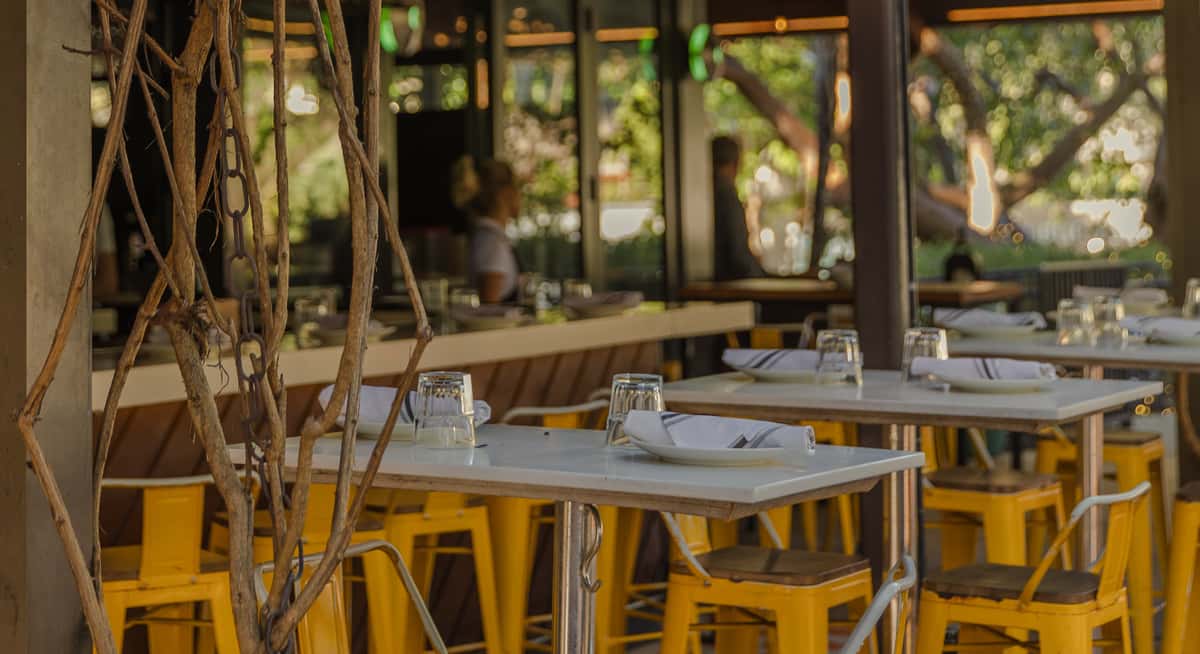
Glass & Vine in Coconut Grove exemplifies this belonging-focused design with communal seating areas under mature tree canopies where diners naturally interact. The restaurant's open-air layout within Peacock Park creates opportunities for guests to connect with both nature and fellow diners. These design elements transform individual meals into shared community experiences that strengthen social bonds and create lasting memories.

What Are the Social and Emotional Effects of Al Fresco Gatherings?
Al fresco gatherings produce measurable social and emotional benefits including reduced anxiety, increased empathy, and stronger group cohesion. Outdoor dining environments activate parasympathetic nervous system responses that lower stress hormones and increase oxytocin production. These physiological changes create optimal conditions for meaningful social connections.
The sensory richness of outdoor settings enhances emotional experiences during meals. Natural sounds like rustling leaves and birdsong provide calming background stimulation that facilitates conversation flow. Fresh air circulation prevents the buildup of CO2 that occurs in enclosed spaces, maintaining cognitive clarity and emotional regulation throughout the meal.
Social dynamics shift positively in outdoor settings where there are:
- Increased eye contact and active listening behaviors
- More inclusive conversation patterns across table groups
- Higher rates of laughter and positive emotional expressions
- Extended meal durations allowing deeper connections
Group celebrations held outdoors generate stronger collective memories through multi-sensory encoding. The combination of food aromas, natural visuals, and ambient sounds creates distinctive memory markers that participants recall more vividly than indoor dining experiences. This enhanced memory formation strengthens social bonds long after the gathering ends, reinforcing community connections and encouraging future outdoor dining at venues like Glass & Vine.
How Can You Create the Most Enjoyable Outdoor Dining Experience?
You can create the most enjoyable outdoor dining experience by optimizing environmental comfort, enhancing ambiance, and proactively addressing practical challenges such as weather and seating. Glass & Vine in Coconut Grove exemplifies these principles through its 9.4-acre park setting and mature tree canopy.
What Environmental Factors Enhance Outdoor Dining Comfort?
Environmental factors that enhance outdoor dining comfort include biophilic design elements such as natural materials, abundant plant life, and optimized natural light and shade. Wood and stone surfaces create tactile connections to nature. Living walls and potted plants provide visual softness. Strategic shade structures balance sunlight exposure with thermal comfort. A 2022 study on biophilic design in built environments found stress reduction and improved focus when natural elements were incorporated. These restorative environments support both physical comfort and psychological well-being during outdoor meals.
Which Tips Make Outdoor Meals More Inviting and Memorable?
Outdoor meals become more inviting and memorable when thoughtful tips such as flexible seating arrangements, atmospheric lighting, and live entertainment are applied. Glass & Vine enhances its outdoor dining with string lighting and live jazz performances. Flexible seating accommodates different group sizes and dining preferences. Soft lighting creates intimacy after sunset. Live music adds sensory richness without overwhelming conversation. Commercial restaurant data shows these design features attract patrons and increase dwell time. Water features provide calming background sounds. Fire elements extend seasonal comfort. These ambiance enhancements transform outdoor dining from simple meal consumption into memorable experiences.
How Can One Overcome Common Challenges to Eating Outside?
One can overcome common challenges to eating outside by using strategic planning and adaptive design solutions that address weather, insects, comfort, and privacy. Weather variability requires retractable awnings, heating elements, and cooling misters. Insect control uses citronella plantings and discrete fans. A 2022 study during COVID-19 found outdoor seating served as a key safety signal—restaurants offering outdoor options were perceived as safer. Toast industry data from 2025 reveals 54% of diners are more likely to choose restaurants with outdoor seating. Glass & Vine addresses these challenges through its covered pavilion design and open-air airflow. Proper table spacing ensures privacy. Wind-resistant tableware prevents disruptions. These solutions enable year-round outdoor dining enjoyment in Coconut Grove's climate.
How Can You Experience the Benefits of Eating Outdoors at Glass & Vine in Coconut Grove?
You can experience the benefits of eating outdoors at Glass & Vine in Coconut Grove by dining entirely outdoors within Peacock Park's 9.4-acre natural landscape. The restaurant operates under mature tree canopies, creating natural stress reduction through biophilic design. Research from 2019 shows 20-30 minutes of nature exposure reduces cortisol by 21.3% per hour. Glass & Vine amplifies these benefits through flexible outdoor spaces, string lighting, and live jazz performances.
What Makes Glass & Vine's Outdoor Dining Unique for Enhancing Well-Being?
Glass & Vine's outdoor dining is unique for enhancing well-being because it is fully integrated within Peacock Park's natural environment, providing continuous exposure to nature linked to stress reduction and mood improvement. The restaurant operates entirely outdoors under mature tree canopies, providing constant nature exposure linked to cortisol reduction and mood improvement. Biscayne Bay views activate restorative visual pathways that promote relaxation during meals.
Key well-being features include:
- Full outdoor operation within 9.4-acre Peacock Park
- Mature tree canopy providing natural shade and biophilic elements
- Park-side natural scenery enhancing visual restoration
- String lighting creating ambient evening atmosphere
- Live jazz performances stimulating positive emotional responses
- Flexible seating arrangements supporting social connections
A 2022 biophilic design study found natural elements in dining environments reduce stress and improve focus. Glass & Vine's high reservation demand reflects customer recognition of these outdoor dining benefits. The venue expanded to private events and corporate gatherings, leveraging outdoor settings for enhanced group well-being experiences.

What Are the Key Takeaways About the Psychology of Eating Outdoors and Feeling Better?
The key takeaways about outdoor dining psychology reveal measurable improvements in mental and physical health. Research synthesis from 2018-2024 demonstrates outdoor eating produces four primary benefits: stress reduction through cortisol decrease, mood enhancement via serotonin production, improved attention from nature exposure, and stronger social bonds through shared outdoor experiences.
|
Benefit Category |
Measured Effect |
Source/Year |
|
Stress Reduction |
21.3% cortisol drop per hour |
Frontiers in Psychology 2019 |
|
Food Choices |
Healthier selections in nature |
Communications Psychology 2024 |
|
Social Connection |
0.2-point life satisfaction increase |
World Happiness Report 2025 |
|
Restaurant Selection |
54% prefer outdoor seating |
Toast Industry Data 2025 |
Glass & Vine exemplifies these psychological benefits through its park setting and outdoor-only model. Post-pandemic market data shows outdoor dining transformed from amenity to strategic asset. Restaurants offering outdoor experiences like Glass & Vine capture both safety perceptions and well-being seekers. Visit Glass & Vine to experience how Coconut Grove's natural setting combines with thoughtful outdoor design to enhance your dining well-being.