
Designing a Restaurant Around Nature, Not Just Tables
Designing a Restaurant Around Nature, Not Just Tables
Nature-centered restaurant design is a structural philosophy that builds dining spaces around living landscapes, using existing trees, native plants, natural light, and organic materials as foundational architecture rather than decorative afterthoughts.
This guide covers the principles that separate nature-driven layouts from traditional floor plans, the specific natural elements worth integrating, the climate and operational challenges of outdoor dining, the measurable wellness and business returns of biophilic design, and the experiential layers that turn a garden restaurant into a destination.
Traditional layouts treat the environment as decoration. Nature-driven design treats it as infrastructure, preserving mature canopies for shade, routing pathways along natural grade changes, and positioning structures between existing trees rather than clearing them away.
Living plants, water features, natural stone, reclaimed wood, and strategic shade structures each serve both sensory and functional roles. Water features slow heart rates through calming sound and movement, while vertical gardens define zones between tables and absorb noise.
South Florida's tropical climate introduces rain, heat, and pest challenges that require layered solutions: retractable canopies, misting systems, repellent plantings like lavender and basil, and drainage design that works with natural terrain. Protected outdoor seating can expand capacity by 25 to 50 percent when properly shielded.
Biophilic environments lower cortisol levels, improve guest satisfaction, and increase patronage intentions. These outcomes translate into longer visits, higher spend per table, and stronger return rates.
Beyond the plate, nature-first restaurants attract families through playground-adjacent settings, build loyalty with pet-friendly policies, and deepen immersion through botanically inspired cocktail programs that carry the garden onto the table.
Why Does Nature-Centered Restaurant Design Matter Today?
Nature-centered restaurant design matters today because diners increasingly seek spaces that blend fresh air, greenery, and organic surroundings with their meals. This shift reflects changing consumer preferences, measurable wellness benefits, and strong business returns that traditional enclosed layouts cannot match.
Consumer demand drives the trend. A 2022 survey found that 75% of respondents wanted outdoor dining options to expand, even after pandemic restrictions ended. Data from 2025 reinforces this preference: 54% of respondents are more likely to choose restaurants with outdoor seating when weather permits, and 41% specifically select restaurants for this feature. These numbers signal a permanent behavioral shift, not a temporary reaction. Restaurants that ignore this preference risk losing nearly half their potential guests to competitors who embrace open-air, nature-forward environments.
The psychological impact supports these preferences with hard science. A 2019 University of Michigan study published in Frontiers in Psychology found that nature exposure delivers a 21.3% cortisol reduction per hour, with just 20 minutes of nature contact effectively relieving stress hormones. When diners eat surrounded by living plants, natural light, and open air, their bodies respond with measurable relaxation. This physiological shift translates directly into longer visits, higher satisfaction, and stronger emotional connections to the venue.
From a business perspective, the returns are equally compelling:
Twenty-nine percent of limited-service operators with outdoor seating report it accounts for more than 40% of average daily sales, according to the National Restaurant Association.
Seventy-nine percent of UK diners stated they would increase their dwell time if given the option to sit outside.
High-quality biophilic design in hospitality settings significantly affects guest well-being and perceived value, leading to higher patronage intentions.
For restaurants in climates like South Florida, where year-round outdoor dining is viable, nature-centered design is not a stylistic choice; it is a strategic advantage that compounds across guest retention, revenue per seat, and brand differentiation. The sections ahead explore what separates a nature-driven layout from traditional design, which natural elements to integrate, and how to solve the climate challenges that come with building around the outdoors.
What Makes a Nature-Driven Layout Different From Traditional Design?
A nature-driven layout treats the environment as the primary design element, while traditional design treats it as decoration. The differences span floor plan structure, landscape integration, and site preservation.
How Does an Open-Air Floor Plan Shape the Guest Experience?
An open-air floor plan shapes the guest experience by removing walls between diners and their surroundings. Instead of relying on interior finishes to create atmosphere, the space itself becomes the environment. Breezes, shifting sunlight, and ambient sounds from nearby greenery replace mechanical climate control and curated playlists.
This approach fundamentally changes how guests perceive time and comfort. According to Forest Homes, designers of nature-inspired restaurants prioritize repetitive interaction with nature rather than sporadic encounters to effectively trigger psychological relaxation. Open-air layouts deliver that continuity by keeping guests immersed in natural stimuli throughout the entire meal, not just near a window or potted accent wall.
What Role Does a Tree Canopy or Existing Landscape Play?
A tree canopy or existing landscape plays the role of architectural infrastructure in nature-driven design. Mature trees provide natural shade, reduce ambient temperature, and define spatial boundaries without constructed partitions.
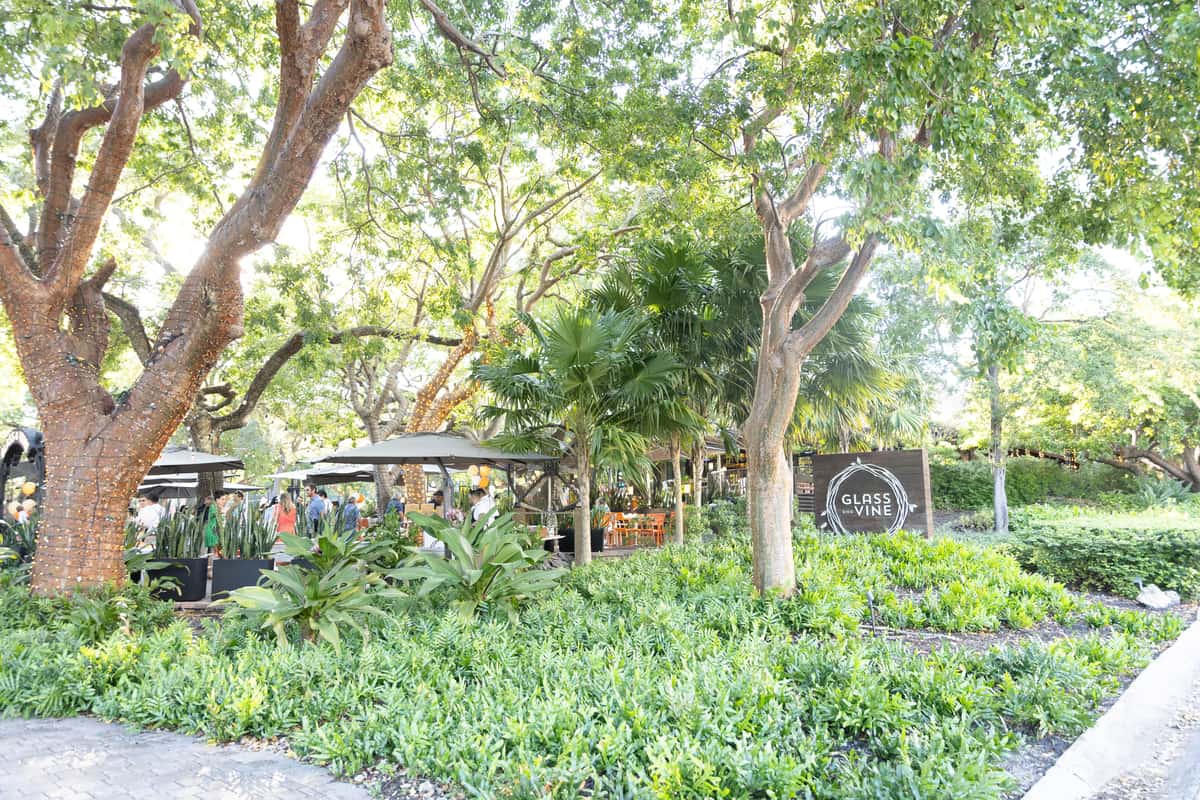
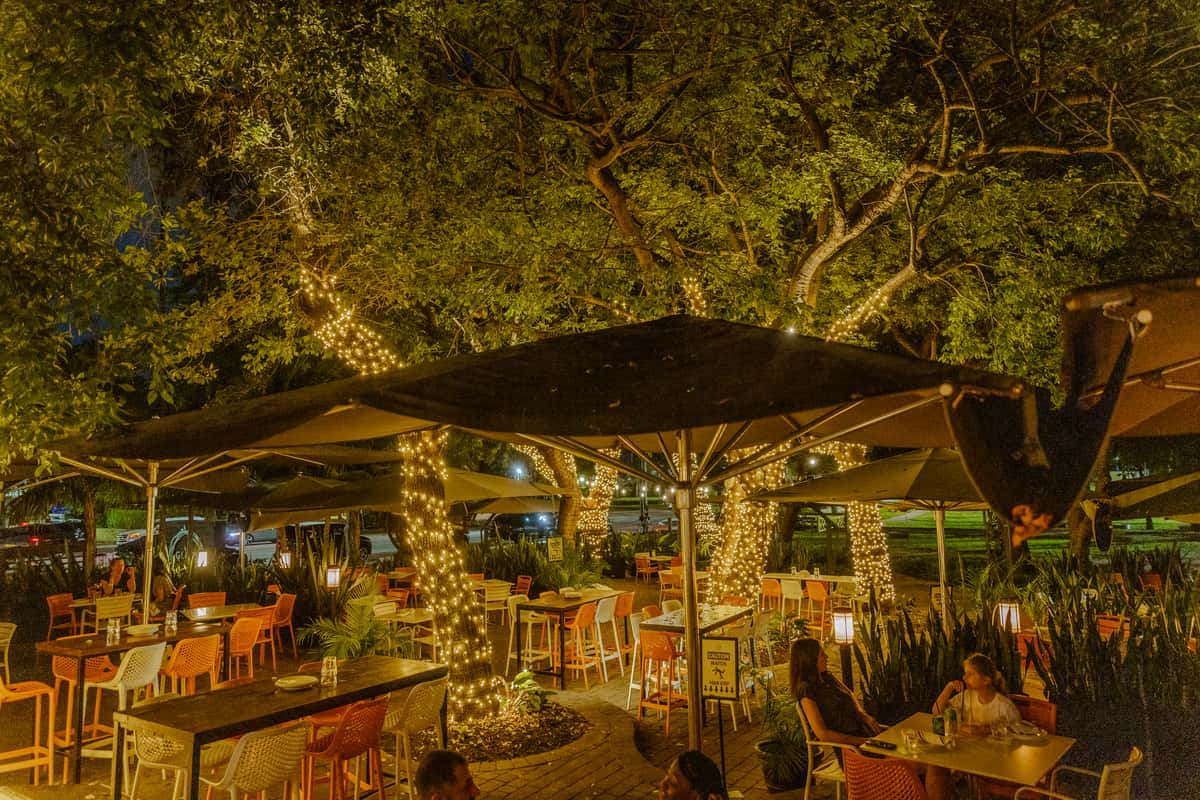
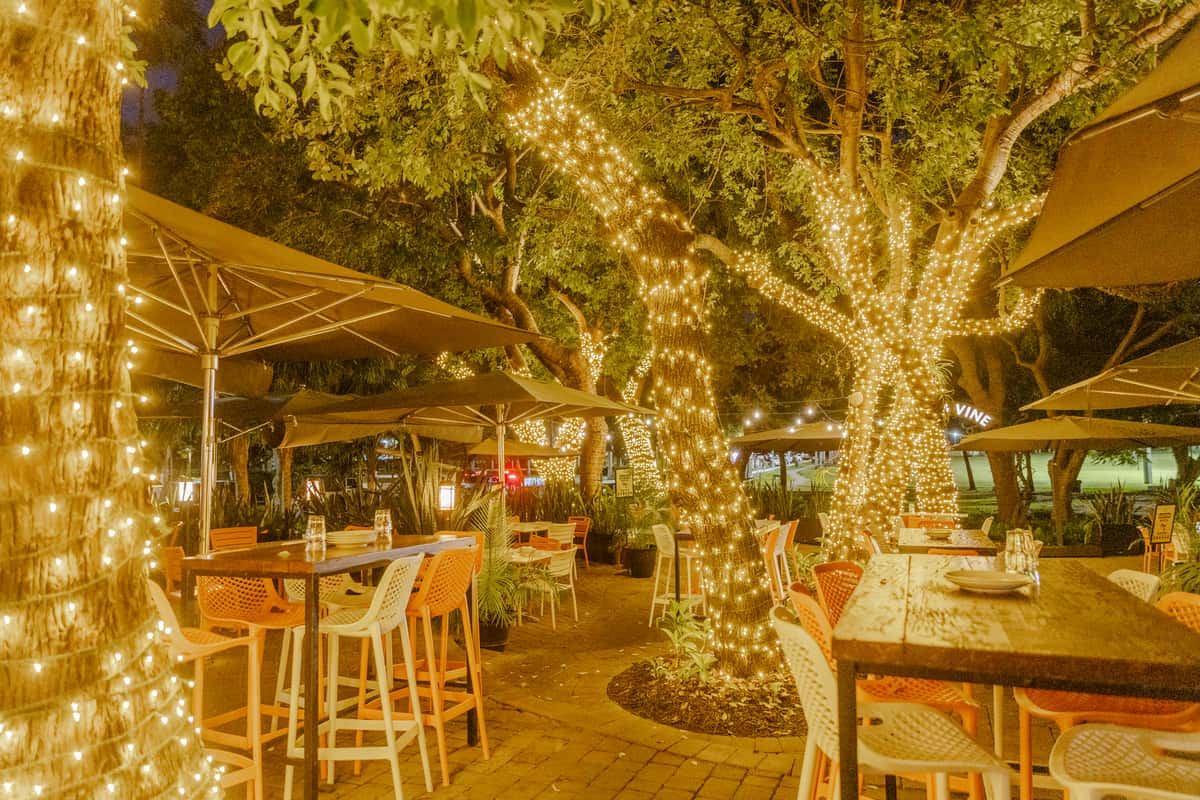
In Coconut Grove, Glass & Vine uses the mature oak canopy of Peacock Park as a living ceiling. These trees perform the same function as a built roof structure: they filter sunlight, buffer wind, and create intimate dining pockets organically. Rather than installing costly overhead systems, the canopy delivers cooling, ambiance, and visual identity simultaneously. For context, professionally designed living plant walls alone cost $175 to $250 per square foot, according to Green Oasis. Existing landscape features provide comparable biophilic value at a fraction of that investment.
How Do You Design Around Nature Instead of Clearing It Away?
You design around nature by mapping existing trees, root systems, and topography before placing a single table. Site-responsive planning identifies which natural features to preserve and builds the layout to complement them.
Key principles of designing around nature include:
Positioning structures between existing trees rather than removing them for open floor plates.
Routing pathways along natural grade changes instead of leveling terrain.
Using strategic furniture placement and landscaping to create zones defined by the site's own features.
Selecting permeable surfaces that protect root systems and allow natural drainage.
This philosophy requires more upfront planning than conventional build-outs, but it produces spaces with an authenticity that manufactured environments cannot replicate. Understanding how layout responds to nature sets the stage for choosing which natural elements to integrate.
What Natural Elements Should a Restaurant Integrate?
A restaurant should integrate living plants, water features, natural light, and reclaimed organic materials. Biophilic dining is a holistic philosophy that integrates natural elements into dining spaces to enhance wellbeing, sensory engagement, and sustainability. The following subsections detail each element category.
Living Plants and Vertical Gardens
Living plants and vertical gardens bring layered greenery into a restaurant's interior and exterior spaces. Vertical gardens, also called living walls, create dense botanical displays on otherwise unused wall surfaces. In tropical climates like Coconut Grove, species such as ferns, bromeliads, and philodendrons thrive with minimal intervention. Potted palms and hanging planters can define zones between dining areas, softening acoustic boundaries while adding visual depth. For restaurants committed to nature-centered design, living plants are the most immediate and recognizable element guests notice upon arrival.
Water Features and Natural Stone
Water features and natural stone introduce auditory and tactile dimensions to a dining environment. According to a BrightView resource on commercial landscapes, water features promote relaxation by slowing the heart rate and lowering stress levels through calming sounds and movement. Small cascading walls, tabletop fountains, or reflecting pools pair effectively with natural stone like coral rock, limestone, or river pebble. Stone surfaces also serve functional roles as bar tops, accent walls, and pathway materials. Together, moving water and textured stone ground a space in sensory richness that synthetic finishes cannot replicate.
Natural Light and Shade Structures
Natural light and shade structures control how sunlight enters and moves through a dining space throughout the day. Retractable pergolas, sail canopies, and mature tree canopies filter harsh midday sun while preserving the open-air character guests seek. Strategic orientation of seating ensures morning brunch areas capture soft eastern light, while evening dining zones benefit from warm western exposure at sunset. Shade structures also reduce reliance on artificial cooling, lowering energy costs in warm climates. Balancing brightness with comfort is one of the most underestimated elements in outdoor restaurant design.
Reclaimed and Organic Materials
Reclaimed and organic materials anchor a restaurant's visual identity in authenticity and environmental responsibility. Natural materials such as wood, stone, marble, and glass form the foundation of restaurant biophilia, providing a tactile connection and lasting durability. Salvaged timber can become communal tables, while reclaimed brick adds character to accent walls. Noma in Copenhagen, widely recognized for its minimalist, nature-centric interiors, incorporates organic materials and greenery to complement its culinary philosophy. Choosing materials with visible grain, patina, or natural imperfection reinforces the design narrative that nature, not manufactured uniformity, defines the space.
With the right natural elements in place, the broader atmosphere of outdoor dining transforms how guests perceive the entire experience.
How Does Outdoor Dining Change the Way a Space Feels?
Outdoor dining changes the way a space feels by replacing walls and ceilings with open air, living greenery, and ambient natural sound. These elements shift a guest's sensory experience from controlled to immersive, affecting comfort, mood, and time spent at the table.
How Does Fresh Air Influence How Long Guests Stay?
Fresh air influences how long guests stay by reducing the sensory fatigue that enclosed, climate-controlled rooms create. When diners breathe unfiltered air and feel a natural breeze, their bodies relax more quickly, and the impulse to leave after the final course fades. According to a 2024 Light Speeding survey cited by A&S Landscape, 79% of UK diners stated they would increase their dwell time if they had the option to sit outside at more restaurants. Longer visits typically translate to additional drink orders and dessert courses. For restaurants built around nature, fresh air is not a perk; it is a core design tool that directly shapes revenue per seat.
Why Does Greenery Make a Dining Setting Feel More Intimate?
Greenery makes a dining setting feel more intimate because plants create natural visual barriers that separate tables without walls. Hedges, hanging vines, and potted palms absorb sound and break sightlines, giving each party a sense of privacy even in a busy garden layout. Strategic plant placement also serves a practical function: repellent species like lavender, basil, and marigold act as natural pest deterrents for outdoor dining areas, keeping insects away without chemical sprays. This layered planting approach achieves two goals simultaneously. It softens the environment aesthetically while solving one of outdoor dining's most persistent operational challenges. Well-designed greenery turns a wide-open patio into a collection of sheltered dining pockets.
How Does Natural Sound Replace the Need for Background Music?
Natural sound replaces the need for background music by filling a space with layered, non-repetitive audio that the brain processes as calming rather than stimulating. Birdsong, rustling leaves, and distant water movement create an acoustic texture that shifts with the time of day, something no playlist can replicate. Unlike recorded music, which demands volume calibration and licensing, natural soundscapes self-regulate and carry no operational cost. Conversations feel easier beneath a tree canopy because organic ambient noise masks neighboring tables without competing with the guest's own voice. For any restaurant designed around nature, the surrounding environment becomes its own sound system, one that guests instinctively associate with relaxation and escape.
What Climate and Weather Challenges Come With Nature-Based Design?
The climate and weather challenges that come with nature-based design include tropical rain, intense heat, humidity, and pest activity. According to 2025 data from Toast POS, 54% of diners are more likely to choose restaurants with outdoor seating when weather permits, making weather mitigation essential for consistent revenue.
How Do You Handle Rain in a Tropical Open-Air Restaurant?
You handle rain in a tropical open-air restaurant by layering protective structures that shield guests without enclosing the space. Retractable canopies, pergolas with waterproof fabric, and strategically angled rooflines redirect rainfall while preserving open sightlines. Proper grading and drainage channels prevent pooling around dining areas. Protected outdoor seating can expand restaurant capacity by 25–50% when shielded from environmental factors like wind, rain, or extreme temperatures. For a venue like Glass & Vine, where the oak canopy of Peacock Park already provides a natural first layer of coverage, supplemental rain protection keeps service running through South Florida's afternoon downpours rather than forcing guests indoors.
How Do You Keep Guests Comfortable in South Florida Heat?
You keep guests comfortable in South Florida heat through a combination of natural shade, airflow design, and cooling technology. Mature tree canopies lower ambient temperatures beneath them by several degrees compared to direct sun exposure. Misting systems positioned along seating perimeters further reduce perceived heat without soaking guests. Ceiling fans under covered sections circulate air continuously, and light-colored furniture and natural stone surfaces absorb less heat than darker materials. Seating layouts that align with prevailing breezes also help. In Coconut Grove, the proximity to Biscayne Bay creates natural wind corridors that thoughtful orientation can capture, turning the subtropical climate into an asset rather than an obstacle.
What Pest and Wildlife Considerations Affect Outdoor Venues?
The pest and wildlife considerations that affect outdoor venues include insects, rodents, and local fauna attracted to food, water, and lighting. According to Able Pest Hawaii, natural pest deterrent options for outdoor dining include setting up repellent plants like lavender, basil, and marigold to keep insects away. These plantings double as landscaping elements that reinforce a nature-centered aesthetic. Beyond botanicals, proper food waste management, sealed storage, and prompt table clearing reduce attractants significantly. Lighting choices matter too; warm-toned LEDs draw fewer flying insects than bright white bulbs. With these layered strategies in place, consistent maintenance keeps outdoor dining spaces welcoming for guests rather than wildlife.
How Do You Choose Locally Sourced Materials and Ingredients?
You choose locally sourced materials and ingredients by prioritizing regional suppliers, seasonal availability, and short supply chains that reduce transportation costs while strengthening community ties. This approach applies to both the physical design materials and the culinary menu.
Local ingredients typically have lower costs compared to imported ingredients due to reduced transportation expenses and fewer tariffs, according to Slow Food Miami. This cost advantage allows restaurants to reinvest in higher-quality produce and sustainable building materials from nearby sources. For a nature-centered concept, local sourcing also reinforces the sense of place that biophilic design depends on; reclaimed Florida woods, native stone, and regionally grown herbs all anchor the dining experience to its specific geography.
A 2024 study published by PMC (National Center for Biotechnology Information) found that consumers are willing to pay a 34.5% premium for products sourced from short food supply chains. That willingness signals more than a trend. It reflects a genuine value shift toward transparency, freshness, and environmental responsibility. Restaurants that communicate their sourcing story directly on the menu or through server knowledge tap into this premium without alienating price-sensitive guests.
For any restaurant designing around nature, local sourcing is not just an operational decision. It is a design philosophy that connects the plate, the space, and the surrounding ecosystem into a single coherent experience. Understanding how materials and menus align with place sets the stage for exploring how biophilic design directly improves guest well-being.
How Does Biophilic Design Improve Guest Well-Being at a Restaurant?
Biophilic design improves guest well-being at a restaurant by reducing stress, enhancing satisfaction, and creating a stronger emotional connection to the dining experience through sustained exposure to natural elements.
Immersive biophilic environments can improve occupants' satisfaction and cognitive performance while reducing stress through physiological changes such as lowered cortisol levels, according to research published in ScienceDirect. These effects are not incidental; they stem from consistent, layered interaction with living systems rather than a single decorative gesture. Plants, natural light, organic textures, and ambient sounds from the environment work together to shift the nervous system toward a calmer state, which directly shapes how a meal is perceived and remembered.
High-quality biophilic designs in hospitality settings significantly affect guest well-being and perceived value, leading to higher patronage intentions. When guests feel genuinely restored by a space, they stay longer, order more, and return. This also translates to measurable business outcomes. Biophilic design in hospitality leads to higher ROI because the positive experience of natural systems remains critical to human performance and well-being, as noted by Terrapin Bright Green.
For restaurants operating in naturally rich environments like Coconut Grove, the opportunity is even greater. Rather than manufacturing a nature aesthetic, venues that build around existing landscapes can deliver an authenticity that guests instinctively recognize. That authenticity is what separates a well-decorated room from a space that genuinely changes how someone feels during a meal. Understanding this well-being impact sets the stage for what a nature-centered restaurant can offer beyond food.
What Should a Nature-Centered Restaurant Offer Beyond Food?
A nature-centered restaurant should offer experiential amenities that extend the outdoor setting into every part of the visit. Family-friendly adjacencies, pet-welcoming policies, and botanically inspired drinks each deepen the connection between guest and garden.
How Does a Playground-Adjacent Setting Attract Families?
A playground-adjacent setting attracts families by letting parents enjoy a full dining experience while children play within sight. This removes the tension that often cuts meals short at conventional restaurants, where kids grow restless at the table.
Proximity to a playground transforms dinner into an outing rather than a logistical challenge. Parents linger longer, order additional courses, and return more frequently when the venue doubles as a destination for the whole family. Glass & Vine sits directly alongside Peacock Park's green space in Coconut Grove, pairing its garden dining room with a natural play environment that keeps children engaged. For restaurants built around nature, the surrounding landscape is not just scenery; it becomes a functional amenity that drives repeat visits from families who rarely find this kind of freedom elsewhere.
Why Does a Dog-Friendly Policy Fit a Garden Dining Concept?
A dog-friendly policy fits a garden dining concept because the open-air, plant-filled environment already mirrors the spaces where dogs are most comfortable. Welcoming pets feels like a natural extension of the setting rather than an accommodation.
According to 2025 data from OpenTable, 55% of dog owners are part of the outdoor dining crowd and are more likely to return to venues with pet-friendly amenities. That loyalty potential is significant for garden restaurants, where enclosed walls and tight aisles do not exist. Glass & Vine leans into this by offering a dedicated dog menu alongside its patio seating, turning pet owners into regulars. In a garden concept, excluding dogs would actually feel incongruent with the philosophy of connecting guests to the outdoors.
How Do Curated Cocktails Complement an Outdoor Atmosphere?
Curated cocktails complement an outdoor atmosphere by engaging the same senses that the natural setting already activates. Fresh herbs, citrus, and botanical ingredients create a through-line between what guests taste and what they see growing around them.
A drink built with muddled basil or rosemary carries the garden onto the table, reinforcing the immersive quality of the environment. Seasonality matters here; rotating ingredients based on what thrives locally keeps the cocktail program aligned with the landscape's rhythm. Glass & Vine features a curated cocktail list alongside its open-air dining under Peacock Park's oak canopy, where the drink experience and the setting reinforce each other. For nature-centered restaurants, the bar program is not a separate offering; it is another layer of the environment guests came to enjoy.
With these experiential layers in place, the full potential of a nature-first restaurant begins to emerge as something closer to an escape than a meal.
How Can a Garden-Inspired Restaurant Create a Sense of Escape?
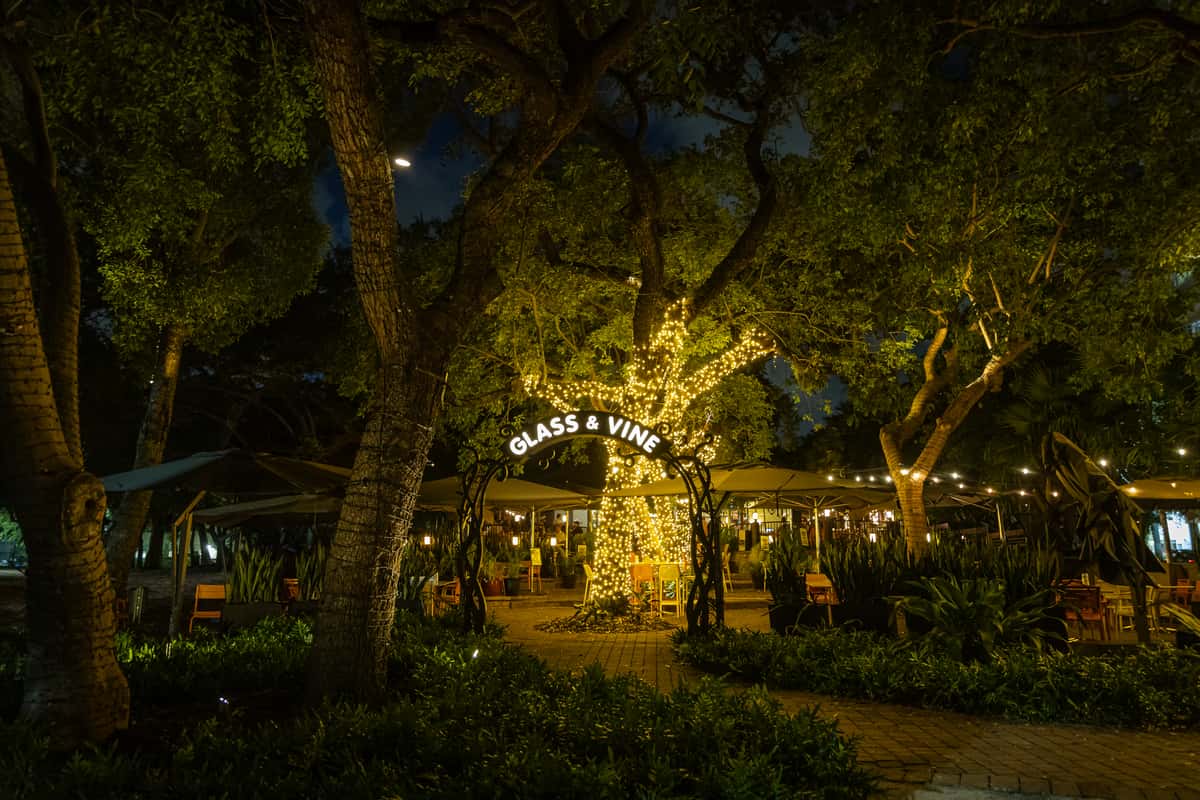
A garden-inspired restaurant creates a sense of escape by immersing guests in a natural environment where the surroundings feel removed from urban routine. Glass & Vine in Coconut Grove demonstrates this through its open-air setting beneath Peacock Park's oak canopy.
Does Glass & Vine in Coconut Grove Show What Nature-First Dining Looks Like?
Glass & Vine in Coconut Grove shows exactly what nature-first dining looks like. The restaurant operates as an entirely outdoor garden dining concept within Peacock Park, using mature oak canopies and tropical landscaping for natural cooling and ambiance instead of artificial climate control. Strategic furniture placement and lush plantings create intimate dining pockets while maximizing views of the surrounding park.
This approach resonates with growing consumer demand. A 2022 survey found that 75% of respondents wanted outdoor dining options to expand, even after pandemic-era restrictions ended. Glass & Vine meets that expectation year-round, welcoming families near the playground and dog owners on the patio. For anyone seeking proof that a restaurant can feel like a retreat rather than a room, Coconut Grove's secret garden by the sea is the model.
What Are the Key Takeaways About Designing a Restaurant Around Nature?
The key takeaways about designing a restaurant around nature center on working with the existing landscape rather than against it:
Preserve and leverage mature trees, native plantings, and natural terrain as foundational design elements.
Prioritize repetitive interaction with nature over decorative accents; consistent sensory engagement triggers deeper relaxation.
Use organic materials, natural light, and open sightlines to blur the boundary between built space and landscape.
Source locally to reinforce the connection between place, menu, and environment.
Design for inclusivity by accommodating families, pets, and accessibility needs within the natural setting.
Nature-centered design is not a decorative trend. It is a structural philosophy that shapes layout, material choices, sourcing, and guest experience from the ground up. Restaurants that commit to this approach, as Glass & Vine does beneath Peacock Park's canopy, create dining experiences guests cannot replicate at home or find in conventional interiors.